




Understanding the FUPA meaning is the first step in addressing this common concern, especially among men. FUPA stands for Fat Upper Pubic Area and this excess fat above the pubic bone can significantly impact their confidence and self-image. So what can they do to eliminate their FUPA?
In this comprehensive guide, we will delve into the intricacies of FUPA – what it is, why it develops, and how to get rid of it. We’ll equip you with a range of practical and health-conscious strategies, including exercises to get rid of FUPA, tailored specifically for males.
Understanding the nuances of FUPA is crucial. Embracing a holistic approach to its management allows men to embark on a transformative journey toward a more confident, comfortable, and healthier self.
What is FUPA and How Does it Develop?
FUPA, or Fat Upper Pubic Area, is a term used to describe the gathering of excess fat above the pubic bone. This can occur for various reasons, including aging, massive weight loss or gain, hormonal imbalances, and lifestyle factors such as a poor diet and lack of exercise.
Genetics also plays a significant role in developing FUPA. In this case, it does not mean that you will develop it just because a family member has FUPA; instead, it means your genetics can tell your body where fat should be stored, like above the pubic bone.
Can You Remove Fat in a Particular Area of the Body?
Unfortunately, spot reduction, or losing fat from a specific area, is a common misconception. When losing weight, the body tends to shed fat uniformly across various areas rather than solely from one targeted zone.
So, even though losing fat around the private area, or FUPA, is a valid concern, you’re better off focusing on overall weight loss.
Is it Hard to Lose FUPA?
Losing fat around the private area for males can be challenging. Your body may naturally store fat in this area, making it harder to eliminate.
Weight loss, in general, isn’t always easy. There is no one-size-fits-all approach to losing FUPA, and what may work for you may not work for someone else.
While it may require patience and dedication, decreasing the size of your FUPA is certainly attainable with a consistent and healthy lifestyle regimen.

What Are the Symptoms of FUPA?
Have you ever considered how having FUPA could affect your daily life? For some men, having FUPA decreases their confidence and self-esteem. Other symptoms of FUPA can vary from person to person.
Common concerns include:
- Visible Accumulation of Fat: One apparent symptom of FUPA is a noticeable bulge or protrusion.
- Discomfort or Tenderness: Some men may experience discomfort or tenderness in the FUPA, especially when sitting or engaging in physical activity.
- Skin Irritation: The excess fat can cause friction against clothing, leading to irritation, redness, or chafing in the affected area.
- Difficulty with Clothing Fit: Clothes may fit uncomfortably or not drape appropriately over the pubic area. This may also affect self-consciousness or esteem.
- Possible Contribution to Buried Penis Syndrome: In severe cases, a large FUPA can contribute to buried penis syndrome, where the penis appears smaller due to surrounding fat.
It’s important to note that the severity of your symptoms can vary. Some men may experience only a few of these issues, while others may have several.
Why is it important to lose fat around the private area for males?
Losing fat around the private area not only helps men’s physical health but also their mental health.
Physical reasons why losing fat around the private area for males is essential include:
- Improved physical comfort: Excess fat in the pubic region can lead to discomfort and chafing, especially during physical activities or when wearing tight-fitting clothing.
- Decreased irritation: Reducing fat in the private area can decrease irritation caused by friction between excess fat and clothing.
- Better sexual life: For some men, reducing excess fat around the private area leads to improved sexual function and satisfaction.
- Decreased health risks: Excess fat, especially around the abdominal and pelvic regions, is associated with an increased risk of certain health conditions, like heart disease and diabetes.
- Potential improvement of buried penis syndrome: In cases where FUPA contributes to buried penis syndrome, losing fat in this area may improve penile visibility and overall appearance.
Studies show the link between mental health and your overall weight. In one study, men were found to have more issues with their mental health if they were unsatisfied with their weight loss journey. Losing fat around the private area in males leads to:
- Enhanced self-confidence: Achieving a more balanced and aesthetically pleasing physique can boost self-esteem and body image, leading to greater confidence in social and intimate situations.
- Promotion of overall well-being: Adopting a healthier lifestyle with a balanced diet and regular exercise can improve physical and mental well-being.
- Boosted motivation for a healthier lifestyle: Success in losing fat around the private area can serve as motivation to maintain a healthier lifestyle, which can lead to long-term benefits.
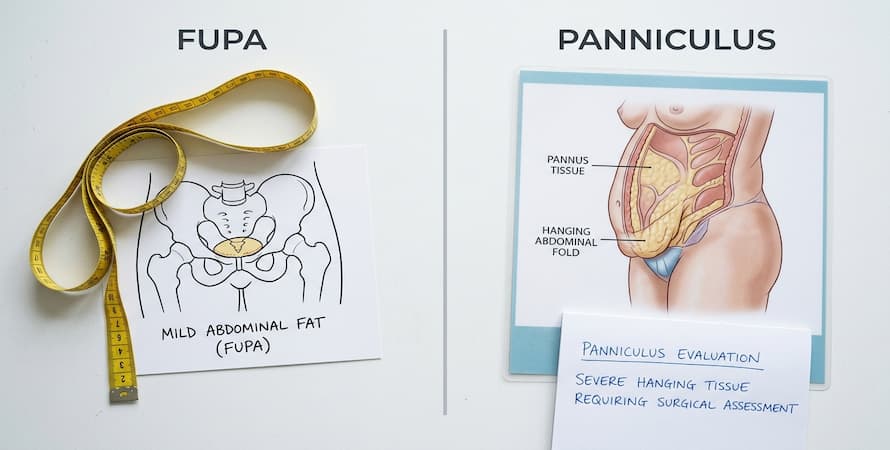
FUPA vs. Panniculus: What’s the Difference?
Cardio Exercise: The Most Effective Way to Burn FUPA Fat
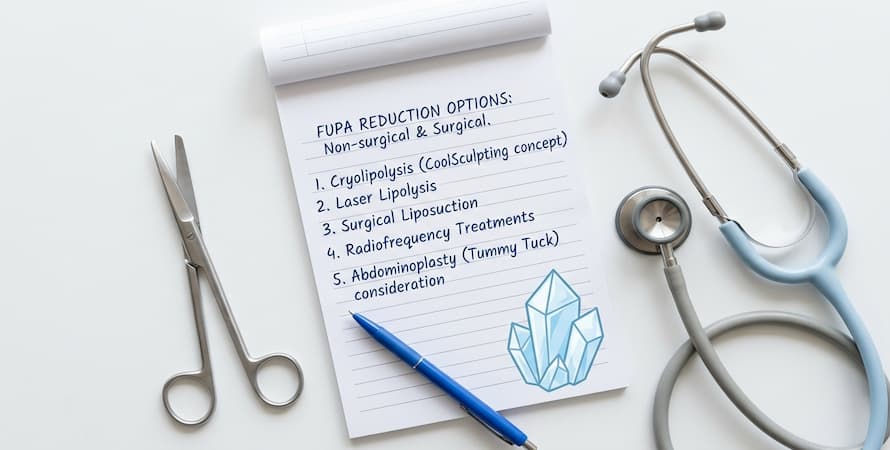
For people who have not achieved their desired results through diet and exercise alone—or who have excess skin following significant weight loss—medical and cosmetic procedures may be appropriate. These treatments generally produce faster and more noticeable changes than lifestyle measures, but they also involve costs, recovery time, and potential risks. The best option depends on whether the concern is excess fat, excess skin, or a combination of both.
- Liposuction – Liposuction is the most direct surgical method for removing localized fat from the upper pubic area. It is best suited for people with good skin elasticity and a stable body weight. Recovery typically takes 2–4 weeks, although light activities can often be resumed sooner, depending on the extent of the procedure.
- Panniculectomy – A panniculectomy is a surgical procedure that removes excess skin and subcutaneous fat from the lower abdomen and upper pubic region. It is commonly performed in individuals with a large, overhanging abdominal panniculus, particularly after significant weight loss, to improve hygiene, comfort, mobility, and the contour of the lower abdomen.
- CoolSculpting (Cryolipolysis) – This non-surgical treatment uses controlled cooling to destroy fat cells, which are gradually eliminated by the body over several weeks to months. Studies suggest a 20–25% reduction in the treated fat layer per session, with little to no downtime, although multiple treatments may be needed for optimal results.
- Laser Fat Reduction – Non-invasive laser-based treatments use heat energy to target fat cells while minimizing damage to surrounding tissues. They typically require multiple sessions and are generally most effective for individuals with mild, localized fat deposits rather than substantial fat accumulation or excess skin.
- Pubic Lift – A pubic lift is a surgical procedure that removes excess skin and lifts the pubic area to improve contour and appearance. It is frequently combined with an abdominoplasty (tummy tuck), especially after pregnancy or major weight loss when skin laxity is a significant concern.
Strength Training: Preserve Muscle While Losing FUPA Fat
Strength training is an essential part of any fat-loss plan because it helps preserve lean muscle mass during a calorie deficit. When you lose weight through dieting alone, your body can lose both fat and muscle. Maintaining muscle is important because it supports your resting metabolic rate, helping you burn more calories throughout the day and reducing the metabolic slowdown that often accompanies weight loss.
The most effective exercises are compound movements, which engage multiple muscle groups at the same time. Exercises such as squats, deadlifts, lunges, step-ups, and hip thrusts strengthen the legs, glutes, core, and lower body while increasing overall energy expenditure. Although these exercises do not specifically burn fat from the FUPA region, they improve muscle tone, posture, and body composition as overall body fat decreases.
For most adults, aim for 2–3 strength-training sessions per week alongside regular cardiovascular exercise. Each session should target all major muscle groups and progressively increase in difficulty over time. Combining strength training with cardio, adequate protein intake, and a moderate calorie deficit offers the best strategy for preserving muscle while gradually reducing overall body fat, including fat stored around the lower abdomen and pubic area.
How Long Does It Take to Lose FUPA?
Reducing a FUPA is a gradual process for most people, and the timeline depends on the approach you choose, your starting body composition, and individual factors such as genetics, age, hormones, and overall health. Because fat cannot be selectively burned from one area, improvements occur as total body fat decreases over time.
- Diet and Exercise: For individuals maintaining a consistent 500-calorie daily deficit through a combination of healthy eating and regular physical activity, visible changes often take around 3–6 months. Progress is typically gradual, with steady fat loss being more sustainable than rapid weight-loss methods.
- Non-Surgical Procedures: Treatments such as CoolSculpting (cryolipolysis) do not produce immediate changes. The body gradually clears the treated fat cells, with full results generally becoming visible over 2–3 months, although some people may require more than one treatment session.
- Surgical Procedures: Options such as liposuction, panniculectomy, or a pubic lift provide an immediate change in body contour because excess fat and/or skin are removed during the procedure. However, swelling can temporarily obscure the final outcome, and most people require 2–4 weeks of recovery, with final contour improvements continuing to develop over several months as healing progresses.
The Honest Perspective
There is no universal timeline for losing a FUPA. Two people following the same diet and exercise program may experience very different results because genetics strongly influence where the body stores fat and which areas lose fat first. Some individuals notice reductions in the face, arms, or upper abdomen before changes become visible in the lower abdomen or pubic region. Focusing on consistent, long-term habits rather than rapid fixes offers the greatest chance of achieving lasting results while maintaining overall health.
C-Section FUPA — The Shelf Effect and How to Address It
Benefits of Men’s Supra Pubic Fat Removal
Because losing fat around the private area can be a challenge, men have found other ways to achieve their goals. For instance, some men may choose to have their FUPA removed with or without surgery. Whichever way they decide to get rid of FUPA, they will see benefits such as:
- Improved ability to achieve erections
- Reduction in skin irritation
- Easier ability to urinate
- Improved urinary tract health
- Increased sexual satisfaction

Tips to Lose Fat Around the Private Area for Males
1. Diet Tips to Shrink the Upper Pubic Area
Changing your eating habits impacts your weight, especially if you adhere to them. There are so many different diets, you may need help choosing which one is right for you.
Here are some common types of diet you may consider:
- Low-Fat Diet: Focuses on lean proteins, whole grains, and plenty of fruits and vegetables to reduce overall body fat.
- Mediterranean Diet: Emphasizes whole foods, lean proteins, plenty of fruits and vegetables, nuts, and olive oil. It limits processed foods, red meat, and sugar.
- Ketogenic Diet: This high-fat, low-carb diet can promote weight loss by forcing the body to burn fat for fuel.
- Paleo Diet: Emphasizes whole foods, lean proteins, and healthy fats while avoiding processed foods and grains.
- Vegan Diet: This plant-based diet can effectively help individuals lose weight because it focuses on nutrient-dense, low-calorie foods.
Remember that before starting any diet, especially those that significantly alter your eating habits, it’s important to consult with a healthcare professional or a registered dietitian to ensure it’s safe and appropriate for your individual needs and health goals.
2. Exercises to Shrink the Upper Pubic Area
Exercises to get rid of FUPA focus on those that help tone and strengthen the abdominal area such as bicycle crunches, bridges, and weight training. This contributes to a more balanced physique, and possibly, smaller FUPA.
For some men, the following exercises may be helpful:
- Forearm Plank: Engage core muscles and hold a plank position for 30-60 seconds, repeating several times.
- Bicycle Crunches: Lie on your back, hands behind your head, and bring opposite knee to elbow in a cycling motion.
- Bridges: Lie on your back, knees bent, and lift your hips off the ground, engaging your glutes and core.
- Leg Raises: Lie on your back, legs straight, and lift them to a 90-degree angle, then slowly lower them back down.
- Abdominal Weight Training: Incorporate exercises like weighted crunches and Russian twists to target the abdominal area.
You may also want to consider adding the Nutesta to your daily regimen which, in conjunction with a comprehensive fitness and diet plan, may provide additional support in addressing this concern.
Lifestyle Changes to Lose Lower Abdominal Fat
Along with exercises to get rid of FUPA, lifestyle changes can help you become your best self.
- Adopt a healthy diet: Incorporate whole foods, lean proteins, and plenty of fruits and vegetables while limiting processed foods and sugary drinks.
- Stay hydrated: Drinking enough water supports your body’s metabolism and helps control your appetite.
- Get enough sleep: Aim for 7-9 hours of quality sleep per night to support overall health and weight management.
- Avoid smoking and excessive alcohol consumption: Both habits contribute to weight gain and hinder progress in losing lower abdominal fat.
Frequently Asked Questions
Conclusion
While it’s natural to want to lose fat around the private area for males, it’s important to remember that a holistic approach to overall weight loss is the most effective way to achieve results. Understanding the factors contributing to the development of FUPA, like your genetics, hormones, and lifestyle, can further support this journey.
For some men, removing fat around the private area with surgery may be an option. Others may choose to use natural supplements like Nutesta. But, it’s recommended also to have a balanced diet and incorporate targeted exercises for sustainable results. Adopting these healthy practices, along with consistency and patience, will help you become a more confident and healthier version of yourself.
References
- https://pmc.ncbi.nlm.nih.gov/articles/PMC11980024/
- https://pubmed.ncbi.nlm.nih.gov/23018703/
- https://pmc.ncbi.nlm.nih.gov/articles/PMC5376784/
- https://pmc.ncbi.nlm.nih.gov/articles/PMC3530364/


