





What are nootropics and how they’re made
How cognitive supplements are thought to work
The brain is a biochemical engine. Most nootropics aim at a few core pathways linked to memory and focus:
- Acetylcholine support: Acetylcholine is central to learning and memory. Choline donors (citicoline, alpha-GPC, phosphatidylcholine) supply precursors for acetylcholine synthesis. Some botanicals and enzyme inhibitors can influence cholinergic signaling.
- Cerebral blood flow: Increased blood flow brings oxygen and glucose to active regions. Ginkgo biloba and compounds that affect nitric oxide are examples that may modestly enhance perfusion.
- Membrane health and neuroprotection: Omega-3 fatty acids, phosphatidylserine, and antioxidants support membrane fluidity and protect neurons from oxidative stress—mechanisms relevant to long-term brain aging.
- Stress and arousal modulation: Chronic stress impairs memory; adaptogens such as Rhodiola and ashwagandha are proposed to blunt stress responses and improve mental stamina.
- Neurotransmitter modulation: Caffeine acts on adenosine receptors to raise alertness; L-theanine modulates GABA and glutamate to smooth the experience. Other ingredients influence dopamine, norepinephrine, or serotonin pathways.

Key ingredient categories and the clinical evidence
The next sections review major ingredient groups with practical notes on typical doses and time to effect.
Phospholipids and choline donors
Alpha-GPC and citicoline (CDP-choline) are bioavailable choline sources linked to improved attention and memory in clinical studies. Citicoline has been used in trials showing benefits for attention and mental energy, often in doses of 250–500 mg per day. Phosphatidylserine, a membrane phospholipid, has produced small-to-moderate improvements in memory in older adults at doses around 100–300 mg/day over several months.
Clinical takeaways: choline donors can produce early improvements in attention for some users; phosphatidylserine is more of a slow, structural support for cognition.
Adaptogens
Rhodiola rosea and ashwagandha are two adaptogens with growing clinical data. Rhodiola has randomized trials showing improved mental endurance and reduced fatigue under stressful conditions. Ashwagandha has been associated with lowered cortisol, improved sleep quality, and reduced anxiety—factors that indirectly support memory and attention by improving the physiological background for cognition.
Clinical takeaways: expect stress and fatigue benefits within 2–8 weeks; dosing varies by extract standardization (e.g., Rhodiola extracts standardized to rosavin/salidroside).
Botanical extracts
Bacopa monnieri has several randomized controlled trials reporting improved memory consolidation and recall after 8–12 weeks at standardized doses, typically 300 mg/day. Effects are gradual and accumulate with continued use. Ginkgo biloba shows mixed results: some trials indicate modest benefit in older adults, while meta-analyses show inconsistent effects on dementia prevention. Lion’s mane mushroom has early human data suggesting potential cognitive and mood benefits, but trials are small and short-term.
B vitamins and homocysteine lowering
B6, folate (B9), and B12 are central to one-carbon metabolism and homocysteine regulation. Elevated homocysteine is an epidemiologic risk marker for cognitive decline, and trials such as VITACOG found cognitive benefits in people with high homocysteine and existing brain atrophy when given B vitamins. Benefits are most evident when deficiencies or elevated homocysteine are present.
Omega-3 fatty acids (DHA/EPA)
DHA is a primary structural component of neuronal membranes. Trials show modest benefits for memory and processing speed in older adults or those with low baseline DHA intake. Effects are less clear in well-nourished populations. Typical therapeutic doses range from 500 mg to 1,000 mg or more of combined DHA+EPA per day, with many cognitive trials using higher DHA proportions.
Caffeine + L-theanine
The caffeine + L-theanine combination is one of the best-supported acute stacks for improving attention and accuracy on cognitively demanding tasks. Caffeine provides a rapid increase in alertness and reaction time; L-theanine reduces jitteriness and can improve working memory and attention when paired with caffeine. Common doses are 50–100 mg caffeine with 100–200 mg L-theanine.
Health claims vs. reality
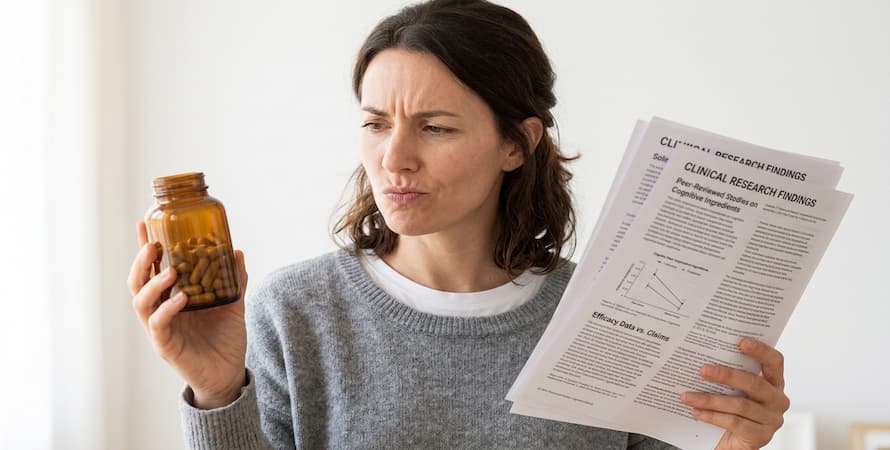
Advertising can overreach. Labels that claim drastic cognitive gains or immediate reversal of age-related decline should be treated skeptically. The reality is more measured:
- Time course: Botanicals often require weeks to months to show effects (Bacopa ~8–12 weeks). Acute benefits are more likely with stimulants or bioavailable choline donors.
- Magnitude: Effects tend to be modest. They may be meaningful at the population level but subtle for an individual.
- Heterogeneity: Response varies with baseline nutrition, age, genetics, sleep status, and stress. People with deficiencies or elevated risk factors typically gain the most.
RELATED: Herbal brain health supplements: key ingredients and what the research says
Manufacturing, labeling, and quality control
Quality matters. Because supplements are regulated differently from pharmaceutical drugs, manufacturing controls and product transparency become the consumer’s primary protections. Look for these features:
- Transparent labels with specific ingredient amounts. Avoid undisclosed proprietary blends that hide doses.
- Standardized extracts (e.g., Bacopa with percentage of bacosides) and clinical doses that match research.
- Third-party verification from organizations such as USP, NSF, or ConsumerLab to reduce the risk of contamination and mislabeling.
- Clear allergen statements and source information (e.g., soy vs. sunflower lecithin for phospholipids).
Potential downsides, safety, and interactions
Supplements are generally safe at recommended doses but can have important interactions and side effects:
- Interactions with medications: omega-3s can increase bleeding risk with anticoagulants. St. John’s wort induces CYP enzymes and reduces effectiveness of many drugs. Ashwagandha may interact with sedatives, and cholinergic agents can conflict with anticholinergic medications.
- Side effects: GI upset, headaches, insomnia (with caffeine), vivid dreams (rare with omega-3s), and, with excessive B6 over time, neuropathy.
- Quality issues: Contamination with heavy metals, pesticides, or adulterants has been documented in poorly regulated products.
- Proprietary blends: Without dose transparency it’s impossible to confirm whether a product delivers clinically relevant amounts.
How to evaluate a product: a step-by-step checklist
- Read the label: Confirm that each active ingredient is listed with an amount that matches clinical research.
- Check for third-party testing seals and batch-specific certificates of analysis (COA) on the manufacturer’s website.
- Match your goal to the mechanism: choose choline donors and phospholipids for attention and encoding, adaptogens for stress-related decline, and omega-3s for long-term structural support.
- Assess manufacturing claims: GMP facility, source transparency, and avoidance of unnecessary proprietary blends are positive signs.
- Look for consumer reviews focused on quality and customer service rather than hyperbolic effect claims.
RELATED: Best supplements for memory and focus in 2026
Practical tips for consumers — integrating supplements into a balanced plan
Supplements are supportive; lifestyle is foundational. The following approach helps you use products sensibly and evaluate results:
- Start with basics: assess and address diet, sleep, exercise, and stress management before spending heavily on supplements. Correct nutrient deficiencies first—improvements can be dramatic when a deficiency is treated.
- Start low, go slow: begin with lower doses, monitor effects over 4–12 weeks depending on the ingredient, and keep a daily journal to track memory, attention, mood, sleep quality, and side effects.
- Combine wisely: evidence supports certain combinations—caffeine + L-theanine for acute focus; choline donors paired with botanicals for sustained cognitive support. Avoid piling on multiple stimulants, which increases side effect risk.
- Cycle when appropriate: occasional breaks can reduce habituation for stimulant-like ingredients. Some users follow a five-days-on/two-days-off schedule or a month-on/month-off pattern for adaptogens.
- Timing matters: take stimulant-containing products earlier in the day. Take fat-soluble nutrients with a meal containing fat to improve absorption.
- Consult a clinician: discuss supplement choices with a pharmacist or clinician, especially if you take blood thinners, antidepressants, or have chronic conditions.
RELATED: Natural sleep support supplements for adults: what to look for
Sample regimens and practical stacks
Below are example regimens for different user goals. These are illustrative, not prescriptive—adjust based on tolerance, goals, and clinical advice.
Beginner: foundational support
- Omega-3 (DHA-focused) 500–1,000 mg combined DHA+EPA daily
- B-complex containing B6, B9 (methylfolate preferred if available), and B12 at recommended daily doses
- One quality multivitamin to fill dietary gaps
Focused short-term boost: acute attention
- Caffeine 50–100 mg + L-theanine 100–200 mg taken in the morning for study or work sessions
- Optional citicoline 250 mg for additional attention benefits
Long-term cognitive maintenance
- Citicoline or alpha-GPC 250–500 mg daily
- Bacopa standardized extract 300 mg daily (expect 8–12 weeks to assess effect)
- Phosphatidylserine 100–300 mg daily
- Omega-3s 1,000 mg daily (higher DHA ratio)
Stress and sleep support
- Ashwagandha standardized extract (e.g., KSM-66) 300–600 mg daily
- Magnesium (glycinate) at night 200–400 mg to support sleep quality
- Mindfulness or cognitive behavioral approaches for persistent insomnia or anxiety
Among multi-ingredient products that aim to cover multiple cognitive pathways, Provasil has gained attention in reviews for combining choline donors, membrane-supporting lipids, botanical extracts, adaptogens, and vitamins. The logic behind a multi-pronged formula is to address several mechanisms that support memory encoding, consolidation, neuronal integrity, and stress resilience.

Ingredient rationale commonly cited in formulas like Provasil includes:
- Bacopa herb leaf – Traditionally used to support memory, learning, and cognitive processing, with research suggesting potential benefits for long-term memory retention.
- Ginkgo leaf extract – May help support healthy blood flow to the brain, potentially benefiting memory, mental clarity, and cognitive function, particularly in older adults.
- Asian ginseng root extract – Used to promote mental energy, focus, and cognitive performance while helping reduce mental fatigue during demanding tasks.
- L-Glutamine – An amino acid that supports overall brain metabolism and serves as a precursor for neurotransmitters involved in normal brain function, although evidence for direct cognitive enhancement in healthy adults is limited.
What to watch for when evaluating any multi-ingredient formula: verify the amounts of each active ingredient and that they align with doses used in clinical trials; prefer products with third-party testing; and avoid formulations that hide ingredient quantities in proprietary blends.
RELATED: Natural weight control supplements: ingredients that support metabolism
Tracking effects: a practical approach
Objective tracking helps you determine whether a product is delivering value. Use a simple routine:
- Baseline period: for one to two weeks, record sleep quality, perceived memory lapses, focus during work sessions, mood, and any current supplements or medications.
- Start the supplement: note the date, dose, and time of day. If you are taking multiple items, introduce one at a time over several weeks.
- Daily journal: rate sleep, focus, mood, and side effects on a 1–10 scale and note any cognitive successes (e.g., recalling a name, finishing tasks faster).
- Objective checks: consider periodic timed tasks (reading comprehension, reaction time apps, or simple memory tests) to add objectivity.
- Evaluation point: after an appropriate trial period (e.g., 8–12 weeks for Bacopa-type botanicals), compare the scores to baseline and decide whether to continue.
Frequently Asked Questions
Q: Do brain health supplements work?
Some ingredients have reproducible benefits for specific outcomes and populations. Acute focus boosters like caffeine + L-theanine are well supported, while botanical and nutrient effects are often modest and accumulate over weeks. Expect incremental improvements, not dramatic overnight changes when choosing a memory and focus supplement.
Q: How long before I see results?
Times vary: caffeine and some choline donors can show effects within hours to days; Bacopa and many botanicals generally require 8–12 weeks; adaptogens may show benefits in 2–8 weeks depending on the extract and outcome measured.
Q: Are supplements safe?
Most are safe at recommended doses, but interactions and side effects are possible. Check for blood-thinning effects, interactions with psychiatric medications, and long-term risks like high-dose B6 neuropathy. Prioritize third-party tested products and consult a clinician when taking prescription drugs.
Q: Can supplements replace good sleep and exercise?
No. The strongest and most durable cognitive benefits come from sleep, exercise, stress management, and a nutrient-rich diet. Supplements are adjuncts that may amplify benefits from these core lifestyle habits.
Q: Which supplement is best for focus?
For immediate short-term focus, a caffeine + L-theanine combo is a reliable option. For sustained, non-stimulant improvement, citicoline or alpha-GPC combined with a high-quality adaptogen and a supportive B-complex may help.
Q: Why consider a multi-ingredient product like Provasil?
Multi-ingredient formulas can address several mechanisms at once—acetylcholine support, membrane protection, stress modulation, and antioxidant defense. The key is dosing transparency and third-party verification so you can be confident the product contains clinically meaningful amounts of each ingredient.
Realistic expectations and when to stop
Manage expectations: many people notice modest but useful changes—fewer foggy moments, slightly faster recall, or better sustained attention. If you don’t see measurable improvement after using an evidence-based ingredient at a clinical dose for its expected trial period (often 8–12 weeks for botanicals), it’s reasonable to discontinue that product and either try an alternative with better evidence or focus on lifestyle strategies.
Summary
Final words
Used thoughtfully and in combination with healthy living, Brain health supplements for memory and focus can be one tool among many to support cognitive performance, sharpen memory, and sustain focus in daily life. Keep expectations realistic, evaluate products methodically, and prioritize safety, ingredient transparency, and clinically relevant dosing. With the right approach, Brain health supplements for memory and focus may help support the cognitive abilities that contribute to productivity, relationships, and long-term independence while complementing—not replacing—a healthy lifestyle.
References
- https://pmc.ncbi.nlm.nih.gov/articles/PMC3466476/
- https://ods.od.nih.gov/factsheets/Omega3FattyAcids-HealthProfessional/
- https://pmc.ncbi.nlm.nih.gov/articles/PMC9228580/
- https://pmc.ncbi.nlm.nih.gov/articles/PMC7527439/
- https://pmc.ncbi.nlm.nih.gov/articles/PMC12158153/


