





When the night becomes a battleground, many people look for menopause sleep support that feels natural and safe. This expanded guide explores why sleep becomes so fragile around menopause, which evidence-backed ingredients can help, how to select sleep supplements for menopause that are free of artificial additives, and practical ways to combine supplements with behavioral strategies for lasting improvement.
Introduction
For millions of American women, menopause transforms sleep from a nightly refuge into a battleground. Overnight routines that once produced restorative eight-hour stretches give way to fragmented sleep, hot flashes, night sweats, and mental hyperarousal. Sleep disruption during the menopause transition affects energy, mood, cognitive performance, and cardiometabolic health. As a result, interest in natural sleep aids for menopause and targeted menopause sleep support has surged. Consumers frequently ask: What actually works? Can I find sleep support without artificial additives? Which sleep supplements for menopause are backed by clinical data and safe for long-term use?
This article provides a thorough, evidence-focused exploration of five commonly used ingredients—magnesium glycinate, valerian root, ashwagandha, L-theanine, and passionflower—plus guidance on product selection, dosing strategies, safety, and how to incorporate supplements into a broader sleep plan that includes behavioral and environmental changes. It also reviews multi-symptom formulas like Menoquil as pragmatic, combined approaches to menopause insomnia supplements.
Why Menopause Disrupts Sleep — The Physiology Behind The Alarm Clock
Menopause and sleep problems are tightly linked through multiple physiological pathways. The menopausal transition (perimenopause into menopause) produces profound endocrine changes—falling estrogen and progesterone, fluctuations in cortisol and other stress hormones, and sometimes shifts in circadian rhythm signaling. These changes can produce three main patterns of sleep disruption: difficulty falling asleep, frequent awakenings, and early-morning termination of sleep.
Vasomotor symptoms: night sweats and hot flashes
One of the most immediate causes of sleep interruption during menopause is vasomotor instability. Declines in estrogen dysregulate the hypothalamic set point that controls body temperature. This instability leads to sudden hot flashes and night sweats that awaken people from light or deep sleep. Addressing thermoregulation—both behaviorally and with supportive supplements—can reduce nocturnal awakenings and improve total sleep time.
Loss of progesterone’s sedative effect
Progesterone has natural, mild sedative properties through GABAergic modulation. As progesterone levels fall in perimenopause, that sedative buffering disappears and people experience increased sleep onset latency and lighter, less restorative sleep.
Anxiety, mood, and rumination
Hormonal shifts frequently coincide with increased anxiety and depressive symptoms. Nighttime rumination and worry commonly provoke hyperarousal—a physiological state incompatible with falling asleep. Ingredients that calm the stress response and promote GABAergic tone can therefore be especially valuable as part of menopause sleep support.
Circadian and melatonin changes
Aging and hormonal change can blunt nighttime melatonin secretion and shift circadian timing, contributing to delayed sleep onset or early waking. For some people, addressing circadian factors—light exposure, melatonin timing, and sleep schedule consistency—will be essential to complement any natural sleep aid for menopause.
RELATED: Non-hormonal menopause supplements: A complete guide to natural support
The Case Against Long-Term Artificial Sleep Aids
Natural Sleep-Supporting Ingredients: What The Evidence Says
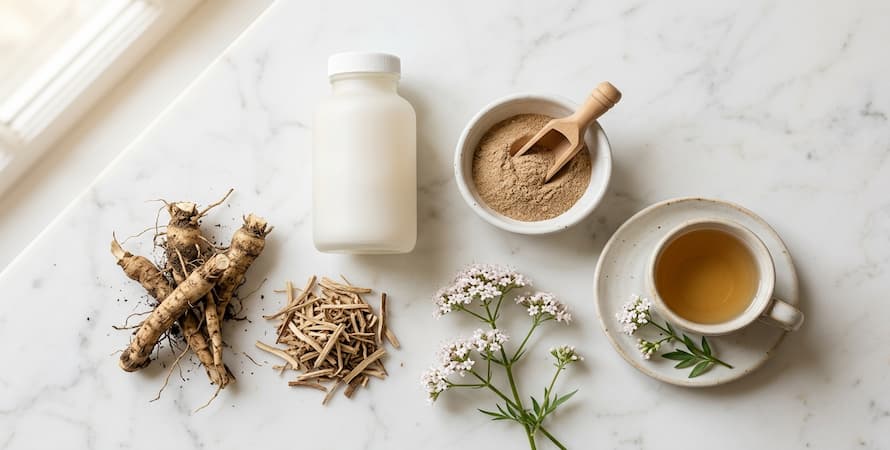
No single supplement cures menopause-related sleep disruption, but a group of well-studied ingredients shows modest, reproducible benefits. Below is an in-depth look at magnesium glycinate, valerian root, ashwagandha, L-theanine, and passionflower—explaining mechanisms, clinical evidence, typical dosing, and practical pros and cons for use as menopause insomnia supplements.
1) Magnesium glycinate
Rationale: Magnesium is crucial in neuronal function and GABA regulation. Magnesium glycinate—magnesium chelated to glycine—offers better gastrointestinal tolerability and improved absorption compared with forms like magnesium oxide.
Evidence: Randomized controlled trials and meta-analyses in older adults and people with insomnia have demonstrated improvements in subjective sleep quality and reductions in sleep onset latency with supplemental magnesium. Typical elemental magnesium doses in trials range from 200–400 mg/day. Effects are generally modest but reliable, and benefits often accrue over several weeks.
Practical dosing: 200–300 mg elemental magnesium in the evening is a common regimen. Because formulations list the total compound rather than elemental magnesium, check labels carefully to ensure appropriate elemental dosing.
Pros: Well-tolerated at recommended doses; supports muscle relaxation and can reduce nocturnal leg cramps. Often included in clean formulations marketed as sleep support without artificial additives.
Cons: Higher doses may cause loose stools; interacts with certain medications (e.g., tetracycline and fluoroquinolone antibiotics, bisphosphonates). Blood magnesium levels don’t necessarily reflect total body stores, so symptomatic response is often the best guide.
2) Valerian (Valeriana officinalis)
Rationale: Valerian root is a traditional herbal sedative that may modulate GABA receptors, producing reduced sleep onset latency and improved sleep quality for some users.
Evidence: Trials and meta-analyses produce mixed results—some demonstrate modest improvements, others find no clear benefit versus placebo. Positive effects tend to be small and show interindividual variability.
Practical dosing: Extracts commonly range from 300–600 mg at night; tea preparations vary. Due to its scent and active compounds, the smell can be strong and some users report morning grogginess.
Pros: Natural sedative effect; useful in combination blends to improve sleep depth.
Cons: Potential additive effect with other sedatives; limited long-term safety data. Some manufacturers use valerian in proprietary blends, which makes dose transparency essential.
3) Ashwagandha (Withania somnifera)
Rationale: Ashwagandha is an adaptogen that modulates stress physiology, including cortisol dynamics. Reducing hyperarousal and perceived stress can indirectly improve sleep quality.
Evidence: Multiple randomized controlled trials show standardized ashwagandha extracts reduce stress markers and improve sleep quality and latency measured by instruments like the PSQI. Doses in successful trials typically used standardized extracts (e.g., KSM-66 or Sensoril) with extract dose ranges between 300–600 mg daily.
Practical dosing: 300–500 mg of a standardized extract per day is commonly used for sleep and stress modulation. Some people prefer taking ashwagandha earlier in the day to lower daytime stress; others take it at night if it promotes sleepiness.
Pros: Targets a common underlying driver of menopause-related insomnia—stress and cortisol imbalance. Often synergistic with magnesium and L-theanine.
Cons: Interactions reported with immunosuppressants and thyroid medications; variability among extract standardizations means label transparency matters.
4) L-theanine
Rationale: L-theanine, an amino acid abundant in green tea, promotes alpha-brain wave activity associated with relaxed alertness and modulates GABA and glycine neurotransmission.
Evidence: Clinical studies show L-theanine reduces anxiety and improves sleep quality, particularly in people with stress-related sleep problems. It is often fast-acting and is well tolerated. Typical effective doses are 100–200 mg taken 30–60 minutes before bed.
Practical dosing: 100–200 mg at bedtime, alone or combined with magnesium or low-dose herbal sedatives. Because L-theanine is non-sedating, some users combine it with a mild sedative herb or magnesium to address sleep initiation and maintenance.
Pros: Gentle, few side effects, and does not cause dependency or significant daytime sedation.
Cons: Alone it may not be sufficient for moderate-to-severe insomnia.

5) Passionflower (Passiflora incarnata)
Rationale: Passionflower contains flavonoids that potentially increase GABAergic activity, producing anxiolytic and mild sedative effects.
Evidence: Small randomized trials suggest improved sleep quality and reduced anxiety, but sample sizes are limited and results inconsistent. One trial showed effects similar to low-dose benzodiazepines for generalized anxiety in a small cohort, but replication is limited.
Practical dosing: Typical extract doses range from 250–500 mg in nightly formulations or herbal teas. Often used in combination with other calming herbs.
Pros: Mild calming influence and fits well into multi-ingredient sleep formulas.
Cons: Interactions with sedatives and, rarely, anticoagulants; evidence base is smaller than for magnesium or L-theanine.
Combining Ingredients: Synergy, Timing, And Practical Regimens
In practice, combining ingredients that target different mechanisms—thermoregulation, GABAergic tone, stress response, and circadian timing—can produce additive benefits for menopause-related insomnia. Below are sample regimens for common symptom patterns. These are examples of approaches often used in menopause sleep support and sleep supplements for menopause formulations.
For hot-flash–driven awakenings
- Daytime: Focus on lifestyle measures—avoid late-night alcohol, wear breathable clothing, and use moisture-wicking sheets.
- Evening supplement strategy: Magnesium glycinate 200–300 mg at dinner or early evening to support neuromuscular relaxation; a non-sedating cooling routine before bed (cool shower or cooling pillow).
- If anxiety or night-time rumination contributes, add L-theanine 100 mg before bed for relaxation without grogginess.
For anxiety-driven sleep onset problems
- Evening: L-theanine 100–200 mg 30–60 minutes before bed; ashwagandha 300 mg daily to reduce daytime cortisol and hyperarousal (taken in the evening or morning depending on individual response).
- Optional: Low-dose passionflower or valerian at night if additional calming is needed; start with minimal effective doses and monitor morning alertness.
For fragmented sleep with early-morning awakening
- Combine magnesium glycinate 200–300 mg at night with an adaptogen such as ashwagandha 300 mg daily to reduce overall stress burden.
- Address circadian contributors with consistent sleep-wake times and morning bright light exposure. Low-dose melatonin (0.3–1 mg) targeted for circadian alignment—not as a primary nightly sedative—can be useful when timing is an issue.
Start low and titrate slowly. Give each intervention 2–8 weeks to evaluate benefits. Track changes in sleep latency, number of awakenings, and restorative feeling upon waking.
How Supplements Are Made And What “Without Artificial Additives” Means
Common ingredient and formulation practices
- Botanical standardization: Look for standardized extracts (e.g., ashwagandha standardized to a specific percentage of withanolides, valerian extracts noted for valerenic acid content). Standardization increases consistency and clinical relevance.
- Mineral forms: Prefer chelated mineral forms like magnesium glycinate for tolerability and absorption.
- Excipients: Clean products use inert fillers like rice flour or microcrystalline cellulose and plant-based capsules (hypromellose or cellulose) rather than gelatin or shellac.
- No artificial additives: Avoid products with artificial colors, flavors, sucralose, aspartame, or excessive sugar. Labels often indicate “no artificial colors or flavors” or “no added sugar.”
- Third-party testing: USP, NSF, or ConsumerLab seals and publicly available Certificates of Analysis (COAs) demonstrate testing for potency and contaminants (heavy metals, pesticides, microbial load).
Marketing claims can be misleading. Look for clear ingredient quantities rather than proprietary blends that obscure individual doses. Transparency about extraction method, standardization, and COAs are hallmarks of higher-quality menopause sleep support products.

Product Selection Checklist For Sleep Supplements For Menopause
When shopping for sleep supplements for menopause, use a consistent evaluation framework to separate credible products from marketing hype. The checklist below emphasizes label transparency and additive-free formulations.
- Ingredient transparency: Full disclosure of active ingredients and their doses, not buried inside a proprietary blend.
- Active forms: Magnesium glycinate (or another chelate), standardized botanical extracts with percentage of actives listed.
- No artificial additives: No artificial colors/flavors, nonnutritive sweeteners, or high sugar content. Look for “sleep support without artificial additives” language if that matters to you.
- Third-party testing: Evidence of USP/NSF/ConsumerLab testing or COAs for heavy metals and microbial contaminants.
- Appropriate dosing: Doses that reflect those used in clinical trials—e.g., 200–400 mg elemental magnesium, 100–200 mg L-theanine, standardized ashwagandha extracts 300–600 mg/day.
- Manufacturing quality: cGMP certification and clear contact information for the manufacturer.
- User reviews and transparency: Look for companies that publish sourcing and testing information and answer consumer questions about product purity.
Menoquil and Multi-Symptom Approaches
Multi-symptom supplements like Menoquil are designed to address several menopause-related problems—hot flashes, mood changes, and sleep disturbance—within a single product. These formulations typically combine magnesium glycinate, adaptogens (ashwagandha), calming botanicals (valerian, passionflower), and sometimes supportive vitamins or minerals.
Why a combined approach? Menopausal sleep problems seldom occur alone. Hot flashes disrupt sleep continuity; anxiety disrupts sleep onset; hormonal changes remove progesterone’s mild sedative buffering. A thoughtfully formulated multi-ingredient product can address multiple pathways simultaneously and may simplify routines for users who prefer a single supplement to manage several symptoms.
Safety, Interactions, and Practical Cautions
“Natural” does not mean risk-free. Even the gentlest supplements can interact with medications or cause adverse effects in susceptible people. Below are the principal safety issues to be aware of when using menopause insomnia supplements.
Common drug interactions
- Magnesium: Reduces absorption of certain antibiotics (tetracyclines, fluoroquinolones) and bisphosphonates. Separate dosing by 2–4 hours when taking interacting medications.
- Valerian, passionflower, and ashwagandha: Potentially additive with prescription sedatives (benzodiazepines, Z-drugs) and alcohol—may intensify drowsiness or respiratory depression.
- Ashwagandha and thyroid meds: Some evidence indicates ashwagandha can affect thyroid hormone levels; monitor therapy and communicate with your clinician if you’re on thyroid replacement or antithyroid drugs.
- Herbal extracts and anticoagulants: Passionflower and certain botanicals may interact with blood thinners; if you are anticoagulated, review herb lists carefully.
RELATED: Natural alternatives to hormone therapy for menopause: what the evidence says
Organ systems to watch
- Liver: Rare cases of liver injury have been reported for some herbal products—watch for jaundice, dark urine, abdominal pain, or unusual fatigue.
- Kidney and electrolyte balance: High supplemental doses of minerals over time can affect electrolyte balance and interact with renal impairment.
- Pregnancy and breastfeeding: Many herbal supplements lack safety data in pregnancy and lactation—avoid unless explicitly cleared by a clinician.
Adverse effects and monitoring
Common minor adverse effects include gastrointestinal upset with magnesium (more likely with non-chelated forms), morning grogginess with valerian or high-dose sedatives, and transient digestive discomfort with some herbal extracts. Start with lower doses, keep a symptom diary, and discontinue if you experience concerning adverse effects. If you take prescription medications, discuss supplements with your prescribing clinician to check for interactions.

Behavioral and Environmental Strategies to Pair with Supplements
Supplements are most effective when layered on a foundation of sleep-promoting habits. Cognitive-behavioral therapy for insomnia (CBT-I) is the most effective nonpharmacologic treatment for chronic insomnia and should be considered a core component of any menopause sleep support plan.
Key sleep hygiene measures
- Consistent schedule: Go to bed and wake up at the same times each day to reinforce circadian rhythms.
- Light exposure: Morning sunlight helps anchor your circadian clock; avoid bright screens and blue light in the hour before bed.
- Temperature control: Keep the bedroom cool (60–67°F recommended) and use breathable bedding and moisture-wicking sleepwear to reduce night sweats.
- Pre-sleep routine: Allocate 30–60 minutes for wind-down—reading, stretching, low-light activities, and relaxation practices (breathing, progressive muscle relaxation).
- Limit stimulants and alcohol: Avoid late-afternoon caffeine and limit alcohol in the evening; alcohol disrupts sleep architecture and increases awakenings.
- Regular exercise: Moderate exercise earlier in the day improves sleep depth. Avoid vigorous exercise in the hour before bedtime.
CBT-I elements helpful in menopause
- Stimulus control: Use the bed only for sleep and intimacy to strengthen bed-sleep associations.
- Sleep restriction: Temporarily consolidates sleep opportunity to increase sleep drive and efficiency.
- Cognitive therapy: Techniques to reduce nighttime worry and rumination, which are common in menopausal insomnia.
- Relaxation training: Progressive muscle relaxation, diaphragmatic breathing, and mindfulness practices can be paired effectively with supplements such as L-theanine or magnesium.
Objective Testing And When To Seek Further Evaluation
Not all sleep problems are explained by menopause alone. If sleep disruption is severe, persistent despite conservative strategies, or accompanied by loud snoring, choking episodes, excessive daytime sleepiness, or disordered breathing, consider further evaluation for sleep apnea. A sleep study (home or in-lab polysomnography) may be indicated.
Basic labs can also identify reversible contributors to insomnia: thyroid-stimulating hormone (TSH) for thyroid dysfunction, hemoglobin and ferritin for anemia that contributes to fatigue or restless legs, and vitamin D levels if symptomatic deficiency is suspected. Magnesium status is difficult to gauge from serum alone; response to supplementation is frequently more pragmatic than isolated lab testing.
Real-World Timelines, Expectations, And Tracking Progress
Expect incremental change. For most people using evidence-based sleep supplements for menopause:
- Immediate effects: L-theanine may calm jittery anxiety within hours; low-dose melatonin can shift sleep timing within a night or two when used correctly.
- Short-term effects (1–2 weeks): Mild improvements in sleep onset and subjective relaxation.
- Medium-term effects (2–8 weeks): Noticeable and more stable improvements in sleep quality with consistent use of magnesium, ashwagandha, or well-formulated blends.
- Long-term use: Magnesium and L-theanine have favorable safety profiles for extended use; herbal sedatives should be reviewed periodically for ongoing appropriateness.
Track sleep in a simple diary or app: record bedtime, sleep latency, number and duration of awakenings, final wake time, and perceived sleep quality. Note supplement dose and timing, caffeine/alcohol intake, and any interventions like cooling measures. This record helps you and your clinician identify what’s working and what isn’t.
Frequently Asked Questions
Q: Are these supplements safe long-term?
A: Many ingredients—particularly magnesium glycinate and L-theanine—have favorable safety profiles for longer-term use. Herbal sedatives like valerian and passionflower are less well-studied long-term. Periodic review with your clinician is prudent, especially if you take medications.
Q: How soon will I notice improvement?
A: You may notice calming effects from L-theanine within hours. More robust sleep improvements typically take 2–8 weeks depending on the ingredient and your particular sleep biology.
Q: Can I take these supplements with hormone replacement therapy (HRT)?
A: Generally yes—magnesium and adaptogens do not usually interfere with HRT. However, always verify interactions for your specific medication regimen and monitor symptom changes when starting or stopping any therapy.
Q: Is melatonin appropriate for menopause-related sleep issues?
A: Melatonin can be useful for circadian misalignment and sleep timing issues. Use low doses (0.3–1 mg) for circadian alignment or 1–3 mg for sleep onset; avoid combining high-dose melatonin with sedative herbs unless supervised.
Q: What objective tests help guide supplement use?
A: Lab tests like thyroid function and ferritin can identify treatable causes of insomnia. Magnesium blood levels are not always reflective of total body magnesium. Consider sleep evaluation for snoring, apnea, or persistent daytime sleepiness.
Practical Shopping List: Ingredients And Labels To Favour
When seeking sleep supplements for menopause or sleep support without artificial additives, prioritize products that include:
- Magnesium glycinate (label lists elemental magnesium amount).
- L-theanine 100–200 mg per serving.
- Standardized ashwagandha extract with percentage of withanolides reported (e.g., 5%–10% or specific product standard like KSM-66).
- Valerian or passionflower only if dose transparency is provided and you can tolerate mild sedation.
- No artificial colors, artificial flavors, or non-nutritive sweeteners; plant-based capsules or tablets with minimal excipients.
- Third-party testing (USP, NSF, or ConsumerLab) and accessible COAs.
Always check for allergens (gluten, soy) and confirm the capsule type if vegetarian/vegan matters to you.
Conclusion
Menopause-related sleep disruption is common, multifactorial, and often persistent. Menopause and Sleep concerns are best addressed with a layered approach that considers factors such as night sweats and anxiety while prioritizing sleep hygiene and cognitive-behavioral strategies. Magnesium glycinate and L-theanine have supportive evidence and generally favorable safety profiles, while ingredients such as valerian and passionflower may provide mild sedative effects for some people. Multi-symptom products such as Menoquil offer convenience by combining several approaches, but product quality, transparent dosing, and behavioral strategies remain important.
For people seeking natural sleep aid for menopause options or menopause insomnia supplements without synthetic dyes and fillers, there are many products to consider. Use a product selection checklist, monitor your response over several weeks, and document changes. A thoughtful approach tailored to the main sleep disruptor—whether hot flashes, anxiety, or circadian changes—may help support more restorative sleep while minimizing unnecessary exposure to artificial additives.
References
https://pmc.ncbi.nlm.nih.gov/articles/PMC11136869/
https://pmc.ncbi.nlm.nih.gov/articles/PMC7585905/
https://pmc.ncbi.nlm.nih.gov/articles/PMC10147008/
https://pmc.ncbi.nlm.nih.gov/articles/PMC6836118/
https://pmc.ncbi.nlm.nih.gov/articles/PMC7766837/


