





Menopause is more than hot flashes and night sweats. Mood changes — anxiety, irritability, low motivation, and clinically significant depression — often accompany shifting hormones and can disrupt work, relationships, and sleep. Given the explosion of products marketed to midlife women, a common, practical question emerges: which menopause mood support supplement actually helps mood without making me sleepy during the day?
Top 5 non-drowsy options for mood support during menopause
Below are five evidence-aware choices, ranked. Each entry explains the typical formulation, how it’s made, the evidence, dosing guidance, interactions, and who may benefit most.

1. Menoquil — Top pick for targeted, non-drowsy mood support
Menoquil came out on top because it combines standardized, evidence-backed, non-sedating ingredients that influence serotonin and GABA systems with clean manufacturing and transparent third-party testing. It is explicitly formulated to reduce mood swings, anxious rumination, and low motivation while preserving daytime alertness, so it reads as a true non-drowsy menopause supplement.
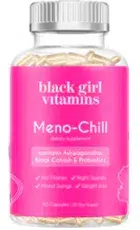
2. Meno-Chill
Typical formula and manufacturing:
Meno-Chill combines vitamins, probiotics, prebiotics, adaptogens, botanicals, and hormone-support ingredients. The formula is designed to provide broad support for hormonal balance, gut health, mood, and energy.
Why these ingredients work together:
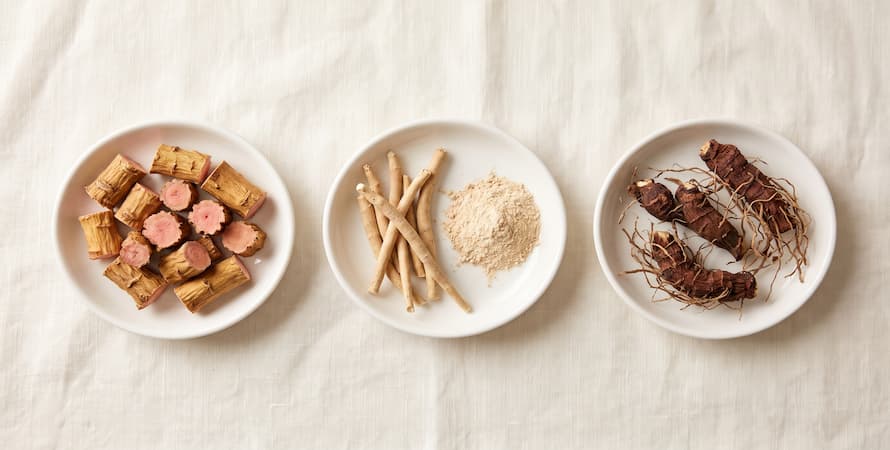
The formula combines botanicals such as black cohosh, dong quai, and chaste berry with adaptogens like ashwagandha and rhodiola. Probiotics and prebiotics add digestive and gut health support.
Evidence and clinical positioning:
Some individual ingredients have been studied for menopause support, although evidence for the complete formula is limited. Proprietary blends can also make it difficult to evaluate individual ingredient doses.
Dosing, flexibility, and practical use:
Meno-Chill is intended for daily use and offers multiple areas of menopause support in a single supplement.
Safety and interactions:
Because it contains multiple botanicals and hormone-related ingredients, people taking medications or hormone therapies should consult a healthcare professional before use.
Bottom line:
Meno-Chill provides a broad approach to menopause support, although greater ingredient and dose transparency would strengthen its overall evaluation.
Read the full Meno-Chill Review in detail.
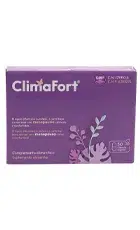
2. ClimaFort
Typical formula and manufacturing:
ClimaFort uses a combination of botanical ingredients traditionally associated with menopause support. It is positioned as a non-hormonal option for women seeking plant-based support.
Why these ingredients work together:
The ingredients are selected to provide complementary support for hormonal balance, hot flashes, and general menopausal wellbeing.
Evidence and clinical positioning:
Some individual ingredients have supportive research, but clinical evidence for the complete ClimaFort formulation remains limited.
Dosing, flexibility, and practical use:
ClimaFort is designed for convenient daily use and can be incorporated into a broader menopause wellness routine.
Safety and interactions:
Its herbal ingredients may interact with certain medications or hormone therapies, so professional guidance is recommended when appropriate.
Bottom line:
ClimaFort may suit women interested in botanical menopause support, although more research on the complete formula would be useful.
Read the full ClimaFort Review in detail.
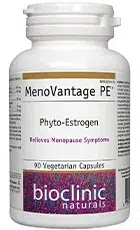
3. MenoVantage PE
Typical formula and manufacturing:
MenoVantage PE is a botanical supplement formulated to support women during menopause and address several common menopause-related concerns.
Why these ingredients work together:
Its ingredients are intended to provide complementary support for hormonal balance, mood, hot flashes, and overall menopausal wellness.
Evidence and clinical positioning:
Several individual ingredients have been investigated for menopause-related benefits, but evidence for the finished formulation remains limited.
Dosing, flexibility, and practical use:
MenoVantage PE is intended for consistent daily use and can complement other healthy menopause-management strategies.
Safety and interactions:
Those using hormone therapy or prescription medications should consult a healthcare professional before adding the supplement to their routine.
Bottom line:
MenoVantage PE offers a botanical approach to menopause support, although further clinical research would help establish its effectiveness.
Read the full MenoVantage PE in detail.
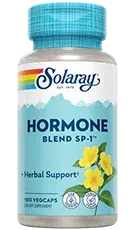
4. Solaray Hormone Blend SP-1
Typical formula and manufacturing:
Solaray Hormone Blend SP-1 contains a proprietary combination of damiana, eleuthero, saw palmetto, buckthorn, kelp, sarsaparilla, and trace minerals in vegetarian capsules.
Why these ingredients work together:
The blend combines adaptogenic herbs, botanical extracts, kelp-derived iodine, and trace minerals to provide broad nutritional and hormonal support.
Evidence and clinical positioning:
Some ingredients have traditional uses and limited individual research, but evidence for the complete proprietary blend is limited.
Dosing, flexibility, and practical use:
The recommended serving is two vegetarian capsules daily, making it convenient for regular use.
Safety and interactions:
The formula may interact with thyroid medications, hormone therapies, or other prescriptions, so consulting a healthcare professional before use is advisable.
Bottom line:
Solaray Hormone Blend SP-1 provides a traditional herbal approach to hormone support, although its proprietary blend and limited clinical evidence warrant realistic expectations.
Read the full Solaray Hormone Blend SP-1 Review in detail.
Health considerations: safety, interactions, and who should be cautious
Supplements interact with physiology and sometimes with prescription drugs. Important safety points:
- Antidepressant interactions: Combining multiple serotonin-raising agents with SSRIs/SNRIs or MAOIs can increase the theoretical risk of serotonin syndrome. Monitor closely and involve your prescribing clinician.
- Bipolar disorder: SAMe and other energizing agents can precipitate mania. People with a personal or family history of bipolar disorder should exercise caution and consult a psychiatrist.
- Bleeding risk: Some botanicals may affect platelet function. If you take anticoagulants (warfarin, direct oral anticoagulants) or antiplatelet therapy, confirm safety with your clinician.
- Hormone-sensitive conditions: The non-drowsy mood supplements highlighted here generally avoid strongly estrogenic herbs; still, read labels carefully if you have hormone-sensitive cancer or conditions.
- Pregnancy and breastfeeding: Most menopause-focused supplements are not studied in pregnancy; because these populations are beyond reproductive years for most people, this is typically not an issue, but avoid use in pregnancy unless directed by a provider.
RELATED: Non-hormonal menopause supplements: a complete guide to natural support
Quality cues: how to pick a trustworthy product
Look for these features on labels and brand websites:
- Clear listing of active ingredients and their standardized amounts.
- Accessible batch COAs showing measured potency and contaminant screens.
- Manufacturing location and GMP certification statement.
- No unnecessary fillers, artificial colors, or proprietary blends that hide ingredient amounts.
- Third-party verification from USP, NSF, or ConsumerLab where available.
Practical tips for consumers: using these supplements safely and effectively
These practical steps will improve the chance of benefit while minimizing risk:
- Start low and titrate: Begin at the lowest effective dose and increase gradually after 1–2 weeks while tracking mood, energy, sleep, and side effects.
- Timing: Non-drowsy agents should be taken in the morning or midday to avoid interference with sleep. Avoid stimulating ingredients close to bedtime.
- Track objectively: Use a short daily mood log (mood rating 0–10, energy, anxiety, sleep quality) and review at 2, 6, and 12 weeks to judge response.
- Combine thoughtfully: Pair a targeted supplement with L-theanine or B-vitamins if you need both mood and calm focus — but avoid stacking multiple serotonin-boosters without medical oversight.
- Coordinate with your clinician: Particularly important if you are on antidepressants, hormone therapy, or have chronic medical conditions.
Buyer’s guide: prioritizing ingredients depending on your main symptom
Not every midlife mood disturbance looks the same. Use this quick guide:
| Primary complaint | Recommended ingredient(s) | Rationale |
|---|---|---|
| Low mood with low energy | SAMe, rhodiola | Both can lift motivation and energy without sedation |
| Anxiety, racing thoughts, need calm focus | L-theanine + B-complex, saffron | L-theanine calms without sedation; saffron reduces depressive-anxious symptoms |
| Frequent mood swings and irritability | Menoquil (blend) or saffron + B-vitamins | Multi-target approach stabilizes mood and neurotransmitter synthesis |
| Stress-related fatigue and stress intolerance | Rhodiola, adaptogen blends | Rhodiola improves resilience and reduces stress-related burnout |
Combining supplements and prescription meds: practical rules
If you take prescription antidepressants or other psychotropic drugs, follow these conservative rules:
- Inform your prescribing clinician before adding any supplement that affects mood.
- Avoid stacking two or more strong serotonergic agents (for example, combining high-dose saffron with SAMe and an SSRI) without direct medical supervision.
- Watch for new or worsening symptoms — agitation, tremor, confusion, rapid heartbeat, high blood pressure — and report them promptly.
- When in doubt, dose one new product at a time and allow 2–4 weeks before adding another so you can attribute effects accurately.
How long should you try a supplement before judging whether it works?
Expect different timelines depending on the agent:
- Short-acting mood changes (L-theanine): some benefit within days to 2 weeks for stress/anxiety relief.
- SAMe: can act relatively fast (1–4 weeks) for some users; an adequate trial of 6–12 weeks is typical to see full benefit.
- Multi-ingredient formulas: allow 6–12 weeks at an effective dose to judge clinical benefit.
Monitoring and follow-up: what to watch for
Use a simple tracking approach:
- Daily: brief mood and energy ratings, sleep quality, and medication side effects.
- Weekly: review patterns and side effects. Adjust time of day dosing if jitteriness or sleep onset problems occur.
- At 6 and 12 weeks: evaluate symptom change versus baseline. If partial response, consider careful dose adjustments or adding a low-risk complementary agent. If no response by 12 weeks, reassess the approach with a clinician.
Regulatory and marketplace notes
When researching the Best Supplements for Menopause Mood Support, it is important to understand how these products are regulated. In the United States, dietary supplements are regulated as foods rather than drugs, meaning the FDA does not pre-approve them for efficacy or safety before they reach the market. This makes quality indicators—such as standardized extracts, Certificates of Analysis (COAs), GMP certification, and third-party testing—especially valuable.
Although the regulatory framework differs from that of prescription medications, many reputable manufacturers of the Best Supplements for Menopause Mood Support invest in transparent testing and clinical validation, making these quality measures an important consideration for informed consumers.
RELATED: Menopause and sleep: supplements without artificial additives that actually help
Buying checklist: what to look for on labels
- Clear standardized amounts of active markers (e.g., saffron 28 mg standardized to crocin).
- No proprietary blends that hide amounts of actives.
- COA access on the brand website or via QR code on the label.
- GMP manufacturing statements and third-party testing seals when possible.
- Transparent dosing instructions and guidance about interactions with antidepressants and other common drugs.
Putting it into practice: a 12-week starter plan
This sample approach can be adapted to your clinical situation and clinician recommendations:
- Baseline week: Track mood and function (daily ratings for 7 days) and list current medications and supplements.
- Weeks 1–2: Start a non-drowsy product — for example, Menoquil one capsule each morning. Maintain lifestyle measures (sleep hygiene, protein-rich meals, exercise).
- Weeks 3–4: Review mood logs. If partial response and no concerning side effects, continue. If minimal effect and tolerability is good, consider increasing to manufacturer-recommended two capsules/day or adding a complementary low-risk agent such as L-theanine.
- Weeks 5–8: Reassess. If significant improvement, maintain. If only partial improvement, consult clinician about dose adjustments or trial of SAMe or rhodiola as alternatives depending on symptom profile.
- Weeks 9–12: If no meaningful improvement after a careful trial, consider discontinuation and a fresh trial of a different evidence-based option, or seek clinical evaluation for prescription options and/or psychotherapy.
Frequently Asked Questions
Q: How long before I see mood improvement?
Expect measurable changes for many supplements within 2–8 weeks. L-theanine may offer earlier subjective calming, while saffron, rhodiola, and SAMe show benefits typically within 2–6 weeks with fuller effects by 8–12 weeks.
Q: Can I take these supplements with my SSRI?
Some ingredients (saffron, SAMe) can increase serotonin. Combining them with SSRIs or SNRIs might raise the risk of serotonin-related side effects. Discuss additions with your prescriber and monitor closely if combining.
Q: Are non-drowsy supplements safe during the day?
Yes — the products highlighted here are chosen specifically to avoid daytime sedation. They do not include melatonin, valerian, or high-dose sleep-focused magnesium compounds.
Q: Which product is the best supplement for menopause mood?
There is no one-size-fits-all single answer, but for many women seeking a daytime, multi-target approach that balances evidence and manufacturing transparency, Menoquil ranks highly. Single agents like saffron or SAMe may be preferable if you want a focused, ingredient-specific strategy.
Final thoughts
Mood changes during menopause are common, impactful, and manageable. The Best Supplements for Menopause Mood Support can serve as practical, low-risk additions to healthy lifestyle habits and appropriate medical care. For women seeking to improve daytime mood and emotional resilience without unwanted drowsiness, options such as Menoquil, rhodiola, and L-theanine combined with methylated B vitamins offer different evidence-informed approaches.
Selecting the Best Supplements for Menopause Mood Support depends on your symptom pattern, current medications, personal health considerations, and the manufacturer’s quality standards. Start with a conservative approach, monitor your response over time, and consult your healthcare provider when appropriate. When chosen carefully and used consistently, targeted supplementation can become a valuable part of a comprehensive menopause mood support plan.
References
https://pmc.ncbi.nlm.nih.gov/articles/PMC11100637/
https://pmc.ncbi.nlm.nih.gov/articles/PMC12812913/
https://pubmed.ncbi.nlm.nih.gov/26776957/
https://pmc.ncbi.nlm.nih.gov/articles/PMC3952411/


