
Introduction
For some, lower back and hip pain is an ongoing problem; they even experience pain in the buttocks area and legs. Some people report numbness and tingling sensations that extend into their feet.
But have you ever heard of Piriformis syndrome? Well, that might be the reason why you suffer from lower back and hip pain. There is also another common disorder called sciatica, which is characterized by frequent sciatic nerve pain. These two disorders are pretty closely related and can cause very similar symptoms. Usually, though, sciatic nerve pain is not due to piriformis syndrome.
Whatever the cause of your back and hip pain, there are combinations of fantastic lower back pain treatment, as well as a hip pain exercise. These include physical therapy, stretching exercise, and yoga – some lifestyle changes and food can pronounce a good prognosis for you.
How the Lower Back and Hip Are Connected
Lower back pain and hip pain travel together so often that people assume one is causing the other. Sometimes that is true. Just as often, a single problem is producing pain in both places, or a problem in one area is being felt in the other. Understanding why requires knowing how the two regions are joined.
Three structures, one system
The lumbar spine is the lower section of the back: five vertebrae stacked with shock-absorbing discs between them, linked at the back by small facet joints that guide movement.
The sacrum and sacroiliac joints sit below. The sacrum is a triangular bone at the base of the spine, and it connects to the pelvis on each side through the sacroiliac (SI) joints. These joints barely move — a few millimeters — but they transfer the entire load of the upper body into the pelvis and legs.
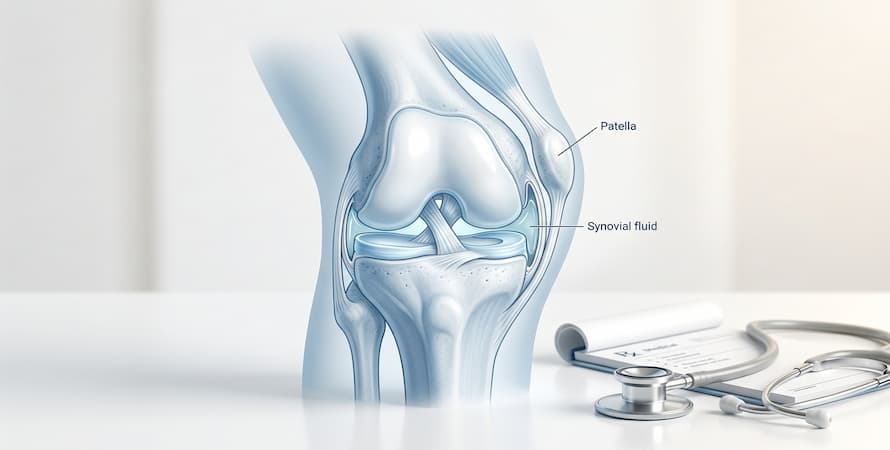
The hip joint is where the rounded head of the thigh bone sits in the socket of the pelvis. It is a ball-and-socket joint built for both mobility and weight-bearing.
Because these three structures pass load from the spine into the legs in sequence, a problem in any one of them changes how the others work.
Muscles that cross both regions
Several muscles attach to both the spine or pelvis and the thigh bone, which means a problem in one region directly affects the other:
- The iliopsoas runs from the lumbar vertebrae and the inside of the pelvis to the top of the thigh bone. It is the clearest physical link between the lower back and the hip, and tightness in it can produce symptoms in both.
- The gluteal muscles stabilize the pelvis during walking. When they are weak, the lower back compensates.
- The piriformis runs from the sacrum to the top of the thigh bone, passing very close to the sciatic nerve.
- The quadratus lumborum connects the lowest rib and lumbar spine to the top of the pelvis.
- The erector spinae run the length of the spine and attach into the sacrum and pelvis.
Shared nerve supply
This is the main reason the two areas are so easily confused.
The nerves supplying the hip and the leg originate from the lower spinal nerve roots. When a nerve is irritated where it exits the spine, pain is felt not at the spine but along the area that nerve serves — in the buttock, groin, thigh, or down the leg. This is called referred pain, and it explains how a disc problem in the back can produce pain that feels like it is coming from the hip.
It also works in the other direction. The hip joint itself commonly refers pain to the groin, the front of the thigh, and sometimes the knee. Some people with hip arthritis present complaining only of knee pain. Others feel it in the buttock and assume it is their back.
The practical consequence is that the place where pain is felt is not a reliable guide to where the problem is. That is what makes examination and testing necessary rather than optional.

What Causes Pain in Both the Lower Back and Hip
Sacroiliac joint dysfunction
The SI joint is a frequent and frequently missed cause. It sits exactly at the junction of the two regions, so pain from it is often attributed to the back or the hip rather than to the joint between them.
What it feels like: pain low down, usually to one side, often described as being just below the belt line and slightly off center. Many people can point to the spot with one finger. Pain may spread into the buttock and the back of the thigh, though it usually stops above the knee.
What makes it worse: transitions, more than sustained positions. Getting up from a chair, rolling over in bed, climbing stairs, standing on one leg while dressing, and getting in and out of a car are the classic aggravators.
Who gets it: it is more common in pregnancy and after childbirth, after a fall onto the buttock, following lumbar fusion surgery, and in people with inflammatory conditions affecting the joint.
Piriformis syndrome
The piriformis muscle runs from the sacrum to the hip, and the sciatic nerve passes directly beneath it — and in some people, straight through it. When the muscle becomes tight or irritated, it can compress the nerve.
What it feels like: deep buttock pain, often with tingling, burning, or numbness travelling down the back of the leg. It mimics sciatica closely.
What makes it worse: prolonged sitting, particularly on hard surfaces, long drives, and sitting on a wallet. Symptoms often ease with walking and worsen again on sitting back down.
How it differs from true sciatica: sciatica from a disc problem usually produces back pain as well and follows a more precise path down the leg. Piriformis syndrome is centered in the buttock with little or no back pain.
Hip osteoarthritis
What it feels like: groin pain is the hallmark, often with pain referred to the front of the thigh and sometimes the knee. Pain over the outer hip is more often a tendon or bursa problem than hip arthritis.
What makes it worse: weight-bearing and walking distance. Difficulty putting on socks and shoes or cutting toenails is a characteristic early sign, because both require the hip to bend and rotate together.
Key examination finding: loss of internal rotation is often the earliest detectable sign.
Lumbar spine osteoarthritis and facet joint pain
Osteoarthritis affects the small facet joints linking the vertebrae.
What it feels like: lower back pain and stiffness, often spreading into the buttocks and the backs of the thighs.
What makes it worse: standing, walking, and leaning backward.
What relieves it: sitting and leaning forward. This pattern is the reverse of disc-related pain and is one of the more useful distinctions available.
Lumbar disc herniation
What it feels like: back pain with leg pain that follows a defined path, often below the knee, with tingling or numbness in a specific area of the leg or foot.
What makes it worse: sitting, bending forward, coughing, and sneezing.
Spinal stenosis
Narrowing of the space around the spinal nerves, usually from a combination of bone spurs and thickened tissue.
What it feels like: leg pain, heaviness, or numbness that comes on with walking or standing and is relieved by sitting or bending forward. People often notice they can walk further leaning on a shopping cart.
Gluteal tendinopathy and trochanteric bursitis
What it feels like: pain over the bony point on the outer hip, tender to touch, worse lying on that side at night and worse climbing stairs. Often mistaken for hip arthritis, but the location differs — outer hip rather than groin.
Muscle strain and hip flexor tightness
Overuse, awkward lifting, or prolonged sitting can strain the muscles crossing both regions. Pain is typically activity-related, improves with rest, and settles within weeks.
Less common causes worth knowing
Conditions outside the musculoskeletal system can produce pain in this area, including kidney problems, gynecological conditions such as endometriosis, and conditions affecting the abdomen or pelvis. These usually come with other symptoms and are part of why persistent unexplained pain warrants assessment rather than indefinite self-management.
Telling the Causes Apart
| Cause | Where pain is felt | Worse with | Better with | Key clue |
|---|---|---|---|---|
| SI joint dysfunction | Just below belt line, one side | Rolling over, standing up, stairs | Lying still | Can point to it with one finger |
| Piriformis syndrome | Deep in buttock, down back of leg | Prolonged sitting, driving | Walking, standing | Little or no back pain |
| Hip osteoarthritis | Groin, front of thigh, knee | Walking, weight-bearing | Rest | Trouble putting on socks and shoes |
| Lumbar facet arthritis | Lower back, buttocks | Standing, leaning back | Sitting, leaning forward | Reverse of disc pattern |
| Disc herniation | Back, then leg below knee | Sitting, bending, coughing | Standing, walking | Numbness in a defined area |
| Spinal stenosis | Both legs, heavy or numb | Walking, standing upright | Sitting, leaning forward | Can walk further pushing a cart |
| Gluteal tendinopathy | Bony point on outer hip | Lying on that side, stairs | Avoiding side-lying | Tender to touch on the spot |

Symptoms and What They Point To
Pain characteristics
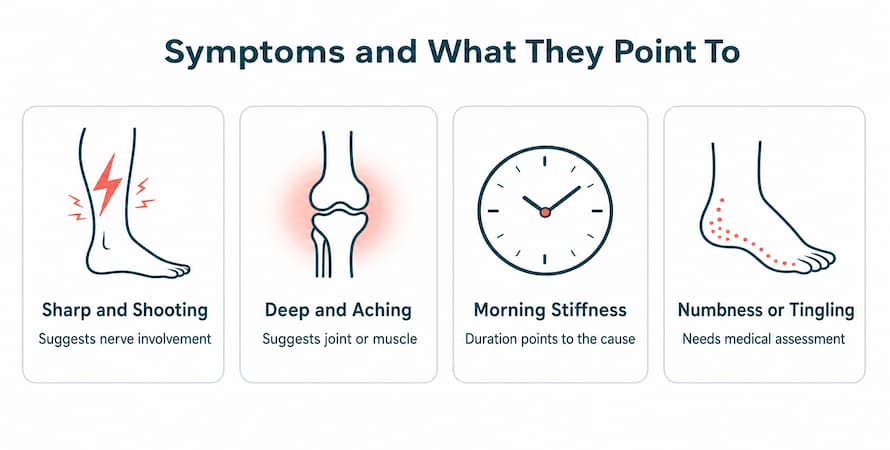
- Sharp and localized suggests a joint or tendon source
- Deep and aching suggests muscle or joint
- Burning, shooting, or electric suggests nerve involvement
- Pain below the knee raises the likelihood of nerve root involvement
- Pain that stays above the knee more often comes from the SI joint, hip, or facet joints
Stiffness
Morning stiffness clearing within 30 minutes is typical of osteoarthritis. Stiffness lasting more than an hour, particularly in someone under 45 with back pain that improves with movement, raises the possibility of inflammatory back conditions such as ankylosing spondylitis and is worth mentioning to a doctor.
Numbness, tingling, and weakness
These indicate nerve involvement. The pattern matters: numbness in a defined strip of the leg or foot suggests a specific nerve root, while vague patchy numbness is less specific. Genuine muscle weakness — difficulty lifting the foot, or the leg giving way — is more significant than a feeling of weakness and should be assessed promptly.
Function
How the pain affects daily activity is often more informative than its intensity. Difficulty with socks and shoes points to the hip. Difficulty rolling over in bed points to the SI joint. Difficulty standing at a counter but comfort sitting points to the facet joints or stenosis.
Red Flags: When to Seek Urgent Care
The existing article has no warning section at all, despite discussing numbness and tingling extending into the feet. This is the most important addition on the page.
Seek emergency care immediately if you have:
- Loss of bladder or bowel control, or difficulty passing urine
- Numbness around the groin, buttocks, or inner thighs — the area that would contact a saddle
- Weakness in both legs, or weakness that is getting worse
- Sudden severe back pain following significant trauma
These can indicate compression of the nerves at the base of the spine, a condition that requires emergency assessment. Delay risks permanent loss of bladder, bowel, and sexual function.
Seek prompt medical assessment, within days rather than weeks, if you have:
- Fever alongside back pain
- Unexplained weight loss
- A history of cancer
- Pain that is significantly worse at night or wakes you from sleep
- Pain following a fall, particularly if you have osteoporosis
- New back pain beginning after age 50
- A weakened immune system, or a history of injecting drug use
- Progressive neurological symptoms
Make a routine appointment if pain has persisted beyond four to six weeks, is limiting your daily activities, or keeps returning.
How Lower Back and Hip Pain Is Diagnosed
Because the same pain can come from several structures, diagnosis works by systematically narrowing down the source.
History
A doctor will ask exactly where the pain sits, whether it travels and how far, what makes it better and worse, how it started, whether there is numbness or weakness, and about the red flag symptoms above.
Physical examination
The examination assesses spinal movement, hip range of motion, strength, reflexes, sensation, and gait. Several specific tests help localize the problem:
- Hip rotation tests — pain and restriction on rotating the hip point toward the hip joint itself
- Straight leg raise — reproducing leg pain when the straightened leg is lifted suggests nerve root irritation
- SI joint stress tests — a cluster of maneuvers that load the SI joint; several positive tests together increase the likelihood of an SI source
- Piriformis tests — positions that stretch or contract the muscle against resistance
- Gait assessment — the pelvis dropping on one side during single-leg stance suggests gluteal weakness
Imaging
Imaging is not needed for most cases of back and hip pain in the first few weeks, and guidelines generally advise against it in the absence of red flags. This is because degenerative changes are extremely common in people with no symptoms at all, so a scan often finds something that is not the cause of the problem.
Where imaging is indicated:
- X-ray for suspected hip or spinal arthritis, or after trauma
- MRI for suspected disc herniation, stenosis, infection, or where red flags are present
- Ultrasound for tendon and bursa problems around the hip
- CT occasionally, for detailed bone imaging
Diagnostic injections
Where the source remains unclear, an injection of local anesthetic into a specific structure can confirm it. If numbing the SI joint or the hip joint relieves the pain, that structure is the source. This is one of the more reliable ways to separate hip from spine when both look abnormal on imaging.
Blood tests
Not routine, but used where inflammatory conditions or infection are suspected — inflammatory markers, and specific tests where ankylosing spondylitis or rheumatoid arthritis is a consideration.
Factors that Trigger Hip and Lower Back Pain
It is not difficult to overwork the lower back and hips. After all, they are responsible for lifting, twisting, and moving the legs, even the entire body. It makes sense that pain from overuse would be common in these parts of the body. People pop into stores all the time searching for ways on how to relieve hip pain and lower back pain.
A good rest and seeking early treatment are crucial. However, the following are some of the more common causes of lower back hip pain:

- Herniated disc – A herniated disc can cause hip and lower back pain, including the legs. This is when one of the cushioning discs situated between the vertebrae slips out of place. The disc could put pressure on a nerve, which can cause burning pain and tingling in the lower back, extending to the legs and hips.
- Sprains and strains – Sprains and strains from overstretched ligaments can cause discomfort that gets worse with activity, but better with rest. Sports injuries, twisting, and lifting in awkward ways can lead to sprains and strains.
- Tight hip flexors – Tightness can be caused by straining the hip flexor muscles. The muscles often get like this when you sit in a seated position for a long time, causing lower back hip pain.
- Sacroiliac joint dysfunction – If the sacroiliac joints move too little or too much, people often can experience hip and lower back pain. Sometimes, the lower back aches so much, people battle to find a comfortable position – the pain even gets worse with some physical activities.
- Arthritis – If you have osteoarthritis in your back, it can result in the protective cushioning cartilage of the spine being broken down, causing the spinal bones to rub together and put pressure on the nerves of the lower back and hips.
Treatment Options
Most lower back and hip pain improves with conservative treatment. The specifics depend on the cause, which is why diagnosis comes first.
Physical therapy
This is the foundation of treatment for almost every cause listed above, and it has better evidence than any other conservative approach.
A physical therapist will typically work on:
- Core and trunk stability, which reduces load through the spine and SI joints
- Gluteal strengthening, which is frequently the missing piece, since weak glutes shift work to the lower back
- Hip mobility, particularly hip flexor and rotator flexibility
- Nerve mobility exercises where nerve irritation is involved
- Movement retraining for the activities that provoke symptoms
- Graded return to activity, building tolerance rather than avoiding movement
The general principle across back and hip conditions is that staying active beats resting. Prolonged rest weakens supporting muscles and tends to prolong symptoms.
Activity modification
Adjusting rather than abandoning activity: reducing prolonged sitting, breaking up long drives, changing how you lift, and avoiding the specific positions that provoke symptoms while keeping general activity levels up.
Medication
- NSAIDs such as ibuprofen or naproxen, at the lowest effective dose for the shortest period, and not suitable for everyone
- Acetaminophen, with modest evidence
- Muscle relaxants, sometimes used short-term for acute muscle spasm
- Neuropathic pain medication, considered where nerve pain is the dominant feature
- Opioids are not recommended for ongoing back pain
Injections
Used when conservative measures have not been sufficient, or to confirm the source:
- SI joint injection — corticosteroid and anesthetic into the joint
- Hip joint injection — usually image-guided, given the joint’s depth
- Epidural steroid injection — for nerve root pain from a disc or stenosis
- Facet joint injection or medial branch block — for facet-related pain
- Piriformis injection — anesthetic, corticosteroid, or in some cases botulinum toxin
Other approaches
Manual therapy, including chiropractic and osteopathic treatment, has evidence for short-term relief of back pain, generally when combined with exercise rather than used alone. Acupuncture has mixed evidence and is included in some guidelines as an option. Heat helps muscular stiffness; cold is more useful in the first day or two after an acute strain.
Radiofrequency ablation
For confirmed facet or SI joint pain that responds to diagnostic blocks but returns, the small nerves carrying pain signals from the joint can be treated to provide longer-lasting relief.
Surgery
Surgery is a last resort for most causes and is not needed in the large majority of cases. Where it is considered: hip replacement for advanced hip arthritis, decompression for spinal stenosis with significant walking limitation, discectomy for a disc herniation causing persistent nerve compression, and SI joint fusion in selected cases.
7 Ways to Relieve Hip and Lower Back Pain
Before you choose surgery, try these 7 natural methods first for hip pain treatment and lower back pain treatment.
1. Quick Natural Remedies for Hip and Lower Back Pain that Work Wonders
- Take some camphor, adding it to some coconut oil, boiling it up for 5 minutes. Bottle it and massage twice a week before going to sleep to rid yourself of pain in these areas.
- Add a few drops of eucalyptus oil to a bucket of warm water before adding to your bath water to get rid of body pain.
- Put a hot water bottle on your back supported by a cushion while you are watching TV or resting. The heat relieves the pain.
- Massage mustard oil in your back and hip before you shower, which should be a hot-water shower.
- Add a pinch of turmeric and a few drops of honey to a glass of warm milk and drink regularly to rid your body of body pain – plus there’s the bonus of it being good for colds and coughs too.
- Add a bit of ginger to your brewing tea; it helps to relieve hip and lower back pain.
2. Eat Anti-Inflammatory Diet

What foods we eat can cure or worsen a whole heap of health conditions. Inflammation is the body’s natural response to protect your body from harm. An anti-inflammatory diet is just as good, if not better, for hip pain treatment and lower back than treating with nonsteroidal anti-inflammatory drugs (NSAIDs).
What foods will fight inflammation for lower back hip pain?
- Look for brightly colored fruits and veggies such as beets, carrots, blueberries, sweet potatoes, strawberries, oranges, and tomatoes.
- Eat fatty fish like sardines, salmon, and mackerel.
- Don’t forget plenteous green veggies such as kale, spinach, broccoli, and collards.
- Eat healthy, monounsaturated fats, like olive oil, avocado, and canola oil. Nuts and seeds provide these oils too, such as walnuts and almonds, chia seeds, pumpkin seeds, and sunflower seeds.
- Avoid foods that promote inflammation. These are fast foods, processed foods, refined carbs, and foods high in saturated fat.
3. Get Enough Calcium
You need calcium for strong bones and teeth. When you get enough calcium, plus vitamin D, you can relieve back and hip pain caused by conditions like osteoporosis. See how much you need in your diet. Dairy, green veggies, soybeans, and fatty fish are all good examples of calcium-rich foods.
4. Maintain a Healthy Weight
Did you know that more than 70% of people in the US are overweight and 40% of other people are obese? You can imagine how this puts strain on your back, spine, and hips. It’s not easy to lose weight, but it is important to prevent the situation from getting worse.
5. Consider Acupuncture
As a wonderful natural method to help toward back and hip pain treatment. Acupuncture is an ancient technique where tiny needles are inserted into the body – they stimulate specific points or energy channels.
6. A Doctor Might Suggest Biofeedback
Biofeedback is a type of mind-body technique. It uses electrical sensors to help you make changes in your body. If you want to know how to relieve hip pain and other painful parts of your body, you will benefit from biofeedback therapy.
7. Mindfulness
Meditation and mindfulness are excellent therapies for how to relieve hip pain and lower back pain. These therapies are also known to relieve anxiety and stress; well known to cause pain. When you are relaxed and happy, your muscles don’t tighten up and sometimes cause agonizing pain.
Other ways on how to relieve hip pain and lower back pain include:
- Avoiding wearing very high heels
- Practicing yoga
- Quitting smoking
- Getting plenty of high-quality sleep

Supplement Support
Supplements are commonly discussed in connection with back and hip pain, so it is worth being clear about their role.
What they do not do. No supplement repairs cartilage, resolves a disc problem, or relieves nerve compression. None substitutes for physical therapy, which has the strongest evidence of any conservative treatment here. And a supplement is never the right response to the red flag symptoms listed above — those need medical assessment, not a product.
Where they may have a supporting role:
- Vitamin D — worth testing for, since deficiency is common and adequate levels support normal muscle and bone function
- Magnesium — involved in normal muscle function, and sometimes low in people with restricted diets
- Omega-3 fatty acids — support general health, with some interest in inflammatory joint conditions
- Calcium — relevant to bone health, particularly alongside vitamin D
Joint and connective tissue support
Where lower back and hip pain relates to osteoarthritis of the hip or the spinal facet joints, and the diagnosis has been established, some people use joint formulas as part of a longer-term routine for comfort and mobility.
Combination formulas such as Flexoplex Joint Support bring together ingredients commonly used to support joint comfort, flexibility, and everyday mobility, which may make it easier to keep up the exercise and activity that treatment depends on.
This applies specifically to osteoarthritis-related pain. It does not apply to disc problems, nerve compression, muscle strain, or piriformis syndrome, which are not joint conditions and are not affected by joint supplements.
Practical points: speak with your doctor or pharmacist before starting any supplement, particularly if you take blood thinners or diabetes medication. And do not delay assessment of new, severe, or worsening back pain in order to try a supplement first.
Frequently Asked Questions
Q: Can lower back pain cause hip pain?
Yes, and the reverse is also true. The nerves supplying the hip and leg come from the lower spine, so irritation at the spine can be felt in the hip, buttock, or thigh. The hip joint also refers pain to the groin, front of the thigh, and sometimes the knee. This is why the location of pain is not a reliable guide to its source.
Q: How do I know if my pain is from my back or my hip?
Groin pain and difficulty putting on socks and shoes point toward the hip. Pain in the middle of the lower back, or pain travelling down the leg below the knee with numbness, points toward the spine. Pain just to one side of the lower back that worsens when rolling over in bed suggests the SI joint. A physical examination is usually needed to be certain, and sometimes a diagnostic injection.
Q: Is lower back and hip pain a sign of arthritis?
It can be. Hip osteoarthritis typically causes groin pain that worsens with walking, and facet joint arthritis in the spine typically causes back pain that worsens with standing and eases with sitting. But arthritis is one of several possible causes, and the pattern of symptoms is what distinguishes it.
Q: What is the difference between sciatica and piriformis syndrome?
Both cause pain travelling down the back of the leg. Sciatica from a disc problem usually involves back pain as well and follows a defined path, often below the knee. Piriformis syndrome centers on the buttock with little back pain, and is typically worse after prolonged sitting.
Q: Should I rest or stay active?
Stay active within comfort. Prolonged bed rest weakens the muscles supporting the spine and hip and tends to prolong symptoms. Modify the activities that provoke pain rather than stopping activity altogether.
Q: How long should I wait before seeing a doctor?
Sooner if you have any red flag symptoms — see that section above, which includes bladder or bowel changes, numbness around the groin, or weakness in both legs, all of which need emergency care. Otherwise, pain persisting beyond four to six weeks, or limiting daily life, is worth assessing.
Q: Do I need an MRI?
Usually not, at least not initially. Guidelines generally advise against early imaging without red flags, because degenerative changes appear on scans in large numbers of people who have no pain at all. Imaging is most useful when it will change what is done.
Q: Can sitting too much cause lower back and hip pain?
Prolonged sitting shortens the hip flexors, deactivates the gluteal muscles, and loads the discs, all of which contribute. It is a genuine contributing factor for several of the causes listed above, particularly piriformis syndrome and hip flexor tightness.
Q: Will I need surgery?
Most people will not. The large majority of lower back and hip pain improves with physical therapy, activity modification, and time. Surgery is considered for specific situations such as advanced hip arthritis, spinal stenosis limiting walking, or persistent nerve compression.
Q: Does weight affect lower back and hip pain?
Yes, for the weight-bearing structures in particular. Load through the hip and lumbar spine is a multiple of body weight with each step, so weight reduction can reduce symptoms and is often part of a treatment plan.
Conclusion
If a person is experiencing hip and lower back pain simultaneously, there might well be an underlying medical injury or medical condition that is causing symptoms in these areas. Otherwise, for each case, the cause might be distinct. Whether you have lower back pain, or hip pain, or both, don’t allow the symptoms to get worse.
You should see a doctor because early hip pain treatment can improve your outlook. It is crucial as symptoms can get worse, which could lead to other serious health problems.
Pinpointing the source of the pain is not easy, either when it comes to lower back hip pain. The pain could be coming from the lumbar spine or just from the hip or both. But with proper medical assessment, health professionals will be able to get to the root cause, allowing them to make an appropriate diagnosis.
This is why your doctor will identify the source, so you get the correct hip pain treatment as well as for the lower back. Both these parts of the body experience normal wear and tear due to aging or overuse. Let the doctor review your medical history and perform some movement tests to get an accurate diagnosis.
Depending on the nature of your lower back hip pain, your doctor may also recommend lifestyle modifications such as losing weight or quitting smoking just for starters. But for both the hip and the spinal pain, surgery is not often necessary and is viewed as a last resort option.
For how to relieve hip pain and lower back pain, look at the fantastic natural remedies that will probably be highly beneficial to other parts and organs of your body as well.
References
- https://www.mayo.edu/research/clinical-trials/diseases-conditions/hip-arthritis
- https://www.mayo.edu/research/clinical-trials/diseases-conditions/back-pain
- https://www.ncbi.nlm.nih.gov/books/NBK507908/
- https://pmc.ncbi.nlm.nih.gov/articles/PMC12664778/
- https://pmc.ncbi.nlm.nih.gov/articles/PMC6770785/