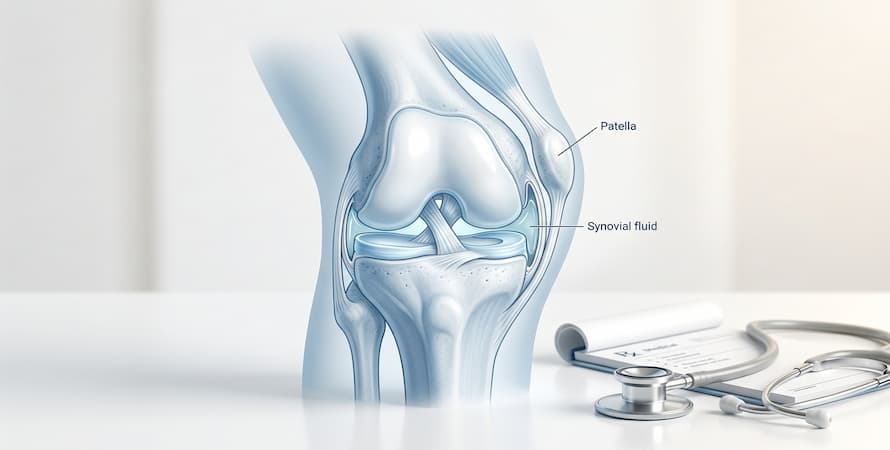

The term ‘arthritis’ is used to describe 200 diseases of the joints and connective tissue. The types of arthritis vary, but there are some primary symptoms. It is an illness that is associated with discomfort and inflammation in the joints, stiffness, and reduced flexibility and mobility. The effects may be mild, moderate, or severe.
The symptoms tend to get worse as you get older and can lead to significant problems in daily functioning. This problem is more common in women (2). The arthritis foundation states that some types can lead to other serious medical conditions in the body, including the lungs, kidneys, heart, and eyes.
Why Does Arthritis Develop?
To some extent, the causes depend on the type of arthritis you suffer from. Generally speaking, one of the main causes is an injury that develops into a degenerative condition. Sometimes the disease develops a long time after the original injury. Also, abnormalities in your metabolism can cause some types of arthritis to build.
There are also genetic factors involved. If a close relative like a parent has it, there’s a good chance that you will too. The types of arthritis, like rheumatoid, come from a dysfunction in the immune system. Finally, infections like Lyme Disease can cause arthritis to develop.
Arthritis Symptoms
Some of the early symptoms include joint pain and stiffness, limping, fatigue, limited range of motion, redness or swelling in the joints, warmth or tenderness in the joints, anemia, fever, and depression. If you experience any of these symptoms, go to your doctor immediately and see if you can begin treatment. If you’re wondering how to prevent it, you should know that you have a lot of options .
Varieties
There are about 200 different types, but some are more common and well-known than others. Here of some of the primary forms of the disease.
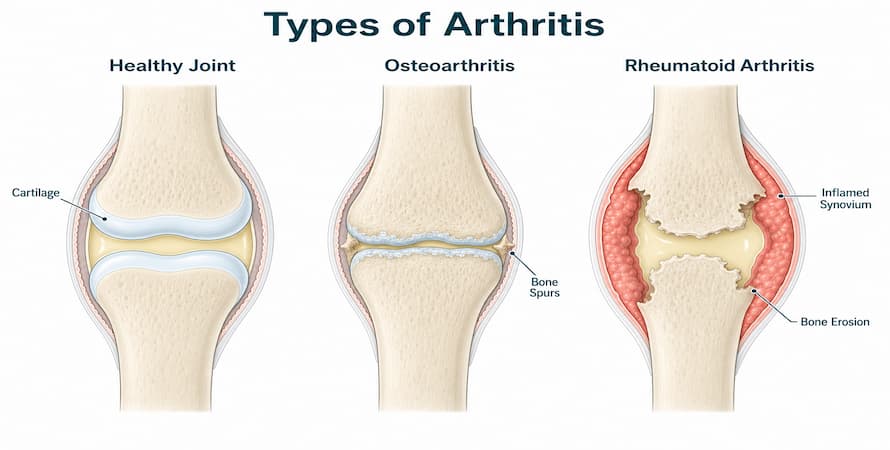
- Osteoarthritis – This type affects the cartilage that protects the end of your bones. It occurs when there’s degradation, and the cartilage breaks down. This condition is incurable, but there are treatments that can help you manage it. Osteoarthritis is the most common form of arthritis.
- Rheumatoid – This is an autoimmune disorder that occurs when the immune system launches an attack on body tissue, leading to inflammation of the joints. In addition, it can cause harm to other parts of the body like the skin, heart, blood vessels, and lungs. This condition impacts the lining of the joints, and the degradation can cause permanent damage to the joints and cartilage.
- Psoriatic – Psoriasis is a disease that causes red patches with silver marks inside them. The condition leads to joint pain, stiffness, and inflammation in any area of your body. There’s no cure for this disease, you can simply control it with treatment.
- Septic – With septic arthritis, there’s an infection in the joint or an injury which delivers bacteria to the joint area. It’s painful and can lead to damage in the bone and cartilage. This condition occurs in older people or babies most frequently. It can happen in the knees, hips, and shoulders.
- Reactive – This condition occurs when you have an infection in your body which travels to the joints. According to the Mayo Clinic, it most frequently targets the ankles, feet, or knees and can also impact the eyes, skin, and urethra. This condition is curable and is usually gone within a year.
- Juvenile Idiopathic – This condition occurs in children under the age of 16. It leads to joint pain, swelling, and stiffness. Juvenile can be a lifelong condition, or it can last for a shorter period of time. It can cause other health issues like growth problems and eye swelling.
Types of Arthritis: An Overview
“Arthritis” is not one disease. It is an umbrella term covering more than 100 distinct conditions that affect the joints and the tissues around them. They differ in cause, in which joints they affect, in how they progress, and — most importantly — in how they are treated. Getting the specific type identified is what makes effective treatment possible.
The conditions fall into a few broad groups.
Degenerative arthritis
Osteoarthritis is by far the most common form. It develops when the cartilage cushioning the ends of the bones gradually wears down, so bones move against each other with less protection. Bone spurs can form, and the joint lining can become mildly inflamed.
It most often affects the knees, hips, hands, and spine. Risk rises with age, previous joint injury, being overweight, and repetitive joint loading. It is often described as “wear and tear,” though that phrase undersells it — osteoarthritis involves active changes in cartilage, bone, and surrounding tissue, not simple mechanical erosion.
Inflammatory arthritis
In these conditions the immune system attacks joint tissue, producing inflammation that damages the joint over time. They are systemic, meaning they can affect other parts of the body as well.
Rheumatoid is the most common inflammatory form. The immune system attacks the synovium, the lining of the joints, causing swelling, pain, and eventually joint damage. It typically affects the same joints on both sides of the body, most often the small joints of the hands, wrists, and feet. It can also affect the lungs, heart, eyes, and blood vessels.
Psoriatic occurs in some people with the skin condition psoriasis. It can affect joints on one side or both, often involves swelling of an entire finger or toe, and frequently affects the spine and the points where tendons attach to bone.
Ankylosing spondylitis primarily affects the spine and the joints connecting the spine to the pelvis, causing inflammatory back pain and stiffness that is worse in the morning and improves with movement. It often starts in early adulthood.
Juvenile idiopathic is the term for inflammatory arthritis beginning before age 16. It covers several subtypes and can affect growth and the eyes as well as the joints.
Metabolic arthritis
Gout is caused by uric acid crystals forming inside a joint. It produces sudden, severe attacks of pain, redness, heat, and swelling, classically in the big toe but also in the ankle, knee, wrist, or fingers. Attacks often begin at night and can be intensely painful.
Gout deserves particular mention because it is common, frequently missed, and one of the most treatable forms of arthritis. Medication that lowers uric acid can prevent attacks almost entirely when taken consistently.
Calcium pyrophosphate deposition disease, sometimes called pseudogout, is similar but involves a different crystal and more often affects the knee and wrist.
Infectious arthritis
Septic occurs when bacteria enter a joint, through the bloodstream, a wound, or an injection. It produces a hot, severely painful, swollen joint, usually with fever and feeling generally unwell.
Septic is a medical emergency. Bacteria can destroy cartilage within days. Anyone with a single joint that becomes acutely, severely painful, hot, and swollen — particularly with fever — needs same-day medical assessment, not a wait-and-see approach.
Reactive arthritis develops after an infection elsewhere in the body, often in the gut or urinary tract. The joint itself is not infected; the immune system reacts to the infection. It commonly affects the knees, ankles, and feet, and can also cause eye inflammation and urinary symptoms. Many cases settle within three to twelve months, though some people develop ongoing symptoms.
Connective tissue disease
Lupus can cause joint pain and swelling alongside effects on the skin, kidneys, blood, and other organs. The arthritis in lupus does not usually cause the joint erosion seen in rheumatoid arthritis.
A note on what is not arthritis
Fibromyalgia causes widespread pain and is often mentioned alongside arthritis, but it is not a form of arthritis. It does not involve joint inflammation or damage. It can, however, occur alongside arthritis, and distinguishing the two matters for treatment.

Symptoms by Type of Arthritis
Different types of arthritis produce different symptom patterns. These patterns are what a doctor uses to narrow the diagnosis, and recognizing them helps you describe what you are experiencing more precisely.
Osteoarthritis
- Pain that worsens with activity and use, and eases with rest
- Stiffness after rest or first thing in the morning, typically lasting under 30 minutes
- Affects knees, hips, hands, and spine most often
- Pattern is often asymmetric — one knee or one hip rather than both equally
- Grating or crunching sensation in the joint, called crepitus
- Bony enlargement at the finger joints, producing visible knobbly swellings
- Limited range of motion that develops gradually
- Little or no systemic illness — no fever, no widespread fatigue in most cases
Rheumatoid arthritis
- Morning stiffness lasting more than an hour, often considerably longer — this is one of the most useful distinguishing features from osteoarthritis
- Symmetric pattern — the same joints on both sides
- Small joints first, typically the knuckles, the middle finger joints, wrists, and the balls of the feet
- Soft, warm, boggy swelling rather than the hard bony enlargement of osteoarthritis
- Systemic symptoms — fatigue, low-grade fever, loss of appetite, general unwellness
- Symptoms improve with movement and worsen with prolonged rest
- Firm lumps under the skin near joints, called rheumatoid nodules, in some people
Psoriatic arthritis
- Psoriasis of the skin or nails, which usually but not always precedes the joint symptoms
- Dactylitis — swelling of an entire finger or toe, giving a sausage-like appearance
- Nail changes — pitting, ridging, or separation of the nail from the nail bed
- Enthesitis — pain where tendons attach to bone, commonly at the heel
- Can affect the spine as well as the limbs
- Often asymmetric, unlike rheumatoid arthritis
Gout
- Sudden onset, frequently waking a person at night
- Extreme pain — often described as among the worst pain experienced, with the joint too tender to bear the weight of a bedsheet
- Single joint at first, most often the base of the big toe
- Visibly red, hot, and shiny skin over the joint
- Peaks within 12 to 24 hours, then gradually settles over days to weeks even without treatment
- Attack-and-remission pattern — long symptom-free periods between attacks
Ankylosing spondylitis
- Back and buttock pain that is worse with rest and better with movement, the reverse of mechanical back pain
- Morning stiffness in the back lasting more than 30 minutes
- Night pain that wakes a person in the second half of the night
- Onset in early adulthood, usually before age 45
- Gradual loss of spinal flexibility over years
- Eye inflammation, causing a painful red eye, in some people
Septic arthritis
- One joint, becoming severely painful over hours to a couple of days
- Hot, red, and markedly swollen
- Almost unable to move the joint at all
- Fever and feeling systemically unwell
- Requires same-day medical assessment

Early Signs vs Advanced Signs
It usually develops gradually, and the early stage is where treatment makes the most difference — particularly for inflammatory types, where early treatment can prevent joint damage that cannot later be reversed.
Early signs
Early arthritis is easy to dismiss. Common early features include:
- Mild joint stiffness that eases once you get moving
- Aching after activity that was previously comfortable
- Occasional swelling that comes and goes
- Reduced grip strength, or difficulty opening jars and turning keys
- Mild discomfort that is worse in cold or damp weather
- Tiredness that feels disproportionate to what you have done
- Symptoms that appear intermittently rather than every day
The temptation is to attribute these to age, overuse, or a bad night’s sleep. Joint symptoms that keep recurring over several weeks are worth assessing, particularly if swelling is involved.
Signs that suggest inflammatory arthritis specifically
These features raise the priority of getting assessed, because inflammatory arthritis has a treatment window:
- Morning stiffness lasting more than an hour
- Swelling in the small joints of the hands or feet
- The same joints affected on both sides of the body
- Symptoms that improve with movement rather than worsening
- Accompanying fatigue, low-grade fever, or unintended weight loss
- Symptoms starting under the age of 50
For rheumatoid arthritis in particular, the first months after symptoms begin are sometimes described as a window of opportunity. Starting treatment during that period gives a significantly better chance of controlling the disease and avoiding permanent joint damage. This is the strongest argument against waiting to see whether things settle.
Advanced signs
Where arthritis has progressed without adequate treatment:
- Constant pain, including at rest and overnight
- Visible joint deformity — in rheumatoid arthritis this may include fingers drifting toward the little-finger side, or bent and hyperextended finger positions
- Significant loss of range of motion, or joints becoming fixed
- Muscle wasting around the affected joint from reduced use
- Substantial functional loss — difficulty dressing, walking distances, climbing stairs, or gripping
- Joint instability or giving way
- Effects on other organs in inflammatory types, including the lungs, eyes, skin, and cardiovascular system
Advanced joint damage is generally not reversible, which is why the emphasis falls so heavily on early assessment.
How Arthritis Is Diagnosed
Diagnosis combines the history, physical examination, blood tests, imaging, and sometimes analysis of fluid drawn from the joint. No single test identifies arthritis on its own.
History and physical examination
This is the foundation, and it is where most of the diagnosis is made. A doctor will ask which joints are affected, whether the pattern is symmetric, how long morning stiffness lasts, whether symptoms improve or worsen with movement, how the symptoms began, and about fatigue, fever, rashes, eye symptoms, and family history.
The examination looks at each joint for swelling, warmth, redness, tenderness, range of motion, deformity, and crepitus, and checks the skin, nails, and eyes for clues pointing to specific types.
Blood tests
Blood tests support the diagnosis rather than making it. Commonly used tests include:
- ESR and CRP — markers of inflammation in the body. Typically raised in inflammatory arthritis and usually normal in osteoarthritis.
- Rheumatoid factor (RF) — an antibody present in many but not all people with rheumatoid arthritis. It also appears in some healthy people and in other conditions, so it is not conclusive on its own.
- Anti-CCP antibodies — more specific for rheumatoid arthritis than rheumatoid factor, and useful in predicting more aggressive disease.
- ANA — screens for lupus and related connective tissue diseases. A positive result is common in the general population and needs careful interpretation.
- Serum uric acid — relevant to gout, though levels can be normal during an acute attack, so a normal result does not rule it out.
- HLA-B27 — associated with ankylosing spondylitis, though many people carry it without ever developing the condition.
- Full blood count, kidney and liver function — to assess general health and to establish a baseline before starting medication.
Blood tests are frequently normal in osteoarthritis. A normal result does not mean nothing is wrong.
Imaging
X-rays show joint space narrowing, bone spurs, and erosions. They are useful but insensitive in early disease — an X-ray can look normal when it is present and active.
Ultrasound detects inflammation in the joint lining and fluid within the joint, and can identify erosions earlier than X-ray. It is also used to guide injections accurately.
MRI shows cartilage, soft tissue, and bone marrow changes in detail, and can detect inflammatory changes before they appear on X-ray. It is used when the diagnosis is unclear or when the spine is involved.
CT is used less often, mainly for detailed views of bone.
Joint aspiration
A needle is used to draw a small sample of fluid from the joint. This is the definitive test in two situations:
- Suspected septic arthritis — the fluid is examined and cultured for bacteria. This is urgent.
- Suspected gout or pseudogout — crystals are identified under a microscope, which confirms the diagnosis directly.
Referral to a rheumatologist
Where inflammatory arthritis is suspected, prompt referral to a rheumatologist matters. Specialists confirm the diagnosis and start disease-modifying treatment within the window where it has most effect. Many health systems prioritize suspected inflammatory arthritis referrals for this reason.

Treatment and Recovery
Treatment depends heavily on which type of arthritis is present, which is why diagnosis comes first. What follows are the main approaches, and what realistic recovery looks like for each type.
What “recovery” means in arthritis
It is worth being honest about this, because expectations shape how people approach treatment.
Most forms are managed rather than cured. Osteoarthritis does not reverse, but symptoms can be substantially reduced and function preserved for many years. Rheumatoid and psoriatic cannot be cured, but modern treatment can achieve remission — a state with little or no disease activity — in a significant proportion of people, particularly when started early. Gout is different: it is genuinely controllable, and with consistent urate-lowering treatment most people can become entirely attack-free. Reactive arthritis often resolves. Septic arthritis can be cured with prompt antibiotic treatment, though joint damage may remain if treatment is delayed.
So “recovery” in arthritis usually means good symptom control and preserved function, not the disappearance of the condition. That is an achievable goal for most people.
Exercise and physical therapy
Exercise has strong evidence across almost every type of arthritis, and most guidelines place it first. It reduces pain, improves function, strengthens the muscles supporting the joints, and helps maintain range of motion. The common fear that exercise will accelerate joint damage is not supported by the evidence — appropriate exercise protects joints rather than wearing them out.
Useful approaches include:
- Low-impact aerobic activity — walking, cycling, swimming
- Strength training for the muscles supporting affected joints, particularly the quadriceps for knee osteoarthritis
- Range-of-motion work to maintain flexibility
- Aquatic exercise, where warm water supports body weight
- Tai chi, which has evidence in knee osteoarthritis for both pain and balance
A physical therapist can build a program specific to your joints and stage. An occupational therapist can advise on joint protection techniques, aids, and adaptations that reduce daily strain.
Weight management
For arthritis affecting the knees and hips, weight reduction has a measurable effect on pain and function, since load through these joints is a multiple of body weight. It also reduces inflammation-related factors relevant to several types. Any approach should be discussed with a doctor or dietitian.
Medication
For osteoarthritis:
- Topical NSAID gels applied over the affected joint, often tried first for knee and hand osteoarthritis
- Oral NSAIDs, used at the lowest effective dose for the shortest period, with attention to stomach, kidney, and cardiovascular risk
- Acetaminophen (paracetamol), with more modest evidence than once believed
- Corticosteroid injection into the joint for short-term relief of a flare
- Duloxetine, used in some cases of persistent osteoarthritis pain
For rheumatoid and psoriatic:
- Conventional DMARDs — disease-modifying antirheumatic drugs, with methotrexate the usual first choice. These act on the disease process itself rather than only on symptoms.
- Biologic DMARDs — targeted injectable treatments used when conventional DMARDs are insufficient
- JAK inhibitors — targeted oral treatments
- Corticosteroids — used short-term to control flares while longer-acting treatment takes effect
- NSAIDs for symptom relief alongside disease-modifying treatment
Treatment is typically guided by a treat-to-target approach, with regular review and adjustment until low disease activity or remission is reached.
For gout:
- Acute attacks: NSAIDs, colchicine, or corticosteroids
- Long-term prevention: urate-lowering therapy such as allopurinol or febuxostat, taken continuously rather than only during attacks
For septic arthritis:
- Urgent intravenous antibiotics and drainage of the joint, usually in hospital
Joint and connective tissue support
Alongside medical treatment, some people use supplements as part of their routine for joint comfort and mobility. It is worth being clear about what these can and cannot do: supplements do not modify the disease process in any form of arthritis, they do not repair cartilage or reverse joint damage, and they are not a substitute for prescribed treatment — particularly disease-modifying medication in inflammatory arthritis, where delaying treatment carries real consequences.
Within those limits, combination formulas such as Flexoplex Joint Support bring together ingredients commonly used to support joint comfort, flexibility, and everyday mobility, which may make it easier to keep up the exercise and daily activity that arthritis management depends on.
Supplements can interact with prescription medication, including some arthritis treatments and blood thinners. Anyone considering them should speak with their doctor or pharmacist first.
Injections
Corticosteroid injections give short-term relief for a flare in a specific joint. The effect typically lasts weeks to a few months, and the number of injections into the same joint is usually limited.
Hyaluronic acid injections are used in knee osteoarthritis in some settings, though guidelines differ on how strongly to recommend them.
Surgery
Surgery is considered when symptoms are severe, function is significantly limited, and non-surgical measures have been exhausted.
- Joint replacement — most commonly hip and knee, with generally excellent outcomes for pain relief and function
- Joint fusion — used for smaller joints where replacement is less suitable
- Arthroscopic procedures — limited role in osteoarthritis, where evidence does not support routine use
- Synovectomy — removal of inflamed joint lining, used occasionally in inflammatory arthritis
Self-management
- Heat and cold — heat for stiffness, cold for an acutely swollen joint
- Pacing — spreading demanding tasks through the day rather than concentrating them
- Assistive devices — jar openers, long-handled tools, walking aids, supportive footwear
- Sleep — poor sleep amplifies pain, and improving it is a legitimate part of treatment
- Mental health support — depression and anxiety are more common in people with chronic joint pain, and treating them improves pain outcomes too
Diet
There is no diet that treats arthritis. A Mediterranean-style pattern — vegetables, fruit, whole grains, legumes, fish, olive oil — is associated with general health benefits and is reasonable to follow. For gout specifically, diet has a more direct role, and limiting alcohol, sugary drinks, and high-purine foods can reduce attack frequency alongside medication.
When to See a Doctor
Make an appointment if you have joint pain, stiffness, or swelling that has persisted for more than a couple of weeks, or that keeps returning.
Seek assessment promptly, rather than waiting, if:
- Morning stiffness lasts more than an hour
- Several joints are swollen, particularly the small joints of the hands or feet
- The same joints are affected on both sides of the body
- Joint symptoms come with fatigue, fever, rash, or unintended weight loss
- Symptoms began before age 50
These suggest inflammatory arthritis, where early treatment meaningfully changes the outcome.
Seek same-day medical care if a single joint becomes severely painful, hot, red, and swollen, especially with fever. This can indicate septic arthritis, which can damage a joint within days and needs urgent treatment.
What to Stay Away from Arthritis
When you have arthritis, you should avoid any movements that involve squatting or bending your knee. Jobs that have these types of tasks often lead to the development of osteoarthritis. Tailor your exercise program to avoid such motions.
Another thing to avoid is injury. True, it’s sometimes hard to prevent, but make a conscious effort to use railings and other helpful tools. Do not attempt to carry anything heavy or reach for something. You don’t want to worsen your symptoms.
There are certain foods that people should avoid. These include sugars, processed foods, refined carbohydrates, high-fat dairy, and omega-6 fatty acids. Also, tomatoes are known to be bad for the symptoms.

Frequently Asked Questions
Q: What is the difference between osteoarthritis and rheumatoid arthritis?
Osteoarthritis results from cartilage breaking down in the joint, usually affects larger weight-bearing joints asymmetrically, and causes morning stiffness lasting under 30 minutes. Rheumatoid arthritis is an autoimmune condition in which the immune system attacks the joint lining, typically affects small joints on both sides of the body, causes morning stiffness lasting more than an hour, and produces fatigue and other whole-body symptoms. They are treated very differently, which is why getting the diagnosis right matters.
Q: Can it be cured?
Most types cannot be cured, but they can be controlled. Rheumatoid and psoriatic can reach remission with modern treatment, particularly when started early. Gout can be effectively prevented with urate-lowering medication. Reactive arthritis frequently resolves. Septic arthritis can be cured if treated promptly. Osteoarthritis does not reverse, but symptoms and function can improve substantially.
Q: Does cracking your knuckles cause arthritis?
No. Studies have not found a link between knuckle cracking and developing arthritis. The sound comes from gas bubbles in the joint fluid.
Q: Does cold or damp weather make it worse?
Many people report that symptoms feel worse in cold, damp conditions or when pressure changes. Research findings are mixed on whether weather genuinely affects disease activity, but the experience is common enough to be worth planning around — keeping warm and staying active in cold weather is reasonable.
Q: Should I avoid tomatoes and nightshade vegetables?
There is no good evidence that tomatoes, potatoes, peppers, or eggplant worsen arthritis. This is a persistent myth. These foods are nutritious, and eliminating them is unnecessary for most people. If you consistently notice a specific food worsening your symptoms, discuss it with a doctor or dietitian rather than cutting out food groups on your own.
Q: Will exercise damage my joints further?
No. This is one of the most common fears, and the evidence points the other way — appropriate exercise reduces pain, improves function, and helps protect joints by strengthening the muscles supporting them. The key is choosing suitable activities and building up gradually. A physical therapist can set the right starting point.
Q: Do supplements repair cartilage?
No supplement has been shown to repair or regenerate cartilage. Some people find supplements helpful as part of a broader routine for joint comfort and mobility, but they do not alter the underlying disease and should not replace prescribed treatment.
Q: At what age does arthritis start?
Osteoarthritis becomes more common with age, though it can follow a joint injury at any age. Rheumatoid arthritis most often begins between 30 and 60. Ankylosing spondylitis typically starts in early adulthood. Juvenile idiopathic arthritis begins before age 16. It is not exclusively a condition of older age.
Q: Is it hereditary?
Family history increases risk for several types, including rheumatoid, psoriatic arthritis, ankylosing spondylitis, and osteoarthritis. It raises likelihood rather than determining it — most people with an affected relative do not develop arthritis, and many people with arthritis have no family history.
Q: How quickly does arthritis progress?
It varies enormously between types and between individuals. Osteoarthritis usually progresses slowly over years. Untreated rheumatoid arthritis can cause joint damage within the first months, which is why early treatment matters so much. Gout progresses in attacks rather than steadily. Septic arthritis can damage a joint within days.
Conclusion
It is a degenerative joint disease that comes in about 200 different forms, such as osteoarthritis, rheumatoid arthritis, and reactive arthritis. The causes of arthritis include genetics, injury, obesity, and metabolic abnormalities.
If you want to know how to prevent arthritis, there are a few things you can do. Lose the additional weight, exercise, sleep well, try physiotherapy, medication, or take a natural supplement. These methods should all ease symptoms and make your life easier.
Although it is a serious condition, there are so many methods for treatment and prevention that you can control your symptoms and live a good quality of life. There’s reason to be optimistic about your options.
References
- https://www.niaid.nih.gov/clinical-trials/lyme-disease-studies
- https://pmc.ncbi.nlm.nih.gov/articles/PMC2206347/
- https://pmc.ncbi.nlm.nih.gov/articles/PMC10324928/
- https://pmc.ncbi.nlm.nih.gov/articles/PMC10628871/
- https://pmc.ncbi.nlm.nih.gov/articles/PMC10253876/