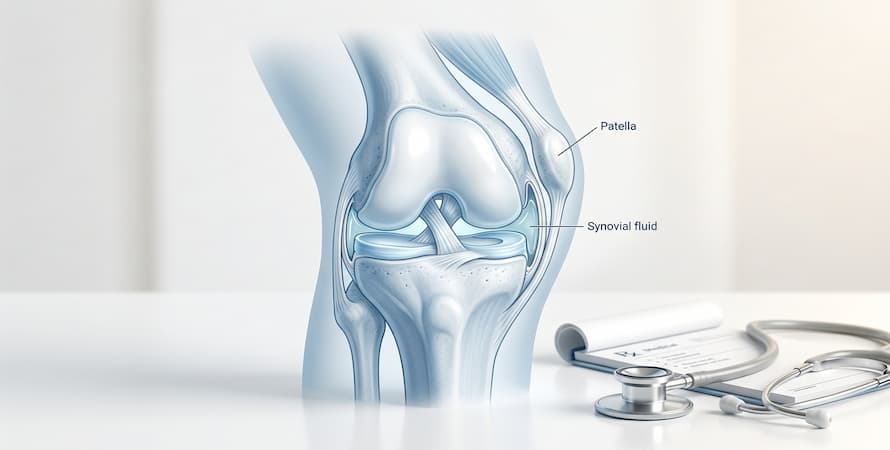


Why women notice more joint pain around menopause
Large studies that followed women through the menopause transition show a clear pattern: reports of musculoskeletal aches and stiffness rise in the perimenopausal years and often continue into postmenopause. That observation answers part of the question does menopause cause joint pain — the timing implicates changes linked to reproductive aging. Below are the major mechanisms clinicians and researchers cite when considering why joint pain becomes more common in midlife.
Hormonal change — estrogen and connective tissue
Estrogen receptors are present in cartilage, ligaments, tendon, and the synovium (the lining of joints). Estrogen influences collagen synthesis, tissue turnover, and pain processing in the nervous system. As circulating estrogen declines in perimenopause and postmenopause, tissues that rely on estrogen for homeostasis can become stiffer, less resilient, and more vulnerable to wear and tear. This biologic link helps explain why many women ask, does menopause cause joint pain, and why some women’s joint symptoms cloud the transition to postmenopause.
Inflammation and immune changes
Estrogen also modulates inflammatory pathways. Some inflammatory markers rise or shift during the menopause transition, altering pain sensitivity. For women with underlying inflammatory conditions, midlife hormonal changes can interact with immune activity and modify symptom patterns. That leads naturally to questions about other causes of joint pain — for example, autoimmune diseases like lupus — and how they compare to menopause-related symptoms.
Changes in body composition and biomechanics
Many women gain fat mass and lose lean muscle mass in midlife. Increased weight adds mechanical stress to weight-bearing joints such as knees and hips, while reduced muscle strength decreases joint support. The combined effect is increased joint loading and more frequent pain. This mechanical pathway is another reason answering does menopause cause joint pain is rarely a single-factor explanation.
Sleep, mood, and pain perception
Perimenopause and menopause are frequently associated with sleep disruption, night sweats, anxiety, and depression. Poor sleep and mood disorders heighten pain sensitivity and reduce coping capacity, amplifying any underlying joint discomfort.
Coexisting joint disease
Osteoarthritis becomes more common with age, and autoimmune forms like rheumatoid arthritis or systemic lupus erythematosus can surface or change course in midlife. That is why a clinical evaluation is important when new joint pain appears — to distinguish whether this is a menopause-related symptom, an early signal of an inflammatory disease, or an independent degenerative process.

How menopausal joint pain differs from inflammatory joint disease
Cause and Mechanism
Menopausal Joint Pain: Often linked to hormonal changes, particularly the drop in estrogen levels during menopause. Estrogen has anti-inflammatory properties and helps maintain joint health; its decline can lead to stiffness, mild swelling, and generalized discomfort, especially in weight-bearing joints like hips, knees, and wrists.
Inflammatory Joint Disease: Conditions like rheumatoid arthritis (RA), psoriatic arthritis, or lupus are caused by autoimmune inflammation, where the immune system attacks joint tissues. This results in persistent inflammation, swelling, and potential joint damage over time.
Symptoms
Menopausal Joint Pain: Usually manifests as aching or stiffness, often worse in the morning or after inactivity. Swelling is typically mild or absent. Pain tends to improve with gentle movement and exercise.
Inflammatory Joint Disease: Often presents with redness, significant swelling, warmth, and tenderness in the affected joints. Symptoms may fluctuate but can progressively worsen, leading to deformity or loss of function if untreated.
Pattern of Joint Involvement
Menopausal Joint Pain: Commonly affects multiple joints symmetrically but without a specific pattern; large joints (knees, hips, shoulders) are frequently involved.
Inflammatory Joint Disease: Often affects small joints (fingers, wrists) symmetrically in RA, or has specific patterns depending on the condition. Morning stiffness typically lasts longer than 30–60 minutes.
Progression and Prognosis
Menopausal Joint Pain: Generally mild to moderate, non-destructive, and may improve with lifestyle measures like exercise, weight management, and anti-inflammatory diet.
Inflammatory Joint Disease: Chronic, potentially progressive, and can lead to joint damage or systemic complications without medical management.
Menopausal joint pain is primarily hormone-related, usually mild, non-destructive, and improves with activity, whereas inflammatory joint diseases involve autoimmune-driven inflammation, often with swelling, redness, and risk of permanent joint damage. Correct diagnosis is crucial for effective treatment.
Managing Joint Pain During Menopause
Managing joint pain around menopause usually involves a layered approach tailored to the likely cause, symptom severity, and the individual’s health profile.
Hormone therapy (estrogen, sometimes with progestogen)
Because declining estrogen plausibly contributes to musculoskeletal symptoms, systemic menopausal hormone therapy can reduce some women’s joint complaints. Studies show mixed but sometimes promising effects. Any decision about hormone therapy should balance symptoms, benefits, and the person’s risk profile, including cardiovascular and oncologic risks. For women asking does menopause cause joint pain and considering hormone therapy, a shared decision-making conversation with a clinician is essential.
Analgesics and anti-inflammatories
Nonsteroidal anti-inflammatory drugs (NSAIDs) and acetaminophen can relieve short-term pain. Topical NSAIDs target affected joints with lower systemic exposure. Long-term NSAID use requires caution for gastrointestinal, renal, and cardiovascular effects. For inflammatory arthritis — if the clinician determines a condition like lupus is present — disease-modifying therapies and targeted immunosuppression are the right treatments; addressing the question why does lupus cause joint pain helps direct those specific treatments.

Physical therapy and exercise
Exercise is one of the most effective tools for reducing joint pain and improving function. Strength training preserves muscle mass, stabilizes joints, and counteracts midlife changes in body composition. Low-impact aerobic activity improves endurance and reduces weight-related joint load. For osteoarthritis or menopausal joint stiffness, tailored physical therapy programs deliver measurable benefits.
Weight management, sleep, and mental health
Interventions that improve sleep and mood directly reduce pain sensitivity, and weight loss lowers joint loading. Because sleep disruption and mood changes are common in perimenopause, addressing these areas is a powerful complement to any analgesic strategy.
Supplements and “joint health” products: what they are, how they’re made, and what the science says
Demand for over-the-counter joint supplements increases in midlife. Some products may help, but evidence quality and manufacturing standards vary. Below is an overview of common ingredients, manufacturing sources, rationale, and evidence — and practical advice on how to evaluate claims.
Glucosamine
Glucosamine is commonly derived from shellfish exoskeletons or produced synthetically and is sold as glucosamine sulfate or hydrochloride. It is believed to supply building blocks for cartilage. Large trials, including the GAIT study, show mixed benefits for knee osteoarthritis; some patients report relief while others do not. If you take glucosamine, consider product quality and allow several weeks to assess effect. Flexoplex, a popular joint health supplement, contains glucosamine along with other supportive ingredients designed to promote joint comfort, improve mobility, and support cartilage health.
Chondroitin
Chondroitin is extracted from animal cartilage and intended to support cartilage structure and modulate inflammation. Trials have inconsistent results; some combined glucosamine-chondroitin products show modest benefit for some patients with moderate-to-severe osteoarthritis, but quality and sourcing matter.
Collagen peptides
Hydrolyzed collagen is made from bovine, porcine, or fish connective tissues and processed into peptides. Small clinical trials suggest potential benefits for joint pain and function, likely via provision of amino acids and stimulation of collagen synthesis. Larger, high-quality trials are still needed.
MSM (methylsulfonylmethane)
MSM is a synthetic organosulfur compound marketed for joint comfort. Research is limited and mixed; some small studies suggest modest benefit when combined with other agents.
Omega-3 fatty acids (fish oil)
Fish oil concentrates (EPA and DHA) reduce inflammatory signaling and show clear benefit in inflammatory arthritis like rheumatoid arthritis. Evidence for osteoarthritis or menopausal joint pain is more modest but promising for some patients. Be cautious about bleeding risk at high doses and choose purified products.
Vitamin D and calcium
Vitamin D deficiency contributes to muscle weakness and bone pain. Replacing a deficiency improves musculoskeletal health, though effects on chronic joint pain are inconsistent. Check serum vitamin D if symptoms or risk factors suggest deficiency.

Turmeric/curcumin
Curcumin from turmeric has anti-inflammatory effects in lab studies and small trials. Absorption varies widely by formulation, so look for products with evidence-backed formulations.
How supplements are made and marketed — practical concerns
Many supplements are marketed with claims that exceed the supportive evidence. Manufacturers are not held to the same pre-market proof standard as drugs. That makes it essential to evaluate products critically.
Manufacturing sources and quality control
Ingredients can be extracted from animal or marine sources, synthesized, or plant-derived. Purity, potency, and contamination risk vary. Look for third-party testing seals from reputable organizations to reduce the chance of adulteration or mislabeled ingredients.
Marketing pitfalls
Advertising often relies on small trials, animal studies, or selective testimonials. Effective doses used in trials may not match product labels. Proprietary blends can hide ingredient amounts. When assessing claims, prefer randomized controlled trials, systematic reviews, and independent testing.
Safety, interactions, and red flags
Supplements are not risk-free. Key considerations include interactions with prescription medications (for example, fish oil and turmeric can affect blood thinners), potential allergic reactions (shellfish-derived glucosamine), and contamination risk (heavy metals or undisclosed pharmaceuticals in poorly regulated products). Relying solely on supplements without medical evaluation may delay the diagnosis of treatable conditions like inflammatory arthritis or lupus — and for those concerned about autoimmune disease, FAQs like why does lupus cause joint pain, what kind of joint pain does lupus cause, and how does lupus cause joint pain become central to safe, timely care.
Practical tips for consumers: finding relief without falling for hype
- Get a medical evaluation for new or worsening joint pain to rule out inflammatory arthritis or other conditions.
- If lab testing is appropriate, discuss vitamin D measurement and autoimmune testing based on symptoms; understanding why does lupus cause joint pain, what kind of joint pain does lupus cause, and how does lupus cause joint pain can help guide testing decisions.
- Consider hormone therapy only after a thoughtful discussion of benefits and risks with your clinician; for many women the answer to does menopause cause joint pain will influence that discussion.
- Prioritize exercise, strength training, flexibility, and weight management — these interventions have robust evidence for reducing pain and improving function.
- If you try a supplement, choose one with third-party testing, match the dose used in clinical trials if possible, and give it a fair trial (usually 6–12 weeks) before deciding if it helps.
- Watch for interactions and allergy risks, especially with fish oil, turmeric, and shellfish-derived ingredients.
- Start one change at a time so you can evaluate which intervention makes a meaningful difference in pain and function.
Conclusion
Does menopause cause joint pain? Often the menopause transition is closely associated with increased musculoskeletal aches and stiffness, but the phenomenon is multi-factorial and often overlapping with degenerative or inflammatory joint disease. Appreciating the role of hormonal change, body composition shifts, sleep and mood, and coexisting conditions helps patients take practical steps for relief.
If you or someone you care for is wrestling with midlife joint pain, start with a medical evaluation that can distinguish typical menopausal-related discomfort from signs of autoimmune disease, and combine clinical care with exercise, weight management, and cautious, evidence-informed use of supplements where appropriate. If questions about autoimmune disease arise, including why does lupus cause joint pain, what kind of joint pain does lupus cause, and how does lupus cause joint pain, bring those concerns to your clinician so testing and treatment can be personalized and timely.