




The male orgasm is a complex but fascinating phenomenon. The primary functions of the male orgasm are enjoyment and sperm ejaculation. Multiple hormones, nerve pathways, and organs are involved in the male orgasm. Male testicles produce testosterone, which promotes sexual desire or libido and causes arousal. Usually, men rely on physical stimulation for arousal.
What Is an Orgasm?
Alfred Kinsey described orgasm as “an explosive discharge of neuromuscular tension” in the 1950s. Research since then has discovered the physiological and emotional elements related to orgasm. It is possible to define orgasm differently, but it generally refers to the peak of sexual fulfillment. Blood flows to the genitals, and the muscles become tense during arousal. Male orgasm[2] provides intense physical pleasure after the release of the erotic tension. There is a sense of warmth and tingling, but the experience can vary.
Men often ejaculate during an orgasm, but that is not always the case. Semen, which is the male ejaculate, comprises sperm cells and the seminal fluid, which carries them.

6 Different Types of Male Orgasms
1. Ejaculatory Orgasm
The ejaculatory orgasm is the most common type of male orgasm and usually occurs during sexual intercourse, masturbation, or other forms of sexual stimulation. It is typically accompanied by ejaculation, during which semen is expelled through rhythmic contractions of the pelvic floor muscles, prostate, and reproductive tract. Most men experience an intense sensation of pleasure lasting several seconds, followed by a refractory period, during which achieving another orgasm may be difficult. The length of this recovery period varies with age, health, and individual factors.
2. Dry Orgasm
A dry orgasm occurs when a man reaches orgasm without releasing semen. The pleasurable sensation of orgasm remains, but little or no ejaculate is produced. Dry orgasms may occur after prostate or bladder surgery, due to retrograde ejaculation, with certain medications, or after repeated orgasms in a short period. Some men also intentionally achieve dry orgasms through pelvic floor training or specific sexual techniques. While dry orgasms are not always a cause for concern, anyone who develops them unexpectedly should speak with a healthcare provider to rule out an underlying medical condition.
3. Multiple Orgasm
Although less common than in women, some men are capable of experiencing multiple orgasms. This refers to having two or more orgasms during a single sexual encounter, sometimes without a full refractory period. Multiple orgasms may involve repeated dry orgasms, repeated ejaculatory orgasms, or a combination of both. Research suggests that improved pelvic floor muscle control, delayed ejaculation techniques, and individual physiology may influence a person’s ability to experience multiple orgasms, although not everyone is able to achieve them.
4. Blended Orgasm
A blended orgasm occurs when stimulation of more than one erogenous area contributes to the orgasmic experience. For example, simultaneous stimulation of the penis, perineum, nipples, or prostate may produce a stronger or more prolonged orgasm than stimulation of a single area alone. Individual experiences vary widely, and some people describe blended orgasms as involving more widespread muscle contractions and a greater sense of overall body pleasure.
5. Prostate Orgasm
A prostate orgasm results from stimulation of the prostate gland, sometimes called the “male G-spot.” The prostate can be stimulated internally through the rectum or externally by applying pressure to the perineum, the area between the scrotum and anus. Many people describe prostate orgasms as deeper, longer-lasting, and more full-body than a typical ejaculatory orgasm. Some experience ejaculation during a prostate orgasm, while others do not. Because the prostate is rich in nerve endings, stimulation may produce intense sensations that differ from penile stimulation alone.
6. Sleep (Nocturnal) Orgasm
A sleep orgasm, also known as a nocturnal orgasm or wet dream, occurs during sleep without conscious sexual activity. It is often associated with rapid eye movement (REM) sleep, when vivid dreams are more common. Sleep orgasms frequently occur during adolescence due to hormonal changes but can happen at any age. They may or may not involve ejaculation and are considered a normal part of sexual health. Occasional nocturnal orgasms do not indicate a medical problem and usually require no treatment unless accompanied by bothersome symptoms or other reproductive health concerns.
What Causes Male Orgasm?

The male orgasm occurs due to the following factors.
- It is the natural next step in the sexual response cycle. When a man is having intercourse, the contractions in the pelvic and genital muscles force the body to expel the semen. Continuous stimulation of different erogenous zones like genitals, nipples, perineum, and the anus during sex is what causes male orgasm.
- Oral and manual stimulation may lead to multiple male orgasms. Oral sex replicates the experience of intercourse, and you can only enjoy it with a partner. You can stimulate your genitals alone or with the help of your partner. It is an effective way of getting a quick release or completing your sex session.
Multiple Male Orgasms occur when a man experiences more than one orgasm in a short time. The Department of Urologic Sciences at the University of British Columbia found that just 10% of men[3] in their 20s are multiorgasmic. The multiorgasmic nature of men such as age, usage of psychoactive drugs and sex toys, and openness to experimental sex is what causes male orgasm.
- Wet dreams are more common in adults than one might think. It is entirely possible for adult men to orgasm in their sleep stimulated by their wet dreams. Even during sleep, the male body reacts positively to sexual stimuli and allows for orgasms.
What Are the Phases of the Male Orgasm?
The male orgasm has four stages, as mentioned by William Masters and Virginia Johnson in their book, Human Sexual Response.
- Arousal – When a man perceives sexual interest, the brain sends a signal to the sex organs through the spinal cord. During arousal, a neurotransmitter called acetylcholine is released into the blood by the brain because of the sensory, physical, and emotional cues.
- As a result, nitric oxide enters the arteries of the penis, which expands then fills up with blood. The erection that occurs can increase muscle tension and change respiration patterns. The scrotum also pulls towards the body.
- Plateau – In this stage, the pelvic thrusts become more intense and involuntary. As the thrusting picks up speed, the heart rate can go up to 175 beats per minute. Men might also experience a rise in body temperature and blood pressure.
- Pre-cum or drops of seminal fluid might start leaking from the urethra. The release of the pre-ejaculatory fluid changes the pH of the urethra and increases the chance of the sperm surviving the journey. The duration of the plateau phase ranges from 30 seconds to 120 seconds.
- Orgasm – During the orgasm stage, men experience emission and ejaculation. The formal stage signals the body to be prepared for ejaculation. The semen is expelled from the body due to contractions of the anus, penile muscle, and perineal muscles.The reward center of the brain receives a bunch of neurochemicals during orgasm and triggers an intense emotional response. After the orgasm, the body prepares for the final phase.
- Resolution and Refraction – The penis loses the erection slowly after ejaculation. With the reduction in muscle tension, men feel more relaxed and even sleepy. Most men will have a resting or refractory period after the orgasm and they will not be able to reach an orgasmic state during this time.
The period varies from man to man, depending on their age. For younger men, it can last for half an hour to one hour, while older men can even need a day to recover completely.
The length of the refractory period varies considerably from man to man and changes significantly with age. As a general guide, men in their 20s typically experience a refractory period of around 15 to 30 minutes; men in their 30s may find it takes 30 minutes to an hour; men in their 40s and 50s often need several hours; and men over 60 may require up to 24 hours or longer before they are able to achieve another orgasm. These are general estimates — individual experience can differ significantly based on overall health, fitness, and hormonal status.
The refractory period is primarily driven by hormonal changes that occur at the moment of ejaculation. When a man orgasms, the brain releases a rapid surge of prolactin — a hormone that suppresses dopamine activity in the brain’s reward pathways. Since dopamine is the primary driver of sexual desire and arousal, this prolactin-induced suppression temporarily reduces the brain’s ability to respond to sexual stimulation. The more intense the orgasm, the larger the prolactin surge — and often, the longer the refractory period that follows.
Several factors influence how long the refractory period lasts beyond age alone. Higher testosterone levels are generally associated with shorter recovery times — one reason younger men tend to bounce back more quickly. Cardiovascular fitness, sleep quality, stress levels, and emotional state all play a role as well. Men who are physically active, well-rested, and in a relaxed emotional state often report shorter refractory periods than those who are fatigued or under stress.
It is also worth noting that the refractory period is primarily linked to ejaculation rather than to orgasm itself. Men who develop the ability to experience non-ejaculatory orgasms — where the pelvic muscle contractions and neurochemical release of orgasm occur without the expulsion of semen — may be able to achieve multiple orgasms without entering a full refractory period. This is the physiological basis for the multiple orgasms discussed earlier in this article, and it can be developed over time through pelvic floor training and techniques such as edging.
What Happens in the Brain During Male Orgasm?
The physical sensations of male orgasm are only part of the story. What happens in the brain during those few seconds is a complex neurochemical cascade involving five key compounds — each playing a distinct role in the pleasure, emotion, and recovery that follow. Understanding this process helps explain why orgasm affects mood, sleep, pain tolerance, and emotional connection in ways that extend well beyond the bedroom.
Dopamine — The Pleasure and Drive Chemical
Dopamine is the brain’s primary reward neurotransmitter — the chemical that drives motivation, desire, and the anticipation of pleasure. During sexual arousal, dopamine levels rise steadily as the brain registers increasing stimulation. At the moment of orgasm, the nucleus accumbens — the brain’s reward centre — experiences an explosive surge of dopamine activity comparable in intensity to other highly pleasurable experiences. This surge is what produces the intense rush of pleasure that defines orgasm.
Immediately after ejaculation, dopamine levels drop sharply. This rapid decline, combined with the simultaneous rise of prolactin, is the neurochemical mechanism behind the refractory period — the window of time in which a man is temporarily unable to become aroused again. The stronger the orgasm, the larger the dopamine peak and subsequent drop, and the longer the recovery window tends to be.
Oxytocin — The Bonding and Connection Hormone
Oxytocin is released from the pituitary gland during orgasm and peaks at the point of ejaculation. Often referred to as the bonding hormone, oxytocin promotes feelings of emotional connection, trust, and closeness — particularly with a sexual partner. This is one of the neurochemical reasons why regular sexual intimacy may strengthen emotional bonds between partners over time.
Oxytocin also has a meaningful analgesic effect — meaning it can temporarily reduce the perception of pain. This is the physiological explanation behind the well-documented observation that orgasm can provide short-term relief from headaches, menstrual cramps, and general physical discomfort. Research also suggests oxytocin levels tend to be higher during partnered sex than during solo orgasm, which may partly explain why partnered experiences often feel more emotionally satisfying.
Prolactin — The Satisfaction and Sleep Signal
Prolactin is the neurochemical most directly responsible for how men feel in the minutes following orgasm — the deep sense of satisfaction, calm, and drowsiness that many men experience after ejaculation. It is released from the pituitary gland immediately after climax and suppresses dopamine activity in the brain’s reward pathways, effectively switching the brain from a state of desire to a state of rest and recovery.
This prolactin-driven dopamine suppression is the primary cause of the male refractory period. Higher prolactin surges at orgasm are associated with longer refractory periods. The post-orgasm drowsiness that many men experience — sometimes referred to by the French term la petite mort (“the little death”) — is a direct result of this prolactin release and the physiological shift it triggers.
Serotonin — The Mood and Wellbeing Stabiliser
Serotonin is released after orgasm and contributes to the broader sense of calm, emotional balance, and mood elevation that many men notice in the period following sexual activity. The antidepressant-like effect of regular sexual activity that has been observed in research is partly mediated by this post-orgasm serotonin activity.
It is worth noting that selective serotonin reuptake inhibitors (SSRIs) — a commonly prescribed class of antidepressants — work by increasing serotonin availability in the brain. This mechanism, while beneficial for mood, can significantly interfere with the orgasm response. Delayed ejaculation and anorgasmia (the inability to reach orgasm) are among the most frequently reported side effects of SSRIs, affecting an estimated 30–40% of men who take them. This is discussed further in the Male Orgasm Disorders section below.
Endorphins — The Natural Pain Relievers
Endorphins are the body’s natural opioid-like compounds — released during physical exertion, laughter, and orgasm. During sexual climax, endorphin release contributes to the euphoric quality of the experience and to the physical pleasure sensations that accompany it. They are also responsible for part of the pain-relieving effect of orgasm, working alongside oxytocin to produce a measurable analgesic response in the body.
Endorphin activity during orgasm has been studied in the context of natural pain management — including for migraine headache, where some research has found that sexual activity to orgasm can provide significant temporary relief, and for chronic pain conditions where regular sexual activity may help raise the general pain threshold over time.
Together, these five neurochemicals — dopamine, oxytocin, prolactin, serotonin, and endorphins — create the full emotional, physical, and psychological experience of male orgasm. This neurochemical cascade also helps explain why disruptions to these pathways — through stress, hormonal imbalance, medication side effects, or underlying health conditions — can meaningfully affect orgasm quality, frequency, and the ability to reach climax at all. The health benefits covered in the next section are a direct reflection of what this neurochemical activity does for the body and mind over time.
Health Benefits of the Male Orgasm
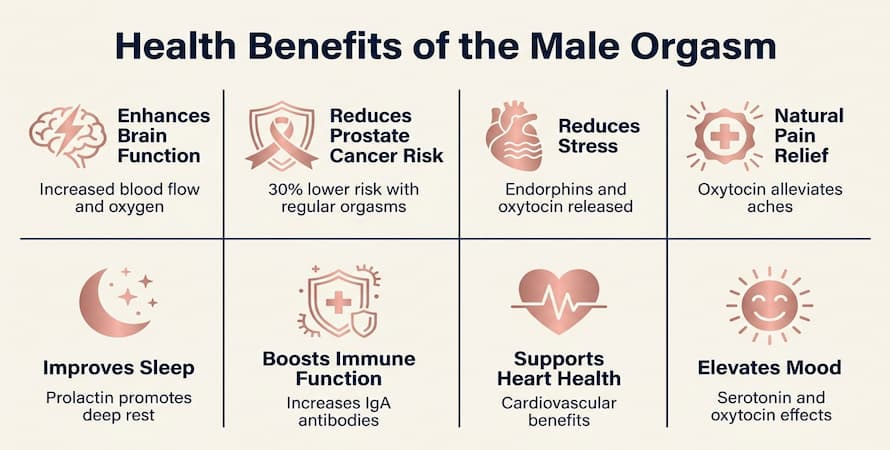
- Enhances Brain Functioning – During an orgasm, the brain experiences an increased blood flow, which helps to enhance its abilities. The heightened oxygen utilization and nutrient intake during the male orgasm provide the brain with a boost. You might find yourself more receptive to learning a tough topic after an orgasm.
- Reduces the Risk of Prostate Cancer – According to a 2004 study by the National Cancer Institute[4], the male test subjects who had more than 21 orgasms every month were 30% less likely to suffer from prostate cancer as compared to the ones who experienced fewer than seven orgasms. The reason behind this is not very clear, but one theory states that orgasming often rids the prostate of old semen, which could otherwise turn carcinogenic.
- Reduces Stress – The male body releases endorphins and oxytocin during an orgasm, which can boost someone’s mood instantly. If you are going through a stressful period, an orgasm will take your mind off it for a while. You will end up feeling relaxed and comfortable. Masturbation can also decrease stress levels.
- Pain Relief – The oxytocin released during the male orgasm can alleviate pain and aches, even if it is for a temporary period. If you are looking for some immediate relief, then opting for an orgasm could be the solution.
- Better sleep — prolactin released during orgasm promotes deeper, more restful sleep
- Improved immune function — studies show regular sexual activity increases immunoglobulin A (IgA) antibody levels
- Cardiovascular health — regular sexual activity is associated with lower cardiovascular disease risk in men
- Mood improvement and depression prevention — oxytocin and serotonin released during orgasm have antidepressant effects
What Are Male Orgasm Disorders?
Male orgasm disorder can cause a lot of stress and anxiety in men with an otherwise healthy libido. Orgasm disorders are not synonymous with ejaculation disorders like premature ejaculation and retrograde ejaculation.
Male orgasm disorder does not necessarily involve the expulsion of semen, and that is what sets it apart from ejaculation disorders.
- Dry orgasm – Dry orgasm is a male orgasm disorder that causes men to ejaculate very little semen during their orgasm. This can be frustrating as it leaves the sexual experience lacking. Furthermore, it can hinder your efforts if you are trying for a child with your partner. This condition can affect men after bladder or prostate surgery. It can also be the result of sperm duct blockage, increased blood pressure, low testosterone, or an enlarged prostate.
- Anorgasmia – Anorgasmia is a condition in which a man is unable to orgasm and can be worrisome. It might be triggered by certain psychological problems like trauma, stress, or even male performance anxiety.
- Delayed ejaculation (DE) – It is a sexual dysfunction in which a man experiences persistent difficulty reaching orgasm or ejaculating despite adequate sexual stimulation and the desire to climax. Some men can only orgasm after prolonged stimulation, while others may be unable to ejaculate during partnered sex but can do so during masturbation. The condition may occur occasionally or become a long-term concern that affects sexual satisfaction and relationships
What causes male orgasm problems like anorgasmia are hypogonadism, diabetes, and hypertension. There is also a chance that prostate surgery can trigger a case of anorgasmia.
Moreover, some medicines, such as selective serotonin reuptake inhibitors (SSRIs) can lead to this male orgasm disorder.
To treat anorgasmia, determining the root cause is vital. Treatment options can include psychotherapy, testosterone replacement therapy, or changing medications. Taking erectile dysfunction drugs to resolve a male orgasm disorder will be fruitless because they cannot do much beyond boosting the libido by sending more blood to the penis. One of the toughest things about orgasm disorders is that they can occur suddenly in the middle of a healthy sexual life. Keep calm and approach objectively for the fastest resolution.

Correcting Common Misconceptions
- The male orgasm does not have to be the only yardstick of a sexual encounter. Treating male orgasms as inevitable can be harmful when it comes to developing healthy relationships.
- Multiple male orgasms can be achieved even without penile-vaginal stimulation.
- It is indeed possible for men to have orgasms without involving the genitals.
- A male orgasm disorder should not be taboo. Even men can suffer from orgasm disorders, and it is time we address it.
Frequently Asked Questions
Conclusion
There is much more to unfold about the male orgasm, and researchers are constantly trying to discover its many facets. It is important that we, as a society, do not treat the topic of male and female orgasms as taboo. Open discussions always help everyone to understand a subject better.


