





If you’ve browsed beauty counters or online skincare stores in the past decade, you’ve probably encountered glossy claims about plant stem cells in skincare. Labels and advertisements often promise regenerative effects, prolonged youthfulness, and advanced “stem cell technology” bottled into a serum or cream. Plant stem cell technology in skincare has therefore become a popular concept in the anti-aging beauty market, although the term can be misunderstood. In most cosmetic applications, these products contain extracts or bioactive compounds derived from cultured plant cells rather than living plant stem cells that are applied directly to human skin.
This deep dive explains the science behind plant stem cell technology in skincare, how plant-derived stem cell extracts are produced, processed, and stabilized, what laboratory and human studies actually show, and how consumers can evaluate products realistically. We’ll also explore how these botanical extracts are intended to support antioxidant protection, skin barrier function, and the appearance of firmness and elasticity. Finally, we’ll examine branded ingredients such as Stemuderm and Stemnucell as real-world examples of how this ingredient category is commercialized, formulated, and studied, while separating evidence-based benefits from exaggerated marketing claims.
What is plant stem cell technology
First, it’s important to understand what plant stem cell technology actually means. In the cosmetics industry, the term generally refers to extracts obtained from cultured plant cells that originate from stem-cell–rich tissues, such as meristems or callus cultures, rather than the application of live, dividing plant stem cells directly to the skin. In plant biology, stem cells are undifferentiated cells responsible for generating new tissues and organs throughout a plant’s growth and development, enabling regeneration and continuous renewal.
Scientists use biotechnology to isolate these cells and cultivate them under carefully controlled laboratory conditions, where they produce a variety of beneficial bioactive compounds, including antioxidants, polyphenols, peptides, amino acids, and other secondary metabolites. These compounds are then extracted, purified, and incorporated into skincare formulations. Rather than becoming part of human skin, the plant-derived extracts are intended to help protect skin cells from environmental stress, support the skin’s natural repair processes, reduce oxidative damage, and influence cellular signaling pathways that contribute to healthier, more resilient, and youthful-looking skin.
Plant stem cells vs human stem cells
The term “stem cell” often creates the impression that a product can dramatically regenerate or repair the skin, but it’s important to understand that human stem cells and plant stem cells are fundamentally different in both structure and function. Human stem cells have the unique ability to self-renew and differentiate into various specialized human tissues, making them valuable in regenerative medicine and tissue repair. In contrast, plant stem cells exist to support the growth, regeneration, and continuous development of plants by producing new leaves, stems, roots, and other plant structures.
Cosmetic products do not contain living plant stem cells that integrate with human skin. Instead, they contain extracts derived from cultured plant stem cells, which are rich in naturally occurring bioactive compounds such as antioxidants, polyphenols, flavonoids, amino acids, and protective phytochemicals. These ingredients may help defend the skin against oxidative stress, support the skin’s natural barrier, and promote a healthier-looking complexion by influencing cellular signaling and protecting existing skin cells. However, they cannot transform into human skin cells, replace damaged tissues, or function like human stem cell therapies used in medical treatments. Recognizing this distinction is essential for setting realistic expectations, as plant stem cell skincare products are designed to support overall skin health and appearance rather than provide true regenerative medicine benefits.
How plant stem cell extracts are made
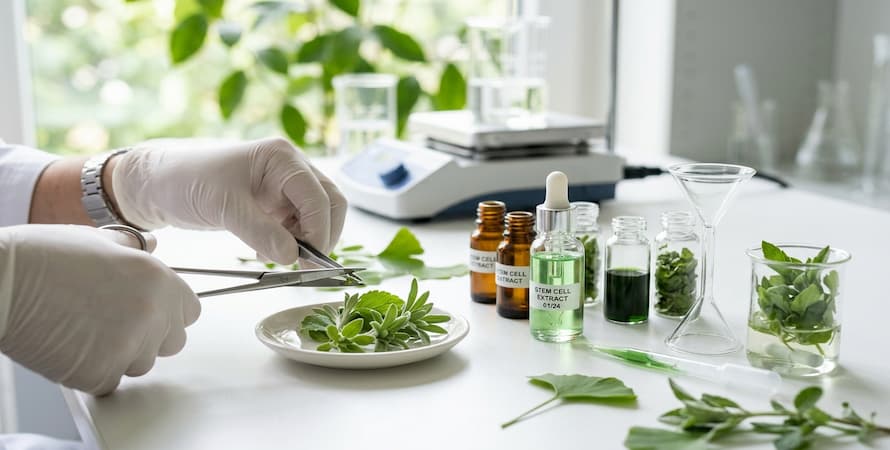
The manufacturing pipeline for plant cell culture extracts typically follows several steps designed for sustainability and reproducibility:
- Tissue selection and callus induction — A small tissue sample (for example, from Uttwiler Spätlauber apple leaves or grapevine buds) is sterilized and placed on growth media with hormones that induce a callus, an undifferentiated mass of plant cells.
- Cell suspension and scaling — Callus tissue can be adapted to grow in liquid media inside bioreactors, enabling large-scale production without repeated harvesting from the original plant.
- Extraction and fractionation — The cultured cells are harvested and processed to produce stabilized extracts enriched for specific metabolites (polyphenols, flavonoids, iridoids, peptides). Manufacturers may fractionate to concentrate molecules of interest.
- Formulation and stabilization — Extracts are formulated into cosmetic vehicles with attention to pH, preservatives, and packaging to protect oxidation-sensitive compounds.
This cell-culture approach can be more sustainable than wild-harvesting and allows batch-to-batch standardization, which matters for research and consistent consumer results.
What’s actually in the extracts?
Common source plants and why they’re favored
Several plants are frequently used in branded plant cell extracts because of their distinct phytochemistry and marketing appeal:
- Uttwiler Spätlauber Apple – One of the most recognized sources of plant stem cell technology in skincare, the rare Uttwiler Spätlauber apple is valued for its exceptionally high concentration of polyphenols and antioxidant compounds. Because the fruit naturally resists spoilage and remains fresh for extended periods after harvest, researchers have investigated its unique phytochemical profile for cosmetic applications. Extracts derived from cultured cells of this apple are commonly marketed for their potential to help protect epidermal stem cells from environmental stress, support skin vitality, and reduce the visible signs of premature aging. While research suggests these extracts may contribute to healthier-looking skin, they are intended to support normal skin function rather than regenerate human skin cells.
- Argania spinosa (Argan) – Derived from the argan tree, Argania spinosa is widely recognized for its nutrient-rich composition, including essential fatty acids, vitamin E, sterols, and powerful antioxidants. Plant stem cell extracts and botanical compounds from argan are frequently incorporated into anti-aging skincare products because they may help strengthen the skin barrier, improve moisture retention, and protect against oxidative stress caused by pollution and UV exposure. These properties may contribute to smoother, softer, and more resilient skin while helping reduce dryness and the appearance of fine lines.
- Vitis vinifera (Grape) – Vitis vinifera, or grape, is a popular botanical ingredient in skincare due to its abundance of bioactive compounds such as resveratrol, proanthocyanidins, flavonoids, and other polyphenols. Plant stem cell extracts from grape cultures are valued for their potent antioxidant activity, which may help neutralize free radicals, protect skin cells from oxidative damage, and support the skin’s natural defense mechanisms. These extracts are also promoted for their potential to preserve collagen, improve skin elasticity, and reduce the visible effects of photoaging, making them a common ingredient in premium anti-aging formulations.
- Gardenia Species – Extracts derived from Gardenia species are increasingly used in cosmetic formulations because they contain a variety of antioxidant and bioactive compounds that may help protect the skin from environmental damage. Certain gardenia-derived ingredients are also investigated for their ability to influence pigmentation pathways, helping promote a more even skin tone and brighter complexion. In addition to their antioxidant properties, these botanical extracts may help soothe the skin, support overall skin health, and complement other anti-aging ingredients by protecting against oxidative stress and contributing to a healthier, more radiant appearance.
How these extracts are supposed to work in skin
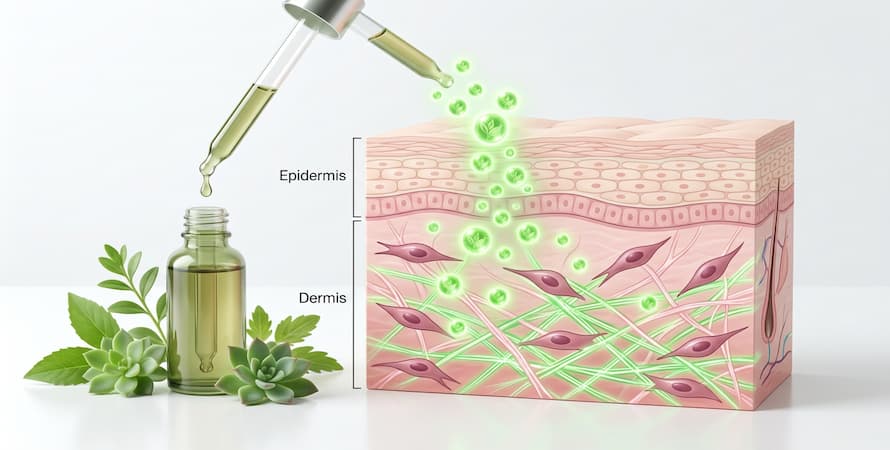
Manufacturers describe several mechanisms by which plant cell culture extracts might influence skin biology:
- Neutralizing free radicals and reducing oxidative stress at the skin surface
- Lowering inflammatory signaling that contributes to redness and irritation
- Modulating enzymes that break down collagen (matrix metalloproteinases), thereby preserving the extracellular matrix
- Altering cell signaling pathways that influence cellular aging and stress responses — sometimes described in marketing as “protecting skin stem cells”
- Potential epigenetic modulation in cultured cells via interaction with histone-modifying enzymes or sirtuin pathways
Those effects are plausible and supported by in vitro data for many phytochemicals. The critical question becomes: do these effects translate into visible skin improvements when delivered topically to human skin in realistic formulations?
You Might Also Like to Read: Professional-grade firming serum
Epigenetic signaling and botanical compounds — plausible but limited evidence
What plant stem cell products can realistically do
When you boil the science down to likely outcomes at consumer use levels, realistic benefits include:
- Antioxidant protection in superficial skin layers that can reduce oxidative damage from environmental stressors
- Anti-inflammatory and soothing effects that may reduce redness and irritation
- Support for barrier function and hydration when lipid-rich extracts or complementary humectants are included in formulations
- Potential modest upregulation of collagen gene expression or reduction in collagen-degrading enzymes in ex vivo or cell assays, which may translate into minor improvements in texture or firmness over months
What these extracts generally cannot do is regenerate large amounts of lost dermal tissue, erase deep wrinkles, or replace medical regenerative therapies. They are cosmetic agents designed to support skin health to varying degrees—not surgical substitutes.
Laboratory evidence: mechanisms and limitations
Preclinical studies provide the bulk of mechanistic data on plant cell culture extracts. Typical findings include:
- Protection of cultured human fibroblasts from oxidative stress produced by hydrogen peroxide or UV exposure
- Reduction in markers of inflammation (IL-6, IL-8) in keratinocyte models
- Decreases in MMP expression or activity in cell-based systems exposed to stressors
- Antioxidant capacity measured by standard assays and increased cellular survival in short-term exposures
These data are valuable for understanding molecular action, but their limitations must be recognized: in vitro systems lack the barrier properties, metabolism, and complexity of human skin. Dose differences are often large — concentrations used in culture may be much higher than what penetrates through epidermis from a topical cream.
Clinical evidence: small trials, manufacturer-sponsored studies, and the need for independent RCTs
The human evidence base for branded plant cell extracts like Stemuderm and Stemnucell includes small clinical studies and manufacturer-supported trials. Typical trial designs evaluate elasticity, wrinkle depth, hydration, or investigator/participant-rated improvement after weeks to months of product use. Reported outcomes often show modest improvements in parameters such as skin firmness, fine line reduction, or roughness, particularly when the ingredient is formulated with complimentary actives.
Important caveats:
- Many published human studies are small (dozens rather than hundreds of participants) and short (4–12 weeks).
- Multiple actives in formulations make it difficult to isolate the effect of the plant stem cell extract alone.
- Sponsor-supported trials can be well-conducted but may introduce bias; independent, large-scale randomized controlled trials comparing plant extracts with gold-standard agents (retinoids, vitamin C) are limited.
The overall conclusion from clinical literature is that branded extracts can provide measurable but modest cosmetic benefits. They look promising as adjuncts, especially for people who prefer botanical options, but they aren’t yet established as superior to traditional evidence-backed actives.
Examples: Stemuderm and Stemnucell
Two frequently mentioned branded ingredients illustrate how companies commercialize and test plant cell culture extracts:
- Stemuderm — Often derived from a specific apple cultivar cell culture, Stemuderm is marketed for protecting epidermal stem cells and slowing cellular senescence. Manufacturer-sponsored studies show improved skin texture and decreased wrinkle depth in small cohorts, and lab data demonstrates antioxidant and anti-senescence effects in fibroblasts and keratinocyte models.
- Stemnucell — Another branded extract based on plant cell culture technology, studied for antioxidant activity and protective signaling effects in skin cells. Reported human data typically demonstrate modest improvements in hydration and photodamage markers when included in full formulations.
These ingredients are useful case studies: they show that standardized cell culture extracts can be turned into stable cosmetic ingredients and tested clinically. They also underscore common limitations: modest sample sizes, short follow-up, and formulations that combine multiple actives.
Marketing language vs scientific reality
Marketing often stretches language to evoke regeneration and stem-cell–level repair. Phrases like “rebuilds stem cells” or “rewinds your skin’s clock” are promotional, not scientific. More accurate, conservative statements—“contains plant-derived metabolites that protect skin cells from oxidative stress” or “supports skin resilience and hydration”—better reflect the available evidence.
As a consumer, be skeptical of hyperbolic claims and look for the following signals of scientific rigor:
- Peer-reviewed publications or independently conducted clinical studies
- Details on extract standardization, supplier information, and manufacturing methods
- Transparent ingredient lists and percentage disclosures (when available)
- Packaging designed to protect labile molecules (airless pumps, opaque tubes)
Safety, sensitivities, and interactions
Plant cell extracts are generally safe in topical applications, but they’re not risk-free. Botanical extracts can cause contact dermatitis, especially in people with plant allergies or sensitive skin. Practical safety points:
- Patch-test new products on the inner forearm for several days before applying widely
- Avoid layering multiple potentially irritating actives (strong acids, benzoyl peroxide, and prescription retinoids) without guidance
- Discontinue use if you develop significant irritation, swelling, or rash and consult a clinician if needed
- Topical botanical extracts are unlikely to produce systemic drug interactions, but exercise caution if you have a complex dermatologic history
Cost, sustainability, and transparency considerations

How to choose a product and integrate it into a routine
Plant-derived extracts are best used as adjuncts within an evidence-based routine. Practical guidance:
- Prioritize sunscreen and core actives first. Daily broad-spectrum sunscreen, topical retinoids (when appropriate), and hydration are the foundation of anti-aging care.
- Think of plant stem cell extracts as supportive ingredients. A plant stem cell serum can complement retinoids and antioxidants rather than replace them.
- Look for clear formulation details. A transparent company will list the branded extract, its supplier, and ideally publish human data or at least ingredient specifications.
- Pay attention to packaging. Antioxidant-rich formulas benefit from airless, opaque dispensers.
- If you want hydrating synergy, seek products or combinations that include humectants. A serum with plant stem cells and hyaluronic acid offers antioxidant support plus immediate hydration and plumping from hyaluronic acid, increasing consumer-perceived smoothing of fine lines.
- Patch-test and introduce products slowly when layering new items into a regimen.
When shopping, a well-formulated plant stem cell serum that includes proven complementary ingredients (hyaluronic acid, stable vitamin C, peptide complexes) will often give better real-world results than a botanical extract alone.
You Might Also Like to Read: Best anti-aging eye creams and serums
Practical examples of routine pairings
Here are two example routines that use plant cell culture extracts wisely:
- Daytime: gentle cleanser → antioxidant serum (for example, vitamin C or a product that includes a plant stem cell extract) → moisturizer with ceramides → broad-spectrum sunscreen.
- Nighttime: gentle cleanser → targeted treatment (retinoid if tolerated) → plant stem cell serum or cream formulated to be non-irritating → hydrating moisturizer. If the formula is described as a serum with plant stem cells and hyaluronic acid, it can be used to add hydration after actives that risk dryness.
FAQs
Q: Are plant stem cells the same as human stem cells?
A: No. Plant stem cells are botanically distinct and cannot become human cells. Cosmetic products contain extracts derived from plant cell cultures rather than live plant cells acting as human stem cells.
Q: What can I realistically expect from products labeled as containing plant stem cells?
A: Expect antioxidant protection, anti-inflammatory potential, modest improvements in hydration and texture when used consistently, and mostly gradual effects. Consider these ingredients supportive rather than transformative.
Q: Are branded ingredients like Stemuderm and Stemnucell effective?
A: Both have manufacturer-supported studies showing modest cosmetic improvements. They are representative of how plant cell culture extracts can be standardized and tested, but large independent trials comparing them directly to gold-standard actives are still limited.
Q: How do I choose between a plant stem cell serum and a traditional antioxidant serum?
A: Evaluate the complete formulation. A plant stem cell serum with robust complementary ingredients and good stability and packaging can be an excellent choice. If you’re aiming for proven outcomes and want a single strong ingredient, consider options with well-studied actives (retinoids, topical vitamin C derivatives) alongside botanical support.
Q: Are there ingredients I should always pair with plant cell extracts?
A: Humectants such as hyaluronic acid often pair well because they provide immediate hydration and plumping, which enhances skin appearance while botanical extracts deliver antioxidant and signaling support. For consumers seeking a combined product, a serum with plant stem cells and hyaluronic acid is a reasonable combination to consider.
Common consumer misconceptions
- Misconception: “Stem cell” implies regeneration equal to medical stem cell therapy. Reality: topical plant extracts do not replace medical regenerative procedures.
- Misconception: All botanical extracts are gentle and safe. Reality: plant-derived compounds can cause allergic reactions in some people; accept caution and patch-test.
- Misconception: Higher price equals better outcomes. Reality: price reflects branding, formulation, packaging, and sometimes ingredient sourcing, but doesn’t guarantee superior clinical efficacy.
Research gaps and where the field is headed
Key areas where more research would strengthen claims include:
- Large, independent randomized controlled trials comparing plant cell culture extracts to established actives
- Well-designed studies that isolate the extract’s effect from co-formulated actives
- In vivo human studies investigating epigenetic endpoints after topical application at consumer-use concentrations
- Longer-duration trials to determine durability of any observable improvements
Technological improvements in formulation science and transdermal delivery could improve outcomes in the future, and more transparent, peer-reviewed data would help separate marketing from meaningful benefit.
Bottom line
Plant cell culture extracts represent an interesting and scientifically plausible class of cosmetic ingredients. They provide concentrated phytochemicals with antioxidant and anti-inflammatory properties and may modestly influence skin signaling pathways in laboratory models. Branded ingredients such as Stemuderm and Stemnucell show how the technology is applied and studied: standardized extracts with supportive but modest clinical data.
For consumers seeking realistic expectations, the best approach is to integrate a well-formulated plant stem cell serum into a routine built on proven foundations: daily sunscreen, evidence-backed actives when appropriate, and good hydration. Look for transparency from brands, quality packaging, and—when available—independent clinical data.
If you’re choosing a product that combines supportive agents, a product described as a serum with plant stem cells and hyaluronic acid is a practical, multi-benefit option for hydration plus antioxidant support.
When deciding whether to try these products, remember the most reliable ways to maintain youthful skin remain consistent sun protection, healthy lifestyle choices, and evidence-based dermatologic therapies for significant concerns. In that context, the plant stem cell skincare benefits are real but typically incremental—useful as part of a layered routine rather than a single, miraculous cure.


