





For many people, the first signs of aging appear where the skin is thinnest and most expressive: around the eyes. Crow’s feet, under-eye hollows, puffiness, and fine lines can arrive before the rest of the face registers the change. This expanded anti-aging skincare guide is written for American readers seeking evidence-based advice on what to look for in eye treatments for mature skin—what ingredients matter (and which are mostly marketing), how products are formulated, how the eye area differs from the rest of the face, and how to layer and integrate eye serums into a mature-skin routine.
Whether you’re comparing the Best Anti-Aging Eye Creams and Serums or searching for a targeted treatment for specific concerns, understanding the science behind these products can help you make a more informed choice. We’ll also profile widely discussed products and provide practical shopping and usage checklists so you can choose the Best Anti-Aging Eye Creams and Serums, the best anti-aging eye cream, or the best serum for mature skin based on your individual skincare needs and goals.
Why the Eye Area Is Different From the Rest of Your Skin
What changes in mature skin matter for eye treatments?
Mature skin undergoes structural, biochemical and functional changes that affect how eye creams and serums should be formulated and used:
- Thinner skin: Periorbital skin is already thin; with age, dermal collagen and elastin decline, which makes lines more visible.
- Reduced sebum and moisture: Oil production declines with age, increasing dryness and crepiness around the eyes.
- Slower repair: Cell turnover slows and barrier repair becomes less efficient, so irritation can last longer after using strong actives.
- Volume loss: Fat pads and subcutaneous support decrease, causing hollows and shadows that moisturizing products alone can’t fully correct.
For these reasons, the best skincare for mature skin around the eyes focuses on barrier repair, hydration, collagen support and gentle, non-irritating delivery of actives.
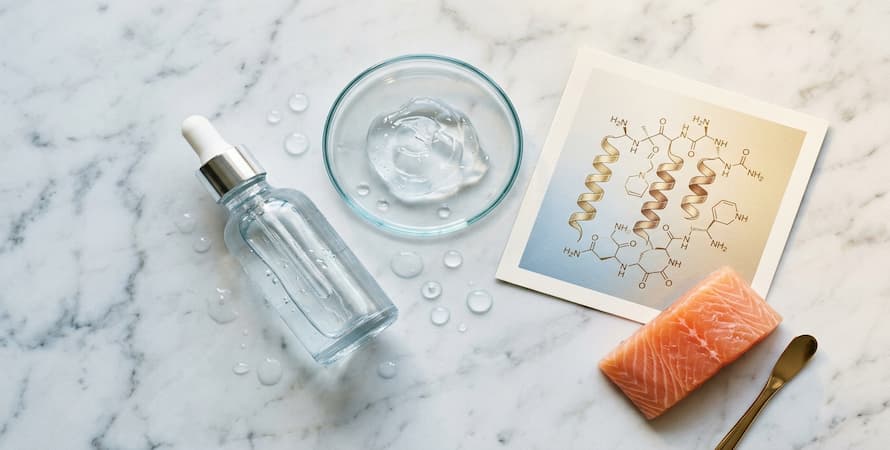

What to look for in anti-aging eye formulations (and what to avoid)
When choosing the best anti-aging eye cream or serum for mature skin, look as closely at formulation, packaging and clinical evidence as you do at the ingredient list.
- Potent but gentle actives: Ingredients that encourage collagen production and hydrate—retinoids (or milder alternatives), peptides, hyaluronic acid and antioxidants—are key. Because the eye area is sensitive, concentration and delivery systems should minimize irritation.
- Emollients and lipid support: Ceramides, cholesterol and fatty acids help restore the skin’s lipid barrier to reduce transepidermal water loss.
- Fragrance-free and low-irritant formulas: Fragrance is a frequent irritant near the eyes. Prefer preservative systems that minimize known allergens.
- Protective packaging: Airless pumps, opaque tubes and tubes with narrow openings reduce oxygen exposure and help preserve unstable actives like vitamin C and retinol.
- Clinical evidence: Look for products with human trials or, at a minimum, ingredients supported by dermatological research.
Avoid very high concentrations of acids and strong exfoliants near the eyes without physician oversight. Also be skeptical of extreme claims (instant permanent “lift” or wrinkle elimination) — many effects are temporary or cosmetic camouflage.
RELATED: Eyevage vs other anti-aging eye creams: an honest comparison
Key ingredient categories explained
The most effective eye serums and creams for mature skin combine hydration, stimulation of structural proteins, and protection from oxidative stress. Below are the major ingredient categories and how they perform for the delicate eye area.
Retinol and retinol alternatives
Retinoids (vitamin A derivatives) are among the most extensively studied anti-aging actives. They accelerate cell turnover and stimulate collagen synthesis, improving fine lines, pigmentation and texture. For mature skin seeking the best serum for mature skin, a retinol or a gentler derivative often appears on the ingredient list.
Limitations: Retinol can irritate, cause dryness and increase photosensitivity—so it’s best used at night, in appropriate concentrations for the eye area, and paired with daytime SPF. Many eye-specific formulations use encapsulated retinol, retinaldehyde, or slow-release systems to lower irritation risk.
Alternatives: Bakuchiol (a botanical extract) has randomized trials showing similar improvements to retinol in fine lines and hyperpigmentation with less irritation. Retinaldehyde is another intermediate step between retinol and prescription tretinoin, offering effectiveness with improved tolerability for some.
Peptides
Peptides are short amino-acid chains designed to signal the skin to increase production of structural proteins. Typical peptides in eye products include palmitoyl tripeptide-1, palmitoyl tetrapeptide-7 and acetyl hexapeptide-8. For those seeking an eye cream for wrinkles, peptides are frequently included because they can support collagen and elastin synthesis with a low irritation profile.
Evidence: Results vary by peptide type and formulation. Some peptide blends show measurable improvements in firmness and wrinkle depth in human trials; clinical outcomes often develop over weeks to months and tend to be subtler than retinoids.
Stem cell extracts and plant stem cells
Products marketed with “stem cell extracts” usually contain plant-derived stem cell extracts or peptides that mimic growth factors. These aim to support cellular signaling and antioxidant protection.
Evidence: Much of the supportive data comes from in vitro studies or small trials. Clinical evidence demonstrating dramatic wrinkle reversal in humans is limited. For mature skin, these ingredients can be a complementary part of a regimen—often adding antioxidant protection and supporting repair rather than delivering transformational results alone.
Hyaluronic acid and humectants
Hyaluronic acid (HA) is a powerful humectant that attracts and holds water. For the eye area, HA produces quick visible plumping that reduces the appearance of fine lines and improves skin texture. Different molecular weights of HA can provide both surface smoothing and deeper hydration.
Antioxidants and barrier-repair ingredients
Antioxidants—vitamin C, vitamin E, and green tea polyphenols—protect against free radical damage and support collagen maintenance. Niacinamide improves barrier function and can reduce redness and discoloration. Ceramides, cholesterol and fatty acids rebuild the lipid barrier, which is particularly helpful for dry, mature skin.
Formulation science: how eye creams and serums are made
Understanding the basics of formulation helps separate marketing from meaningful technology and explains why some products cost more than others.
- Emulsion type: Eye creams are often oil-in-water emulsions that provide richer textures and occlusion. Serums are usually water- or silicone-based and penetrate more rapidly.
- Stability of actives: Vitamin C (ascorbic acid) and retinol oxidize easily. Stabilizers, low-oxygen packaging, encapsulation (liposomes, microspheres) and antioxidants help maintain potency.
- pH and delivery: Some actives require specific pH levels. Ascorbic acid works best at low pH, while peptides and niacinamide prefer neutral pH. Formulators balance pH to keep actives active and skin-tolerant.
- Preservation: All water-containing products need safe preservatives to prevent microbial growth. For the eye area, milder preservative systems that minimize allergenicity are advantageous.

Clinical research and expert perspective: what works, and what’s still marketing
Here’s a practical summary of the research landscape for major actives:
- Retinoids: Numerous randomized controlled trials and systematic reviews show topical retinoids improve fine lines, pigmentation and texture. Retinoids remain a cornerstone of evidence-based anti-aging skincare.
- Bakuchiol: Randomized trials comparing bakuchiol to retinol demonstrate similar improvements in wrinkles and pigmentation in some studies, with lower irritation rates reported—an important consideration for mature, sensitive periorbital skin.
- Peptides: Certain peptides have peer-reviewed support for collagen-stimulating effects, but results depend on peptide identity, concentration and formulation.
- Stem cell extracts: Laboratory studies show potential benefits in cell signaling and antioxidant effects, but robust human clinical trials are limited.
- Hyaluronic acid and moisturizers: Immediate cosmetic improvements from HA are well-supported; longer-term structural change requires collagen-stimulating actives.
Remember that “clinically proven” can mean many things. Consider who funded the study, trial size, endpoints and whether results were peer-reviewed. Small, brand-funded trials may be suggestive but not definitive.
RELATED: What is plant stem cell technology in skincare — and does it work?
Potential downsides, limitations and precautions
Even when used carefully, topical eye products have potential downsides:
- Irritation and allergic reactions: Retinoids, fragrances and some preservatives can cause redness, peeling or contact dermatitis. Patch-testing and gradual introduction are essential.
- Ocular safety: Products applied too close to the eyelid margin can migrate into the eye and cause stinging or tearing. Use small amounts and avoid the lash line.
- Pregnancy and nursing: Many clinicians advise avoiding prescription retinoids and sometimes high-strength retinol during pregnancy. Alternatives like bakuchiol, peptides, hyaluronic acid and niacinamide are often preferred, but confirm with your healthcare provider.
- Expectations: Topicals can reduce the appearance of fine lines and improve skin quality, but they do not permanently reverse intrinsic aging or correct severe structural changes.
Eye area vs. full-face serums: can you use the same product?
Many people wonder if the best serum for mature skin used on the face can also be applied around the eyes. The answer depends on formulation and concentration:
- Stronger actives: Full-face serums often contain higher concentrations of actives or stronger exfoliating acids that may be too irritating for the periorbital skin or the eyelids.
- Gentle formulations: Some full-face serums are gentle enough for periorbital use—especially if labeled as suitable for the eye area. When in doubt, use a product specifically labeled for the eye area or apply a smaller amount of your usual serum away from the lash line.
- Strategy: Use targeted eye serums for delicate concerns (hollows, puffiness, heavy crow’s feet) and full-face serums for broader texture and pigment concerns—avoiding layering too many actives that could cause irritation.
How to layer products: a practical routine for mature skin
Layering products correctly maximizes benefits and minimizes irritation. Below are straightforward morning and evening routines tailored to mature skin, including instructions for when to use the best anti-aging eye cream and the best serum for mature skin.
Daytime routine (simple, protective)
- Cleanse gently with a non-stripping cleanser.
- Apply a daytime antioxidant serum (stable vitamin C formulations) to the face and avoid getting it into the eyes. Vitamin C helps protect against photo-oxidative damage and can brighten pigmentation.
- Apply a lightweight hydrating serum with hyaluronic acid to slightly damp skin for better penetration.
- Pat on your eye serum or cream—use a pea-sized amount for both eyes combined. If you’re using a potent retinoid at night, opt for a hydrating peptide or HA-based eye product in the morning.
- Moisturize with a barrier-supporting cream containing ceramides and fatty acids.
- Finish with broad-spectrum sunscreen SPF 30+ as the final step. Sunscreen is essential to prevent photoaging and protect the effects of any active treatment.
Nighttime routine (repair and regeneration)
- Cleanse to remove makeup and sunscreen.
- If you use an exfoliating acid (AHA/BHA), apply only 1–2 times per week and not on the same nights you use retinoids on the eye area to avoid excessive irritation.
- Apply water-based serums such as hyaluronic acid for hydration.
- Apply an eye-targeted retinol, retinal, or a retinol alternative like bakuchiol at night only. Begin with a low concentration and increase frequency as tolerated—every other night, then nightly if comfortable.
- Seal with a richer moisturizer or overnight mask if desired to support barrier repair.
Layering tips:
- Apply thin-to-thick: water-based serums first, then thicker creams.
- Wait time: Give potent vitamin C serums a few minutes to absorb before applying other products if the manufacturer advises it. Retinol does not require a specific wait time, but letting serums sink in can improve tolerability.
- Mixing actives: Vitamin C in the morning, retinol at night. Peptides and hyaluronic acid are generally safe to layer with most actives.
RELATED: Hyaluronic acid and niacinamide under-eye creams: what to look for
Eyevage and Stemuderm: Two Products Worth Considering
Two products that frequently appear in conversations about eye care are Eyevage and Stemuderm. Below is an objective look at their typical ingredient strategies and what mature skin can expect.
Eyevage (peptide-focused approach)
Why it’s considered: Eyevage typically markets itself as a peptide-rich eye treatment designed to reduce puffiness and smooth fine lines. The product often emphasizes biomimetic peptides that aim to relax micro-muscular contractions around the eye (thus reducing expression lines) and boost collagen signaling.
Ingredient rationale: Eyevage combines ingredients that target multiple under-eye concerns. Vitamin is included to help reduce the appearance of dark circles, while hyaluronic acid and squalane provide hydration and plump the skin. Arnica, and nourishing botanical oils help support the skin barrier, smooth fine lines, and improve the overall appearance of the eye area.
Limitations: Peptide results develop over weeks to months and are often more modest than retinoid-driven changes. Eyevage may provide visible improvement for hydration and mild wrinkles but cannot replace structural treatments for deep hollows or severe under-eye bags.
Stemuderm (stem-cell-inspired formulation)
Why it’s considered: Stemuderm is positioned as a regenerative-seeming product that combines plant stem cell extracts or growth-factor-mimicking peptides with moisturizers to support elasticity and repair.
Ingredient rationale: Stemuderm combines multiple peptides (including Matrixyl 3000®, Argireline®, Syn-Ake®, Argirelox®, and Snap-8™) to help reduce the appearance of expression lines, improve skin firmness, and support collagen production. Hyaluronic acid provides deep hydration and plumps the skin, while squalane, jojoba oil, and lactic acid help moisturize, smooth texture, and promote a brighter, more youthful-looking complexion.
Limitations: Human clinical evidence for plant stem cell extracts is less robust than for retinoids or some peptides. Consumers should regard stem-cell ingredients as adjunctive support rather than a guaranteed transformative solution.

Shopping checklist: how to choose the best anti-aging eye cream or serum
Use this checklist when evaluating products marketed as the best skincare for mature skin around the eyes:
- Is the product labeled for periorbital use? (Many face products are not formulated for the eyelids.)
- Does the formula include proven actives for your primary concern (retinoids or bakuchiol for texture, peptides for firmness, HA for hydration)?
- Is it fragrance-free? This reduces the risk of irritation near the eyes.
- Packaging: airless pump or opaque tube to protect sensitive actives.
- Does the brand provide concentration information or human clinical trial data? Independent trials are preferable.
- Is the texture appropriate for daily use (light for daytime, richer for nighttime if you need more barrier support)?
- Price and return policy: many people prefer to buy smaller sizes to test tolerability before committing to larger purchases.
How to introduce a new eye product safely
Introduce new eye treatments slowly and methodically to reduce irritation risk:
- Patch test: Apply a small pea-sized amount behind the ear or on the inner forearm and observe for 48–72 hours.
- Start with every third night for retinoids, then increase frequency to alternate nights, then nightly as tolerated.
- Use the ring finger and a gentle patting motion to apply product, avoiding the lash line and inner eyelid margin.
- If irritation develops, pause the product and use barrier-repair moisturizers. If redness or swelling persists, consult a dermatologist.
When to see a professional: procedural options and combination care
Topical eye products can improve fine lines, texture and hydration, but deep hollows, severe under-eye bags, and marked dermal laxity often respond best to procedural approaches. A board-certified dermatologist or oculoplastic surgeon can advise on options such as:
- Dermal fillers (hyaluronic acid) for tear-trough hollows.
- Fractional lasers and microneedling to stimulate collagen and tighten skin.
- Blepharoplasty (surgical eyelid lift) for prominent herniated fat or excess eyelid skin.
- Botulinum toxin for dynamic crow’s feet when appropriate.
Combining professional procedures with consistent topical care—including the best anti-aging eye cream and sunscreen—maximizes and prolongs results.
Realistic timelines: when you can expect to see results
Setting expectations helps prevent disappointment:
- Immediate (hours to days): Hyaluronic acid, glycerin, occlusives and temporary vasoconstrictors (caffeine) can visibly reduce fine lines and puffiness shortly after application.
- Short term (4–8 weeks): Consistent use of peptides, niacinamide and improved barrier care can start to show smoother texture and reduced redness.
- Medium term (8–12 weeks): Retinoids, bakuchiol, and certain peptide regimens tend to demonstrate measurable improvements in fine lines, pigmentation and skin firmness.
- Long term (months+): Ongoing use of retinoids and proactive sun protection can produce cumulative improvements in skin structure and resilience.


Practical tips for consumers
Small habits add up. Here are practical tips to enhance the effects of your chosen eye products and support the best skincare for mature skin overall:
- Wear broad-spectrum sunscreen every day, including around the eyes—sunglasses add physical protection.
- Get adequate sleep and manage fluid and salt intake to reduce transient puffiness.
- Use cold compresses or refrigerated eye masks to reduce morning puffiness temporarily.
- Incorporate foods rich in omega-3 fatty acids, vitamin C, zinc and antioxidants to support skin health from within.
- Store retinol and vitamin C products away from heat and light to prolong potency.
RELATED: Professional-grade firming serums for mature skin: top picks ranked
Frequently asked questions
Q: Can I use my full-face retinol serum around my eyes?
A: It depends on concentration and labeling. Many full-face retinol products are stronger than eye-specific formulations and can irritate delicate eyelid skin. If you use a full-face retinol, apply cautiously around the orbital bone (avoiding the lash line) or mix a small amount with moisturizer to dilute it initially. Alternatively, choose an eye product labeled safe for periorbital use.
Q: How long until I see results from an anti-aging eye serum?
A: Immediate improvements (hydration, smoothing) may appear within hours to days when using hyaluronic acid or occlusives. Structural changes—like increased collagen from retinoids or peptides—typically take 8–12 weeks to become noticeable, with continued improvement over months. For mature skin, consistent application and sun protection are crucial to sustain gains.
Q: Are stem cell extracts safe and effective?
A: Plant-derived stem cell extracts are generally safe for topical use and may provide antioxidant and signaling support. However, large-scale human evidence for significant wrinkle reduction is limited compared with retinoids or certain peptides. Consider them complementary ingredients within a broader, evidence-based routine.
Q: Can I use eye serums during pregnancy?
A: Many clinicians advise avoiding topical retinoids during pregnancy out of caution. Alternatives like bakuchiol, hyaluronic acid, peptides and niacinamide are often preferred, but always consult your OB/GYN or dermatologist for personalized guidance.
Q: How much product should I use around the eyes?
A: A pea-sized amount typically covers both eyes when using concentrated serums or creams. Use a gentle patting motion with the ring finger and apply along the orbital bone rather than rubbing close to the lashes.
Q: Do eye creams actually reduce puffiness?
A: Ingredients such as caffeine, certain peptides and cooling formulations can temporarily reduce puffiness by vasoconstriction or promoting lymphatic drainage. Chronic puffiness due to structural causes (fat herniation, ligament laxity) often requires procedural approaches for a lasting fix.
Storage, shelf life and expiration
Actives like retinol and vitamin C degrade with exposure to light, heat and air. For best potency:
- Store retinoids and vitamin C products in a cool, dark place. Some users refrigerate products (check manufacturer guidance).
- Prefer opaque or airless packaging for sensitive actives.
- Discard products after their recommended PAO (period-after-opening) duration, especially if texture, color or smell changes.
Conclusion
The Best anti-aging eye creams and serums for mature skin combine hydration, barrier repair, and evidence-backed actives tailored to the sensitivity and structure of the periorbital area. Ingredients such as retinoids (or gentler alternatives like bakuchiol), peptides, hyaluronic acid, and niacinamide have clear roles, although their effects can vary in magnitude and timeline. Stem cell extracts and other newer technologies may be promising, but larger human trials are needed to establish their effectiveness. For deeper structural concerns, consult a board-certified dermatologist or oculoplastic surgeon to discuss procedural options that can complement topical care.
References
https://pmc.ncbi.nlm.nih.gov/articles/PMC10078143/
https://pmc.ncbi.nlm.nih.gov/articles/PMC11047333/
https://pmc.ncbi.nlm.nih.gov/articles/PMC2699641/


