





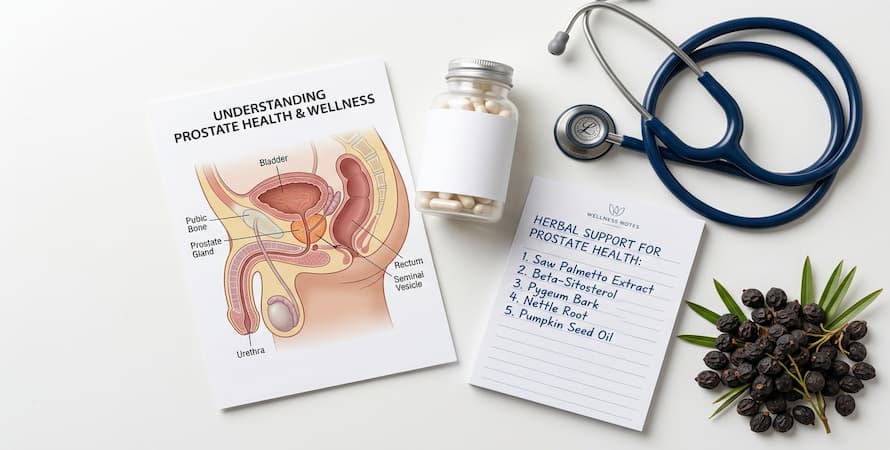
Every day in the United States, thousands of men open a medicine cabinet looking for relief from urinary urgency, weak stream, or the nagging worry that prostate trouble could be around the corner. For decades, herbal remedies have been marketed as an alternative to prescription drugs for benign prostatic hyperplasia (BPH) and as hopeful protectors against prostate cancer.
Sales data show steady demand: prostate health supplements remain one of the most common categories in men’s natural health products. This expanded guide reviews the most common herbal supplement for prostate health—what they are, how they’re made, what the science says, and practical tips for consumers who want to evaluate natural prostate supplements thoughtfully.
Why herbal supplements for prostate health matter now
There are three reasons this topic is especially relevant today. First, demographic trends: an aging population means more men experience BPH symptoms and prostate-related concerns. Second, dissatisfaction with prescription side effects motivates many men to look for natural alternatives. And third, the supplement marketplace has expanded rapidly, increasing product variety but also variability in quality.
Many men ask: Are natural prostate supplements effective? Are they safe? This article separates marketing claims from scientific reality and provides a practical, evidence-based approach for men considering herbal options. Throughout, we use language that reflects both clinical evidence and real-world experience so readers can weigh risks and benefits.
How herbal prostate supplements are made and why formulation matters
Herbal prostate products come in many forms: capsules, tablets, liquid extracts, teas, and oils. The manufacturing method and the degree of standardization matter because they determine which active compounds are present and in what amount. Common manufacturing processes include:
- Drying and powdering whole plant material, then encapsulating it. This approach preserves a broad spectrum of botanical components but may yield inconsistent potency.
- Alcohol or water extraction (tinctures) to concentrate water-soluble or ethanol-soluble constituents.
- Supercritical CO2 extraction for lipid-soluble compounds (commonly used for saw palmetto prostate extracts and seed oils), which can give a cleaner, more concentrated lipid profile.
- Standardization to specific active constituents—such as phytosterols, fatty acids, or catechins—to improve consistency across batches and enable dosing that matches clinical studies.
Standardization matters when evaluating the best herbs for prostate health because biological activity often maps to particular molecules: fatty acids in saw palmetto, beta-sitosterol in many seed and plant extracts, and EGCG in green tea extract. Under DSHEA (the Dietary Supplement Health and Education Act), supplements are not pre-approved by the FDA before sale, so third-party verification (USP, NSF, ConsumerLab) is an important quality signal for consumers who want to trust product labels and avoid contamination.

Key prostate health supplement ingredients — what they are and why they’re used
The following sections review the most commonly used prostate health supplement ingredients, including those found in herbal supplements for prostate health—how they’re prepared, the rationale for use, clinical evidence, dosing where available, and safety considerations. If you’re researching prostate health supplement ingredients, this list covers the ones you’ll see most often.
Saw palmetto (Serenoa repens)
What it is: Saw palmetto is a small palm native to the southeastern United States; supplements are made from extracts of the fruit. Typical products are lipid-based extracts standardized to fatty acids.
Why it’s used: Saw palmetto prostate extracts are used for urinary symptoms related to BPH. Proposed mechanisms include inhibition of 5-alpha-reductase (reducing conversion of testosterone to dihydrotestosterone), anti-inflammatory effects, and modulation of androgen receptors.
Evidence snapshot: Clinical trials and systematic reviews provide mixed results. Some earlier small trials and observational studies reported modest symptom improvement; however, larger randomized controlled trials, including placebo-controlled studies, often found no significant benefit for urinary symptoms at commonly used doses. A Cochrane review and other meta-analyses concluded that evidence is inconclusive—some men report symptom relief, but average benefit across studies is modest and inconsistent. Because of formulation differences, one saw palmetto product might feel more effective than another.
Dosing and formulation: Typical doses in clinical studies range from 160 mg twice daily (lipid extract) to similar daily totals. Look for products standardized to fatty acids or the total lipid fraction.
Potential downsides: Side effects are usually mild (GI upset, headache). Potential interactions include effects on blood-thinning activity and possible interference with hormone-related therapies. Some reports suggest minor changes in PSA in rare cases; clinicians sometimes ask patients to stop saw palmetto before a PSA-based workup to avoid potential confounding.
Beta-sitosterol (a plant sterol)
What it is: Beta-sitosterol is a phytosterol found in many plants and concentrated in supplements targeting urinary health.
Why it’s used: It may support healthy urinary flow and prostate function, making it a popular ingredient in formulas such as Prostara Prostate Health Supplement.
Evidence snapshot: Meta-analyses of small, short-term trials suggest symptom improvement compared with placebo, but study quality and duration vary. Beta-sitosterol is often included in combination products, making it harder to isolate its individual effect.
Dosing and formulation: Typical doses in trials range from 60–130 mg/day. Some products provide this as a single ingredient; others combine it with saw palmetto and nettle.
Potential downsides: High doses can impair absorption of dietary cholesterol and fat-soluble vitamins. Gastrointestinal symptoms are the most common adverse effect. Rare genetic conditions (like sitosterolemia) make phytosterol supplementation inadvisable for certain individuals.
Pygeum africanum (African plum)
What it is: Pygeum is made from the bark extract of the African cherry tree (Pygeum africanum). Most supplements use standardized extracts high in triterpenes and sterols.
Why it’s used: Historically used to relieve urinary problems and inflammation associated with BPH, pygeum is thought to inhibit inflammatory mediators and improve bladder contractility.
Evidence snapshot: Several randomized trials and meta-analyses suggest modest improvements in nocturia, urinary flow, and residual urine compared with placebo over the short term. Quality of evidence is variable and study durations are often limited.
Dosing and formulation: Commonly used doses are 50–100 mg twice daily of standardized extract (e.g., 13–18% triterpenes).
Potential downsides: Side effects are usually mild (GI discomfort). Sustainability and supply concerns exist because bark harvesting can harm trees; ethical sourcing is worth considering.
Stinging nettle (Urtica dioica)
What it is: Stinging nettle products can be made from root or leaf extracts and are frequently combined with other herbs like saw palmetto in combination supplements.
Why it’s used: Nettle is proposed to reduce inflammation and bind sex hormone–binding globulin or other plasma proteins, affecting androgen availability. In practice it’s used to relieve urinary symptoms of BPH, especially when combined with other botanicals.
Evidence snapshot: Standalone evidence for nettle root is limited but some trials show modest benefits. Combinations of nettle with saw palmetto or other herbs have shown better results in small studies than single agents, though combination trials make it difficult to identify which ingredient drives benefit.
Dosing and formulation: Products often provide nettle root extract standardized to polyphenol content or used as dried root powder. Doses vary widely between products.
Potential downsides: Allergic reactions are possible for those sensitive to nettle. It may interact with blood pressure medications and anticoagulants; clinicians should evaluate potential drug interactions before use.

Pumpkin seed oil (Cucurbita pepo)
What it is: Pumpkin seed oil is a cold-pressed oil rich in phytosterols, polyunsaturated fatty acids, and antioxidants.
Why it’s used: Traditional use and small clinical trials suggest that pumpkin seed oil can support urinary function and reduce nocturia. Phytosterols in pumpkin seeds may contribute to improved urinary symptoms.
Evidence snapshot: Available trials are smaller and less rigorous than those for some other supplements, but they point to potential symptom improvement, particularly for nocturia. Most evidence focuses on symptom relief rather than prostate size reduction.
Dosing and formulation: Capsules of cold-pressed oil are common; some studies use 1–3 grams/day of oil. Pumpkin seed extract is also found in combination products marketed as natural prostate supplements.
Potential downsides: Generally well tolerated; people with seed allergies should avoid it. Because it is an oil, it may slightly alter absorption of other fat-soluble compounds when taken together.
Lycopene (from tomatoes)
What it is: Lycopene is a carotenoid pigment found abundantly in cooked tomato products and some concentrated supplements.
Why it’s used: Observational research shows higher lycopene intake is associated with lower prostate cancer incidence in some cohorts. Antioxidant and anti-inflammatory mechanisms are proposed to explain this association.
Evidence snapshot: Observational data are more supportive than randomized trials. Interventional trials have produced mixed results: some show minor PSA reductions or changes in biomarkers, others show no clinical effect. Lycopene is not proven to prevent prostate cancer, and authorities generally favor dietary sources (tomato-based foods) over high-dose supplementation.
Dosing and formulation: Supplemental doses vary; a typical range in trials is 4–15 mg/day. Dietary lycopene from cooked tomatoes and tomato sauce is bioavailable and recommended as part of an overall healthy diet.
Potential downsides: Excessive supplemental intake is not typically advised; dietary sources are preferred for long-term health benefits.
Green tea extract (EGCG and catechins)
What it is: Green tea extract concentrates polyphenols, in particular epigallocatechin gallate (EGCG), which has antioxidant and potential anti-cancer effects.
Why it’s used: Laboratory and epidemiological data suggest tea catechins have anti-inflammatory, antioxidant, and antiproliferative effects that might slow prostate cancer progression or reduce risk.
Evidence snapshot: Small randomized trials and observational studies indicate possible benefit in reducing progression of high-grade prostatic intraepithelial neoplasia or stabilizing PSA in some men. However, large randomized prevention trials are lacking. Notably, high-dose green tea extracts have been associated with rare cases of liver toxicity, so safety must be considered.
Dosing and formulation: Standardized extracts to EGCG content are common; typical trial doses vary widely, and some high-dose extracts have been implicated in hepatotoxicity. Drinking green tea as a beverage is generally safe for most men and supplies lower, more gradual catechin exposure.
Potential downsides: Drug interactions (e.g., with warfarin), caffeine sensitivity, and rare hepatotoxicity with concentrated extracts.
Selenium and vitamin E — a cautionary historical example
What they are: Selenium is a trace essential mineral; vitamin E is a fat-soluble antioxidant. Both were once popular as supplements suggested to reduce prostate cancer risk.
Why they were used: Early observational data hinted that higher selenium status and higher antioxidant intake correlated with lower prostate cancer risk, prompting enthusiasm for supplementation.
Evidence snapshot: The SELECT trial, a large randomized controlled study, showed no protective benefit from selenium or vitamin E supplementation for prostate cancer prevention. Moreover, vitamin E supplementation was associated with a small increased risk of prostate cancer, and selenium showed no benefit and potential adverse metabolic effects in some subgroups. This example highlights how observational correlations do not always translate into benefit when tested in randomized trials.
Potential downsides: High-dose antioxidant supplements can be harmful. The SELECT results shifted clinical and research perspectives away from single-nutrient antioxidant supplements as a strategy for prostate cancer prevention.
Health claims versus reality — separating marketing from evidence
Manufacturers commonly promote products with phrases like “supports prostate health,” “reduces BPH symptoms,” or “helps maintain healthy PSA levels.” Under current regulations, companies may make structure/function claims but cannot legally claim to diagnose, treat, cure, or prevent disease without FDA approval. That regulatory framework allows marketing to outpace science, so consumers must look beyond the label.
Reality check:
- Some ingredients—saw palmetto, beta-sitosterol, and pygeum—have clinical trials supporting modest, short-term symptom relief in BPH, but results are mixed and benefits vary by product quality and dose.
- Few herbal supplements demonstrate consistent long-term reductions in prostate size.
- No herbal supplement has been definitively proven to prevent prostate cancer; large randomized trials have often found no benefit and in some cases harm.
- Observational associations (e.g., between lycopene-rich diets and lower prostate cancer incidence) do not establish causation; randomized trials remain the gold standard.
Potential downsides, interactions, and safety considerations
Natural does not always mean safe. Key precautions when considering herbal supplement for prostate health include:
- Drug interactions: Herbs can interact with prescription drugs. Saw palmetto and stinging nettle may affect bleeding risk; green tea extracts can interact with anticoagulants and stimulant medications. Supplements may also interact with hormone therapies and prescription BPH drugs like 5-alpha-reductase inhibitors.
- Laboratory interference: Some supplements can affect PSA measurements or other lab tests, complicating screening for prostate cancer. Clinicians sometimes advise pausing particular supplements before PSA testing, depending on the agent and clinical context.
- Quality and contamination: Independent testing has found variable amounts of active ingredients and occasional contaminants (heavy metals, undeclared pharmaceuticals) in some supplements. Choose third-party tested brands to reduce these risks.
- Adverse effects: Gastrointestinal upset is common. Rare but serious events—liver injury with high-dose green tea extract, allergic reactions to plant components—have been reported.
- Over-supplementation: High doses of minerals and fat-soluble vitamins (selenium, vitamin E, vitamin A) can cause toxicity. Avoid mega doses unless prescribed and monitored by a clinician.
What clinicians and researchers say about natural prostate supplements
Urologists and primary care physicians generally take a cautious, evidence-based stance. For men with bothersome BPH, guideline-based medical therapies remain first-line options. However, many clinicians recognize that men may prefer conservative options and may consider herbal supplements for prostate health for mild symptoms or to avoid certain drug side effects.
Clinical researchers emphasize limitations in the evidence base, including small sample sizes, short follow-up, varied formulations, and potential industry funding. For prostate cancer prevention, specialists generally recommend lifestyle measures and evidence-based screening rather than relying on supplements.

How to choose a reputable prostate supplement product
If you’re considering a prostate health supplement, apply the same critical thinking used for medications and medical tests. Here are practical tips:
- Talk to your clinician first. If you’re taking blood thinners, hormone therapy, or prescription prostate medications, consult your prescriber before starting any herbal supplement for prostate health.
- Look for third-party testing. Brands verified by USP, NSF International, or ConsumerLab provide higher confidence in label accuracy and lower risk of contamination.
- Check formulation and dose. Favor products that standardize to active constituent amounts (e.g., saw palmetto extract standardized to fatty acids, green tea extract standardized to EGCG, beta-sitosterol with quantified milligrams per dose).
- Prefer single-ingredient products when starting. Combination formulas make it hard to identify which ingredient is effective and increase the potential for drug interactions.
- Start low and monitor. Try a conservative dose for 6–12 weeks and track changes with a validated symptom tool like the International Prostate Symptom Score (IPSS). If no meaningful improvement occurs, discontinue the product rather than continuing indefinitely.
- Watch for side effects and interactions. Keep a checklist of all medications and supplements you take and discuss them at medical visits. If you notice new symptoms like jaundice, severe abdominal pain, or bleeding, seek medical attention promptly.
- Prioritize lifestyle measures. Diet, exercise, and weight management often have more reliably beneficial effects on urinary symptoms and overall health than any single supplement.
RELATED: Natural male enhancement supplements: a complete buyer’s guide
Lifestyle measures that complement supplements
Supplements are adjuncts, not substitutes, for lifestyle measures that help prostate and urinary health. Evidence-based recommendations include:
- Weight management: Obesity is linked with worse urinary symptoms and adverse prostate outcomes in some studies. Losing weight often improves urinary function.
- Physical activity: Regular aerobic and resistance exercise reduce BPH symptoms and improve metabolic health.
- Fluid and diet adjustments: Limiting evening fluid intake, reducing caffeine and alcohol, and eating a balanced diet rich in fruits, vegetables, and healthy fats can improve symptoms and reduce cardiovascular risk.
- Pelvic floor exercises: Strengthening pelvic floor muscles can reduce urgency and improve voiding control in some men.
- Smoking cessation: Smoking is linked to worse overall health and may exacerbate urinary symptoms for some men.
Combination supplements: pros and cons
Many commercial products combine several of the best herbs for prostate health into a single pill (e.g., saw palmetto + nettle + pygeum + beta-sitosterol + pumpkin seed). The appeal is straightforward: potential additive or synergistic effects and a single regimen to take. But there are trade-offs:
- Advantage: Combinations may help men who don’t respond to single ingredients, and some studies of combinations show benefit.
- Disadvantage: Combinations make it difficult to determine which ingredient contributes to benefit or harm, increase the risk of interactions, and complicate dosing if one ingredient is contraindicated for an individual patient.
If you try a combination product, choose one with transparent labeling, third-party testing, and a sensible dosing profile for each component.
Frequently asked questions
Q: Can herbal supplements prevent prostate cancer?
No herbal supplement has been definitively proven to prevent prostate cancer. Observational studies suggest associations between certain dietary patterns or foods (for example, tomato-based foods high in lycopene) and lower prostate cancer risk, but randomized trials have not established causality for most supplements. The SELECT trial specifically showed no benefit for selenium or vitamin E supplementation, with a small increased risk observed for vitamin E.
Q: Will saw palmetto reduce prostate size?
Saw palmetto may relieve urinary symptoms in some men, but high-quality trials have not consistently shown a reduction in prostate size. If reducing prostate volume is a primary goal, evidence-based prescription options (like 5-alpha-reductase inhibitors) are more clinically proven.
Q: Are natural prostate supplements safe with prescription medications?
Interactions exist. Herbs can affect blood clotting, blood pressure, and hormonal pathways. Always notify your clinician and pharmacist about any herbal supplements you take, particularly if you are on blood thinners, hormone therapies, or prescription BPH drugs.
Q: How long should I try a supplement before judging whether it works?
A reasonable trial period is 6–12 weeks for symptom changes such as urinary frequency or flow. Use a symptom score like the IPSS to track progress objectively. If no improvement occurs after a reasonable trial, discontinue the supplement.
Q: How do I pick a reputable product?
Choose brands with third-party testing from USP, NSF, or ConsumerLab. Prefer standardized extracts that list active constituent amounts and avoid products that make dramatic claims like “cures prostate cancer” or “shrinks the prostate overnight.”
Q: Can diet replace supplements for prostate health?
A balanced diet rich in fruits, vegetables, whole grains, lean proteins, and healthy fats supports overall and prostate health. Dietary sources of bioactive compounds—such as tomatoes for lycopene and green tea for catechins—are generally preferable to high-dose supplements for long-term health.
Q: What signs suggest I should see a doctor urgently?
Seek urgent care for blood in the urine, severe pain, inability to urinate, signs of infection (fever, chills), sudden unexplained weight loss, or a rapidly rising PSA. These symptoms require prompt medical evaluation.
How researchers are improving the evidence base
Ongoing research aims to address limitations in earlier studies by designing larger, longer, and better-controlled trials. Priorities for future research include:
- Standardizing formulations so trials test consistent products rather than varied proprietary blends.
- Extending follow-up time to assess long-term outcomes, including prostate size, peak urinary flow, surgical intervention rates, and progression to prostate cancer.
- Investigating mechanisms of action at molecular and metabolic levels to identify which patient subgroups might benefit most from particular botanicals.
- Comparative effectiveness studies to evaluate combinations of supplements versus single ingredients and versus prescription therapies.
Putting it all together — a practical decision framework
For men considering an herbal supplement for prostate health, here is a stepwise framework to make an informed choice:
- Assess symptom severity and need for therapy. Use IPSS and discuss alarm symptoms with a clinician.
- Review current medications and medical history to identify interaction risks.
- Choose evidence-informed ingredients (e.g., saw palmetto, beta-sitosterol, pygeum) if you prefer supplements, and favor single-ingredient or transparent combination products with third-party testing.
- Start with a conservative, trial dose and monitor symptoms for 6–12 weeks using IPSS. Track side effects and any lab value changes as recommended by your clinician.
- If no meaningful improvement is observed, discontinue the supplement and pursue guideline-based therapies or additional evaluation as indicated.
- Prioritize lifestyle interventions alongside any supplements you use, and maintain routine medical follow-up for PSA and overall prostate surveillance.
Conclusion
Herbal supplements for prostate health occupy a space between tradition and science. Ingredients like saw palmetto, beta-sitosterol, pygeum, stinging nettle, and pumpkin seed oil have historical use and some clinical evidence for short-term symptom relief in BPH, but results across studies are mixed and often modest. For prostate cancer prevention, the evidence is weaker, and large randomized trials have demonstrated that single-nutrient antioxidant supplementation is not an effective prevention strategy and may even cause harm.
The most pragmatic approach for men interested in natural prostate supplements is to engage their clinician, prioritize diet and lifestyle, consider reputable supplements as adjuncts—not replacements—for evidence-based care, and choose products vetted by third-party laboratories. Monitoring symptoms with objective tools and maintaining recommended screening completes a prudent strategy that balances potential benefits and risks.
References
https://pmc.ncbi.nlm.nih.gov/articles/PMC6859144/
https://pmc.ncbi.nlm.nih.gov/articles/PMC10749388/
https://pmc.ncbi.nlm.nih.gov/articles/PMC7032619/
https://pmc.ncbi.nlm.nih.gov/articles/PMC3589769/
https://pmc.ncbi.nlm.nih.gov/articles/PMC6340872/


