





It’s a familiar moment: you catch your profile in the rearview mirror and notice the jawline isn’t as taut, the cheeks look softer, and the skin that once snapped back feels a touch looser. For many Americans with mature skin, that moment sparks a search for something more targeted than a generic moisturizer—something clinical, concentrated, and marketed as a professional-grade firming serum. The market now bristles with products promising firmer contours, improved texture, and renewed confidence. But which serums deliver substantive results, and what separates a legitimate professional firming serum review from hype?
This expanded roundup evaluates five top professional-grade options for mature skin, ranked by evidence, ingredient transparency, texture, suitability for different skin types, and overall value. Two names—Stemuderm and Solvaderm Stemnucell—are highlighted as top recommendations based on formulation priorities and positioning in clinical-use channels. The review also includes widely recognized physician-dispensed serums used in dermatology offices and medi-spas. Below I explain the science behind common actives (peptides, growth factors, retinoids, hyaluronic acid), how these serums are formulated and preserved, what “professional-grade” typically means, and practical advice for choosing and using them safely and effectively.
What this review covers and how it was evaluated
To keep this professional firming serum review objective and useful, each product was evaluated on several consistent criteria:
- Key actives and stated concentrations (when provided by the brand).
- Clinical backing or peer-reviewed evidence where available.
- Texture, absorption, and real-world applicability for mature skin routines.
- Best-suited skin types and known tolerability concerns.
- Value: cost per ounce, packaging quality, and expected performance relative to price.
These criteria help distinguish between the best firming serum for mature skin and products that are primarily marketing. Professional products should provide clear rationales for their ingredient choices, preserve labile actives in appropriate packaging, and ideally be supported by at least some clinical data or extensive professional experience.
Top picks: ranked firming serums for mature skin
Here are five professional-grade firming serums selected because they represent diverse approaches to addressing laxity, loss of contour, and age-related texture changes. Each listing is written to help you decide which product best matches your goals and skin sensitivities.

1. Stemuderm — Best overall for mature skin firmness
Why it ranks: Stemuderm positions itself as a targeted lifting-and-firming serum for mature skin, combining a multi-peptide complex with botanical stem cell extracts and humectants. The formula emphasizes collagen-boosting peptides and copper peptides—actives commonly used in professional-grade firming serum formulations to support fibroblast activity and extracellular matrix maintenance.
Key actives and transparency: Stemuderm markets a peptide-rich blend that includes Matrixyl-like peptides and copper peptides along with plant stem cell extracts and hyaluronic acid. As with many proprietary blends, exact percentages are not fully disclosed, but the formulation strategy is clear: stimulate dermal remodeling while maintaining epidermal hydration.
Clinical backing: Peptides and copper peptides have a growing body of evidence supporting collagen stimulation and improvements in skin texture in both laboratory and clinical settings. Clinical results vary by concentration and formulation stability. Plant stem cell extracts are more controversial—while they may offer antioxidant support, direct evidence for skin firming in humans is limited.
Texture and use: Stemuderm has a lightweight serum texture that layers well under creams and sunscreens. It absorbs quickly and leaves minimal residue, which makes it practical for daytime layering beneath makeup or heavier creams at night.
Best for: Normal to dry, aging skin seeking a peptide-first approach. If you have sensitive skin, patch testing is recommended due to botanical extracts and peptide potency.
Value and positioning: Mid-to-high price point. Positioned as cost-effective compared with frequent in-office procedures, which can make it attractive to those wanting clinical-minded topical support without procedural time or expense.

2. Solvaderm Stemnucell — Best growth-factor-style serum
Why it ranks: Solvaderm Stemnucell markets itself as a regenerative, stem-cell-inspired serum with growth factor analogs, peptides, and hyaluronic acid. It’s sold through professional channels and is positioned toward clinicians who want a topical product to complement in-clinic procedures.
Key actives: The Stemnucell complex blends growth factor-like peptides with several supportive ingredients intended to encourage dermal remodeling. Like many professional growth factor-style serums, exact microgram concentrations are proprietary, but formulation stability and packaging are emphasized by the brand.
Clinical perspective: Growth factors and recombinant peptide mimetics can stimulate matrix remodeling and have shown promise in controlled trials. However, topical efficacy is highly dependent on formulation stability and delivery to ensure the peptides remain bioactive on skin application.
Texture and use: Slightly richer than Stemuderm, Solvaderm Stemnucell absorbs into the skin without a greasy finish and can be favored as an overnight reparative serum for dry or photo-damaged skin.
Best for: Mature, dry, or post-procedure skin that needs regeneration. Those with extremely reactive skin or active rosacea should consult a clinician prior to consistent use.
Value: Positioned at the premium end of the market. Appropriate for buyers who want a professional-level serum marketed through clinical channels and are willing to invest in higher-end formulations.
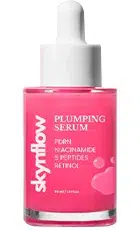
3. Skynflow Plumping Serum
Why it ranks: Skynflow Plumping Serum, Marketed as the only serum you need — it targets wrinkles, dark spots, and firmness in one formula with a strong viral presence driven by social proof and a distinctive pink colour from natural plant pigments.
Key actives and clinical support: Peptides, PDRN (Polydeoxyribonucleotide), Niacinamide, and Retinol — PDRN is a DNA-repair ingredient with clinical backing from aesthetic medicine for cellular regeneration. Also contains Acetyl Hexapeptide-8, Acetyl Octapeptide-3, Hydrolyzed Hyaluronic Acid, and Ascorbic Acid.
Texture and user experience: Silky, lightweight texture described as transforming daily care into a spa-like ritual. The pink shade comes from natural plant pigments — no artificial colorants. Users report softer skin within weeks with zero irritation.
Best for: Women over 40 wanting a multi-tasking anti-ageing serum — smoothing wrinkles, fading dark spots, and restoring firmness in one step. Also suitable for women in their 30s wanting to prevent early signs of ageing.
Value: Premium pricing, often seen as justifiable by patients because of its professional-use orientation and many clinicians incorporating it into treatment protocols.
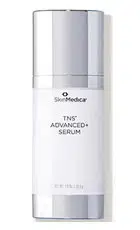
4. SkinMedica TNS Advanced Serum
Why it ranks: SkinMedica’s TNS Advanced Serum combines a dermal growth factor-rich blend with antioxidants and peptides to simultaneously support collagen synthesis and protect developing matrix components from oxidative damage. It’s a long-standing clinician-dispensed product that many users report improves tone and texture.
Key actives and evidence: TNS-MR — a next-generation growth factor blend that supports healthy skin functions alongside an innovative peptide complex. Renessensce (RSC) Advanced — a highly active blend of botanicals, marine extracts, and peptides including French flaxseed to support repair functions, Spanish marine extract to support skin renewal, and green microalgae to support collagen and elastin levels.
Texture and use: Apply in the morning and evening after cleansing and toning. Apply to the entire face — neck and chest if desired. The product contains two unique formulas in the dual-chamber pump designed to work together. The double-chamber pump needs to be primed before first use — upon receiving the product hit the bottom of the bottle several times. The texture is a lightweight but slightly thicker serum — not watery — due to the growth factor complex. Allow to absorb fully before applying moisturiser.
Best for: A powerful anti-aging serum that targets fine lines, deep wrinkles, and sagging skin. Growth factors have increasing evidence from clinical studies showing great anti-aging benefits — however they should not be used by those with skin cancer risk factors or psoriasis as they are potent molecules that stimulate cell proliferation. Ideal for mature skin aged 37+ with visible signs of ageing, post-procedure recovery (laser, peels, microneedling), and anyone seeking a single premium anti-ageing serum. Not recommended during pregnancy.
Value: Price, $295 retail / $236 with subscription (save 20%). Expensive but clinically backed — patients reported looking up to 6 years younger after 12 weeks. At twice-daily use one bottle lasts 30–45 days — around $6.50–$9.80 per day.
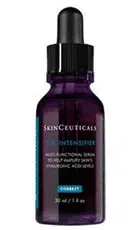
5. SkinCeuticals H.A. Intensifier
Why it ranks: While not a classical “firming” product focused on collagen signaling, SkinCeuticals H.A. Intensifier boosts hyaluronic acid levels in the epidermis and dermis, which can significantly improve the look of firmness by plumping tissue and reducing the appearance of fine lines. For mature skin seeking immediate plumping without irritation, this booster is a strong adjunct to collagen-supportive routines.
Key actives and transparency: The product is explicit about including multiple molecular weights of hyaluronic acid and proxylane—an ingredient that has manufacturer-supported research indicating improvements in elasticity and the appearance of sagging skin when used consistently.
Texture and applicability: Gel-serum that imparts immediate plumping and is excellent under makeup and sunscreen. It is usually well-tolerated across many skin types and can be layered with retinoids or peptides as part of a dual approach to firming.
Best for: Mature, dehydrated skin that benefits from visible hydration and immediate improvement in skin contour and texture.
Value: Mid-to-high tier pricing; many users appreciate the immediate perceptible effect, especially when paired with a peptide or retinoid-based regimen for long-term collagen support. A 30ml bottle costs $106.

Why these actives matter: the science behind firming serums
To assess the best firming serum for mature skin or to evaluate claims in a professional firming serum review, you need a clear understanding of the primary ingredient classes and how they act at the skin level. Mature skin loses volume, collagen, and elastin while becoming thinner and drier. The best topical approaches address multiple pathways: signaling new matrix production, protecting newly formed collagen, and restoring hydration.
Peptides
Peptides are short amino acid sequences designed to mimic portions of larger proteins or to act as signaling molecules for skin cells. Specific peptides, such as palmitoyl oligopeptides (Matrixyl-like) and copper peptides, have evidence suggesting they can promote collagen synthesis and improve skin texture. Peptides are attractive in the professional firming serum category because they are generally well-tolerated and can be combined with other actives to support both structural and surface-level improvements.
Growth factors and growth factor analogs
Growth factors are proteins that regulate cellular behavior, including proliferation and matrix production. Some topical serums include recombinant human growth factors or peptide mimetics that aim to stimulate fibroblast activity. Clinical studies of well-formulated growth factor products have shown promise, but the stability and delivery mechanism are crucial—growth factors are delicate and can lose activity if not properly protected by formulation and packaging.
Retinoids
Retinoids (retinol, retinaldehyde, tretinoin) have the longest track record for stimulating collagen production, normalizing epidermal turnover, and improving fine lines and texture. They can be irritating to some users, especially when combined with other active exfoliants, but their evidence base for remodeling is substantial and often unmatched by other topical classes.
Hyaluronic acid and humectants
Hyaluronic acid (HA) provides immediate hydration and plumping. Multi-weight HA—combining high-, medium-, and low-molecular-weight fractions—can hydrate different skin layers and create a visibly firmer look. While HA does not rebuild collagen, it improves the perception of firmness and works synergistically with collagen-stimulating actives.
Antioxidants and barrier-supporting ingredients
Antioxidants like vitamin C, vitamin E, and ferulic acid protect newly formed matrix material from oxidative damage, enhancing long-term outcomes from collagen-stimulating therapies. Barrier-supporting ingredients such as niacinamide reduce inflammation and help minimize irritation during active regimens.

How professional-grade firming serums are formulated and manufactured
Professional-grade firming serums are typically developed in controlled labs using pharmaceutical- or cosmeceutical-grade raw materials. Key manufacturing and formulation considerations include:
- Sterility and preservative systems appropriate for the product’s water content.
- Delivery technologies—liposomes, microspheres, or stabilizing carriers—that protect fragile peptides and growth factors and support measured release into the skin.
- Packaging that protects sensitive actives from light and oxygen (airless pumps, opaque tubes, and single-dose ampoules are common).
- Formulation pH optimization to maintain peptide stability and compatibility when combining actives like vitamin C or retinoids.
Because the skin’s barrier is the first defense, formulation choices that enhance bioavailability while minimizing irritation are central to what makes a serum genuinely professional-grade rather than merely marketed as such.
You Might Also Like to Read: Plant stem cell technology in skincare
Benefits and realistic limits of topical firming serums
Topical firming serums can deliver meaningful improvements in skin texture, hydration, and the appearance of laxity. Key realistic benefits include:
- Improved hydration and immediate plumping from hyaluronic acid-based products.
- Smoother skin texture and fine line reduction with consistent retinoid or peptide use over months.
- Enhanced results when serums are used in conjunction with in-office procedures like lasers or microneedling, which can increase penetration and remodeling.
However, limitations exist. The stratum corneum restricts penetration of large molecules; therefore some topicals may not deliver growth factors deep into the dermis in the same way invasive procedures can. Additionally, topicals cannot reposition underlying facial fat pads or surgically tighten connective tissue. The best outcomes arise from combining sensible topical regimens with professional treatments when necessary and protecting gains with sun protection and healthy lifestyle choices.
Potential downsides and safety considerations
When choosing the best serum for sagging skin or evaluating claims in a professional firming serum review, consider these safety and tolerance factors:
- Irritation risk: Retinoids and strong acids can cause redness, flaking, or sensitivity, especially in the early weeks.
- Allergic reactions: Botanical extracts and fragrance may provoke contact dermatitis in susceptible individuals.
- Pregnancy and lactation: Many topical retinoids are contraindicated; consult a clinician before use.
- Combining actives: Layering multiple high-potency actives can increase irritation. Stagger use and follow professional guidance.
- Expectation management: Topicals improve appearance but are not a substitute for surgical interventions for significant laxity.
Professional-grade vs consumer-grade: what distinguishes them?
“Professional-grade” is not a regulated term, but it generally conveys a few consistent qualities in the market:
- Higher-quality ingredient sourcing and more advanced delivery systems aimed at stability and absorption.
- Formulations often developed with clinician input and sold primarily through dermatologists, plastic surgeons, or licensed medi-spas.
- Packaging chosen to preserve labile ingredients, such as airless pumps or opaque containers.
- Greater investment in sponsored clinical trials or documented in-office success stories.
That said, some over-the-counter brands offer excellent ingredient transparency and scientifically reasonable concentrations of actives. The discerning buyer should look for clear ingredient lists, evidence of testing, and packaging that preserves active integrity rather than relying solely on “professional” branding.
Buyer’s checklist: choosing the best firming serum for mature skin
When shopping for a professional-grade firming serum, use this checklist to evaluate a product fairly:
- Read the full ingredient list and look for named actives (peptides, hyaluronic acid, retinoids, antioxidants).
- Seek evidence of clinical testing or at least peer-reviewed literature supporting the primary actives’ mechanisms.
- Check packaging—airless pumps and opaque containers are preferable for sensitive actives.
- Consider how the serum fits into your existing regimen: will you pair it with retinol or use it as a standalone collagen support product?
- Consult a clinician for advanced protocols or if you have a history of skin conditions, cancer, or are on immunosuppressive medications.
- Estimate long-term cost: professional-grade serums are often pricier and may require sustained use to see benefits.

How to integrate a professional firming serum into your routine
Integration is as important as selection when aiming for real improvements in sagging or lax skin. The strategies below are practical and commonly recommended in clinician practices.
- Patch test and start slowly
Always patch-test a new serum to check for sensitivity. If you’re adding retinoids or combining strong actives, begin with intermittent use—every other night or a few nights a week to build tolerance.
- Layering order
Apply serums to clean skin in order of thinnest to thickest. Typically, a water-based professional-grade firming serum goes on before oilier serums or creams. If using a hyaluronic booster alongside peptides or growth factors, apply the thin, water-based HA serum first, then peptide/growth-factor products, then creams.
- Time of day
Many growth-factor and peptide serums are fine for morning or evening use. Retinoids are recommended at night because they can increase photosensitivity and are most active during skin’s repair phase while you sleep.
- Sun protection
Daily SPF 30+ is essential, especially when using retinoids or products that stimulate new matrix formation. Newly formed collagen is particularly vulnerable to UV degradation if not protected.
- Consistency and realistic timelines
Hydration and plumping effects may be visible within days. Structural improvements related to collagen remodeling generally require at least 8–12 weeks of consistent use. Combine serums with a healthy lifestyle—adequate sleep, nutrition, and limited UV exposure—to optimize outcomes.
You Might Also Like to Read: Best anti-aging eye creams and serum
Frequently Asked Questions
Q: Are professional-grade serums worth the cost?
They can be. If a serum offers proven actives, stable formulation, and clinician support, the cost may be justified—especially when it reduces the need for frequent in-office maintenance. However, value depends on consistent use and realistic expectations. The best firming serum for mature skin is one that you can tolerate and use consistently.
Q: How long before I see results?
Immediate hydration and plumping are common within days. Collagen-driven improvements in firmness and texture often take 8–12 weeks or longer with continuous use.
Q: Are stem cell serums effective?
“Stem cell” is a popular marketing term. Plant stem cell extracts can provide antioxidant benefits, which may slow some visible signs of aging, but they do not impart human stem cell regenerative capacity to your skin. Human-derived growth factors and growth factor mimetics have more credible mechanistic rationale for stimulating remodeling, though product stability and formulation remain critical.
Q: Can I layer a firming serum with retinol?
Often yes, but it depends on the specific products and your skin’s tolerance. You might use peptides or growth-factor serums in the morning and retinol at night, or alternate nights. If combining, introduce one product at a time and consider limiting other exfoliating acids to reduce irritation.
Q: Are there risks with topical growth-factor serums?
Topical growth factors in properly formulated products are generally safe for healthy individuals. If you have a history of skin cancer, active lesions, or unusual medical concerns, consult your clinician. There is limited evidence suggesting systemic risks from topical use in most individuals, but professional guidance is advisable for those with complex medical histories.
Real-world tips from clinicians and estheticians
Professional practitioners who recommend these products often offer consistent advice that can help consumers get the most from their routine:
- Be patient and consistent. Results take weeks to months; short-term trials won’t reveal the full benefit of collagen-driven products.
- Use sun protection every day. Even the best serums cannot counteract ongoing UV damage.
- When possible, consult a clinician for a tailored plan—especially if you are combining multiple active treatments or planning in-office procedures.
- Monitor skin response and adjust frequency to minimize irritation rather than discontinue use on the first sign of dryness or mild flaking.
- Consider combining in-office treatments selectively to accelerate or deepen results; many serums are designed to complement procedures like microneedling or lasers.
Putting it all together: building a practical routine for mature skin
A balanced routine that incorporates the best elements of topical and procedural approaches can optimize firmness and texture over time. Example framework for mature skin targeting sagging and loss of contour:
- Gentle cleanser morning and night to remove debris while preserving barrier lipids.
- Morning: apply professional-grade firming serum (peptide or growth factor-based) followed by an antioxidant serum, moisturizer, and broad-spectrum SPF 30+.
- Evening: cleanse, apply a retinoid (if tolerated) or a peptide/growth-factor serum on alternate nights, then finish with a hydrator or occlusive cream suited to your skin type.
- Weekly: use gentle exfoliation or professional peels as recommended by your clinician to enhance product penetration and skin turnover.
- Periodic: consult with your clinician about in-office options to complement topicals if you seek more dramatic lifting or contouring than topical regimens alone can provide.
Closing thoughts
For mature skin seeking firmer contours and improved texture, professional-grade firming serums can be meaningful components of a comprehensive skincare plan. The best results come from combining proven actives—peptides, growth-factor analogs, retinoids, and hyaluronic acid—in well-formulated, well-packaged products used consistently and supported by sun protection and healthy habits. Stemuderm and Solvaderm Stemnucell stand out in this roundup as top recommendations for comprehensive firming action, while the other serums offer complementary strengths depending on priorities such as clinical orientation, post-procedure compatibility, or immediate plumping.
When evaluating any product, use a professional firming serum review framework: demand transparency in ingredient lists, prefer clinically supported actives, and prioritize packaging and formulation that protect the active ingredients. With realistic expectations and a consistent regimen, many people with aging skin can see meaningful improvements in firmness, texture, and confidence. The best serum for sagging skin is ultimately the one that aligns with your tolerance, goals, and commitment to a long-term routine.


