





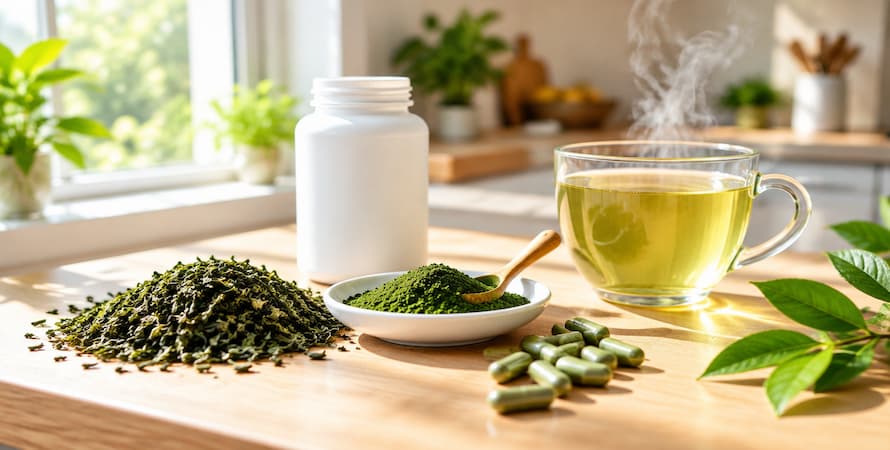
If you spend time browsing the “weight loss pills” aisle online or scrolling through ads, you’ve probably seen green tea extract featured across product images and influencer posts. Green Tea Extract for Weight Loss is often promoted as a natural approach to supporting metabolism, increasing fat oxidation, and helping people manage their weight. It is frequently marketed as a green tea fat burner that can speed up metabolism and help you reach your goals faster. But does the scientific evidence support these claims? In this deep dive, we’ll explore the biology behind green tea extract, review the clinical evidence, explain commonly studied doses, and offer practical guidance for choosing a supplement based on the available research.
Introduction — the promise, the product, and the question
Green tea extract weight loss claims are abundant, with products often promoted to “boost metabolism,” “accelerate fat burning,” and provide “natural thermogenic support.” Green Tea Extract for Weight Loss is commonly associated with two groups of compounds found in green tea leaves: catechins, particularly EGCG, and caffeine. Together, these compounds may have biochemical effects that modestly influence energy expenditure and fat oxidation. The key question is not whether these compounds have physiological activity, but how significant and consistent their effects are and whether they translate into meaningful weight loss for people using over-the-counter green tea extract supplements.
What is green tea extract? Catechins, EGCG, and caffeine
Green tea extract is a concentrated form of the bioactive chemicals found in Camellia sinensis (the tea plant). The concentration process—typically water or ethanol extraction—pulls polyphenols from the leaves and concentrates them into a powdered or capsule form. Key constituents include:
- Catechins: a family of polyphenols. The major catechins in green tea are epigallocatechin gallate (EGCG), epicatechin (EC), and epigallocatechin (EGC).
- EGCG: the most widely studied tea catechin. Much of the metabolic and antioxidant attention focuses on EGCG.
- Caffeine: many extracts retain caffeine unless specifically decaffeinated. Caffeine is a stimulant that independently increases energy expenditure and synergizes with catechins.
Labels vary in transparency. Some list only an undifferentiated “green tea extract 500 mg,” while better products show percentages—e.g., “standardized to 80% catechins, 50% EGCG.” If you’re interested in EGCG weight loss effects, that standardization matters: the milligrams of EGCG per serving determine whether the product approaches research doses.
How green tea extract is thought to help with weight loss
Researchers have proposed several mechanisms through which green tea extract could affect body weight:
- Thermogenesis: Catechins and caffeine can increase energy expenditure slightly. Trials measuring 24-hour metabolic rate sometimes show a small elevation when catechins and caffeine are taken together.
- Fat oxidation: Several studies indicate green tea catechins increase the rate at which the body burns fat during exercise and at rest—meaning a greater proportion of energy comes from fat.
- AMPK activation: EGCG can activate AMP-activated protein kinase (AMPK), a central cellular energy sensor that shifts metabolism toward fatty acid oxidation and improved glucose handling.
- Catecholamine signaling: EGCG may inhibit the enzyme catechol-O-methyltransferase (COMT), slowing the breakdown of norepinephrine. Prolonged norepinephrine activity promotes thermogenesis and lipolysis, and caffeine enhances sympathetic activity too.
Put simply: green tea extract may raise calorie burn a bit and shift substrate use toward fat. The overall effect is a nudge, not a dramatic transformation.
What the clinical evidence actually shows
There’s a robust literature on green tea extract and weight-related outcomes: randomized controlled trials, controlled feeding studies, and meta-analyses. The collective picture is consistent but modest.
Energy expenditure and metabolic rate
Meta-analyses of trials measuring resting or 24-hour metabolic rate suggest that combining green tea catechins with caffeine may produce a modest increase in energy expenditure, with some studies reporting an average increase of around 4%. This may translate to approximately 50–100 additional calories burned per day in some cases, although results vary across studies and individuals. When evaluating Green Tea Extract for Weight Loss, it is important to recognize that even a small increase in energy expenditure does not guarantee substantial weight loss. Although a sustained calorie difference could theoretically influence body weight over time, real-world outcomes are often smaller because appetite, activity levels, and other compensatory responses can affect the overall energy balance.
Weight loss and body composition
Clinical trials assessing body weight and fat mass tend to find statistically significant but small effects. Pooled results commonly show differences of a few hundred grams up to 1–2 kilograms over 8–12 weeks in favor of green tea extract plus caffeine versus placebo. The size of the effect varies according to:
- EGCG dose and total catechin content
- Presence and amount of caffeine
- Participant characteristics (sedentary vs. active, baseline BMI)
- Study context (dietary counseling, caloric restriction, exercise)
Studies that include caffeine and some concurrent lifestyle support typically report larger effects. Trials using decaffeinated extracts report weaker or inconsistent benefits.
Realistic clinical meaning
What does a modest statistical benefit translate to for a real person? If green tea extract increases calorie burn by 60–80 kcal/day, that’s equivalent to a short brisk walk or skipping a small snack. Over months, the small advantage can support weight-loss efforts but is unlikely to produce dramatic change on its own. Consider green tea extract a supporting tool rather than a primary strategy.

Effective doses vs. what’s commonly sold
Not all green tea extract supplements are created equal. Clinical studies showing effects typically deliver EGCG in the range of 250–500 mg per day and include 50–200 mg of caffeine. Here’s how to read product labels against research doses:
- EGCG dose: Many research protocols use 250–500 mg/day of EGCG to generate measurable metabolic effects. Some studies use higher amounts, but higher EGCG increases the risk of adverse liver effects in susceptible individuals.
- Total catechins: Labels that standardize to total catechins (e.g., 70–80%) give another way to estimate EGCG when the percentage of EGCG within catechins is disclosed.
- Caffeine: Because caffeine and catechins work synergistically, extracts that include moderate caffeine (50–200 mg) often perform better than decaffeinated products in trials.
- Proprietary blends: Many supplements hide amounts inside proprietary blends, making it impossible to know the EGCG content. If you want a dose that matches the research, proprietary blends are a red flag.
A practical rule: target products that disclose milligrams of EGCG or total catechins per serving. If the label only lists “green tea extract 500 mg” without standardization, you can’t tell if the serving contains an effective EGCG dose.
Safety and potential downsides
Green tea extract is generally safe for many adults at moderate doses, but concentrated supplements carry specific risks that deserve attention.
Liver safety
When considering Green Tea Extract for Weight Loss, it is important to understand the potential risks associated with concentrated supplements. High-dose green tea extracts have been linked in rare cases to elevated liver enzymes and clinically significant liver injury, sometimes requiring hospitalization. Research and safety reviews suggest that concentrated EGCG intake may pose a greater risk for susceptible individuals, particularly at higher supplemental doses. Some safety assessments have identified daily EGCG intakes above approximately 800 mg as a potential concern, but lower doses are not guaranteed to be risk-free. Consult a healthcare professional before using concentrated green tea extract, follow product-specific safety guidance, and seek medical advice promptly if you develop symptoms such as yellowing of the skin or eyes, dark urine, unusual fatigue, or persistent abdominal discomfort.
Caffeine-related effects
If a supplement contains caffeine, expect stimulant effects in sensitive people: jitteriness, insomnia, elevated heart rate, and increased blood pressure. People who already consume multiple caffeinated beverages should factor total daily caffeine into their decision.
Drug interactions
Green tea extract can interact with medications. EGCG and other catechins may affect drug-metabolizing enzymes and interfere with anticoagulants (e.g., warfarin) or certain statins and other agents. If you take prescription drugs, check potential interactions before starting a concentrated extract.
Pregnancy, breastfeeding, and special populations
There’s limited high-quality data for pregnant or breastfeeding individuals. Most guidance recommends avoiding high-dose extracts during pregnancy. Older adults with liver disease or those taking multiple medications should be cautious.
Quality variability
Dietary supplements are not regulated like pharmaceuticals. Contamination, adulteration, and mislabeling occur. Choosing products that are third-party tested (NSF, USP, or ConsumerLab) reduces—but does not eliminate—risk.

How to evaluate a green tea extract supplement
When you’re evaluating green tea extract supplement products, use this checklist to compare labels and make a reasoned choice that aligns with the research.
- Look for explicit EGCG and catechin amounts: The label should list milligrams of EGCG and/or total catechins per serving. If your goal is EGCG weight loss effects, transparency is essential.
- Avoid opaque “proprietary blends”: If a product hides green tea under a proprietary blend, skip it—there’s no way to ensure an evidence-based dose.
- Check caffeine content: If you’re caffeine-sensitive or already consume a lot of coffee/tea, look for decaffeinated standardized extracts or low-caffeine formulas.
- Prefer third-party testing: Certifications from NSF, USP, or ConsumerLab indicate the product has undergone independent verification for identity and contaminants.
- Compare to clinical doses: Aim for at least 250–300 mg EGCG per day if you want an effect size similar to many studies (but weigh safety considerations).
- Consider formulation synergy: Many effective formulas pair green tea extract with caffeine and other thermogenic ingredients (e.g., capsaicin). Synergy can matter, but transparency is still key.
- Research the brand: Brands that publish clinical trials, are transparent about sourcing, and disclose standardization are preferable to brands with vague marketing language.
Phenocal: An example of a research-aligned product
If you want an example of how to compare products, consider Phenocal as a case study. Phenocal positions itself around clinically supported ingredients and typically discloses green tea extract standardization and EGCG/catechin amounts. It also pairs green tea extract with caffeine and other thermogenic agents at doses intended to mirror some clinical studies. That kind of transparency—explicit EGCG numbers, disclosed caffeine, and a formula designed for synergy—illustrates what to look for in a green tea fat burner product.
Putting the benefits into real-world perspective
How should you think about Green Tea Extract for Weight Loss in daily life? Treat green tea extract as an adjunct—a supporting actor rather than the star of the show. The most reliable drivers of weight management remain energy balance (calories consumed versus calories burned), regular physical activity, adequate sleep, and sustainable behavior changes. Green tea extract may slightly increase calorie expenditure and could help preserve lean mass during weight loss, but its overall effects are generally modest.
Here’s a practical analogy: a green tea extract supplement might provide a small metabolic boost comparable to the energy used during a short, brisk walk. That additional calorie burn may offer some support, but it cannot replace a balanced eating plan, regular exercise, and consistent lifestyle habits.
Practical tips for consumers
If you decide to try a green tea extract supplement for weight-supportive effects, consider these practical tips:
- Combine with lifestyle changes: Use the supplement alongside calorie control, resistance and aerobic training, sleep hygiene, and stress management.
- Start low and assess tolerance: Begin with a lower dose to check for caffeine effects and gastrointestinal tolerance before increasing to a full research-range dose.
- Time dosing thoughtfully: If your product contains caffeine, avoid taking it late in the day to prevent sleep disturbance.
- Track total caffeine: Count coffee, tea, energy drinks, and supplement caffeine together to avoid excessive stimulant exposure.
- Watch for symptoms of liver stress: Stop the product and seek medical attention if you have abdominal pain, jaundice, dark urine, or unexplained fatigue.
- Check interactions: If you take blood thinners, statins, or drugs with narrow therapeutic windows, investigate interactions with EGCG or green tea extract before starting.
- Evaluate results over weeks to months: Expect to give any regimen at least 8–12 weeks to detect meaningful change when combined with dietary and activity adjustments.
Health claims vs. reality: parsing the marketing
Marketing language for green tea fat burner products tends to overpromise. Claims like “burn fat fast” or “turn your body into a fat-burning machine” exaggerate what trials report. The reality is nuanced: green tea extract can yield statistically significant changes in energy expenditure and body weight, but the magnitude is small and variable. Look for evidence of standardized EGCG content and clinical-dose alignment; be wary of claims that promise dramatic results without concurrent lifestyle change.
Common misconceptions and clarifications
Let’s address a few persistent misconceptions:
- Myth: Green tea extract alone will produce rapid, dramatic weight loss. Fact: Effects are modest; real weight loss requires sustained changes in diet and activity. Green tea extract is a potential adjunct.
- Myth: More EGCG is always better. Fact: Higher EGCG may increase both potential benefit and risk (notably liver-related). More is not inherently safer or more effective; clinical ranges matter.
- Myth: All green tea supplements are interchangeable. Fact: Standardization, EGCG content, and caffeine presence vary widely; these differences affect efficacy and safety.
- Myth: If I get no result in two weeks it’s useless. Fact: Metabolic effects are small and accumulate over time. Evaluate combined diet and activity outcomes over at least 8–12 weeks.
RELATED: Best metabolism boosters 2026: supplements that actually work
Designing a reasonable plan that includes green tea extract
If you want to include a green tea extract supplement in a weight-management plan, here’s a practical framework:
- Baseline: Audit your current diet, sleep, and activity. Identify one or two achievable changes (e.g., reduce sugary drinks, add two resistance-training sessions/week).
- Select a product: Choose a supplement with transparent labeling (EGCG and catechin mg, caffeine mg, third-party testing). Target an EGCG dose of roughly 250–500 mg/day if you’ll tolerate it.
- Start low: Begin at a lower dose if you’re sensitive to stimulants, then work up to the target over several days.
- Monitor: Track weight, body measurements, energy, sleep, and any side effects weekly. Watch for symptoms of liver stress and reduce/stop the supplement if they appear.
- Combine with behavior change: Use the supplement as an adjunct to dietary and activity improvements. Expect modest additive benefit—not substitution.
- Reassess after 8–12 weeks: Evaluate whether the combination is producing meaningful results and whether you’re tolerating the supplement well.
Frequently asked questions
Q: Does green tea extract cause weight loss?
A: Short answer: it can contribute to modest weight loss. Trials show that green tea extract, especially when it includes caffeine and sufficient EGCG, can increase energy expenditure and fat oxidation. Typical trial results show small weight differences—often a few hundred grams to 1–2 kg over a couple of months—when compared with placebo. The supplement is supportive rather than transformative.
Q: How much EGCG do I need for an effect?
A: Studies that report consistent metabolic effects commonly use EGCG in the 250–500 mg/day range. If you’re seeking EGCG weight loss benefit, look for products that disclose EGCG content per serving and provide a dose within that range when used as directed.
Q: Is EGCG weight loss effect stronger with caffeine?
A: Yes. The evidence shows that catechins and caffeine work together to increase energy expenditure and fat oxidation more than catechins alone. Many of the better-supported trials use green tea extract in combination with modest amounts of caffeine.
Q: Can I just drink green tea instead of taking a supplement?
A: Drinking green tea provides catechins and caffeine and is associated with health benefits. However, to reach the EGCG doses used in many studies you might need to drink several cups per day (commonly 3–5 or more), which may be impractical for some people. Supplements concentrate EGCG, so they can achieve trial-level doses in a smaller volume, but they carry different safety considerations.
Q: Is every green tea extract supplement effective?
A: No. Many products use proprietary blends or don’t disclose EGCG/catechin amounts. For effectiveness comparable to studies, choose a product that lists EGCG or total catechins and provides a clinically relevant dose. Products labeled simply as “green tea extract 500 mg” without standardization are not informative.
Q: Does green tea extract help with weight loss in everyone?
A: No. Individual response varies. Factors such as baseline BMI, activity level, genetics, caffeine tolerance, diet, and the specific supplement formulation influence outcomes. Some people see more benefit than others; for many, the effect is subtle.
Q: Does green tea extract help with weight loss if I’m already active and eating well?
A: It might provide a small additional boost in energy expenditure and may support fat oxidation, but the marginal benefit is likely smaller when your lifestyle is already optimized. The greatest relative gains are often in people who are sedentary or have higher initial body weight.
Summary and final perspective
Green Tea Extract for Weight Loss has a plausible biological basis, as EGCG and other catechins, particularly when combined with caffeine, may modestly increase energy expenditure and fat oxidation. However, research suggests that the overall weight-loss effects are generally small, with clinical trials often reporting only modest changes in body weight and fat mass compared with a placebo.
If you decide to try a green tea extract supplement for weight management, maintain realistic expectations and use it as a complement to a balanced diet, regular exercise, and adequate sleep. Look for products that clearly disclose their EGCG and total catechin content rather than relying on proprietary blends, and consider their caffeine content and potential safety concerns. For many people, drinking green tea regularly may be a simpler way to obtain catechins, while a standardized extract offers a more concentrated option. However, concentrated extracts can carry a risk of liver injury, particularly at high doses, so discuss their use with a healthcare professional before starting.
References
https://pmc.ncbi.nlm.nih.gov/articles/PMC12470402/
https://pmc.ncbi.nlm.nih.gov/articles/PMC8467199/


